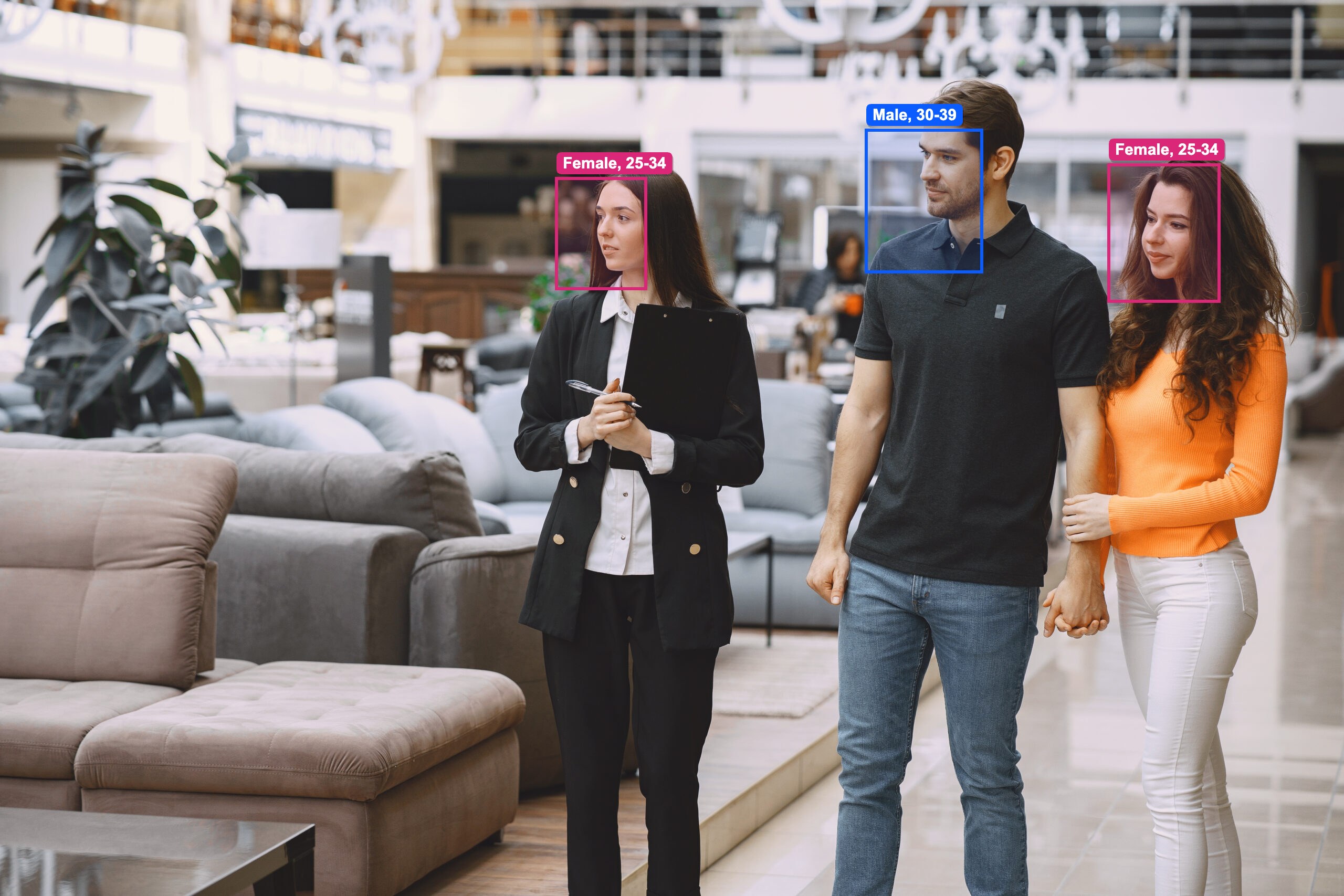

Shopping malls are staging a remarkable comeback. After years of headlines predicting the end of brick-and-mortar retail, 2026 data tells a far more optimistic story. Indoor malls have seen a 9.7% increase in foot traffic year-over-year, while open-air centers jumped by 10.1% and outlet malls climbed 10.7%. Visit durations are up as well, with shoppers spending an average of 3.3% more time inside malls compared to the previous year.
Yet here’s the challenge every mall operator and retailer faces: more foot traffic doesn’t automatically mean more revenue. The average mall conversion rate — the percentage of visitors who actually make a purchase — sits at just 32%. That means roughly two out of every three people walking through mall doors leave without buying anything. In a year when Gartner projects global AI spending to surpass $2 trillion, the retailers winning in 2026 are those who use intelligent analytics to turn those idle footsteps into transactions.

The Conversion Rate Problem: Why More Visitors Don’t Mean More Sales
For decades, shopping malls relied on a simple formula: attract as many visitors as possible, and a predictable percentage would buy. Anchors like department stores pulled crowds in; specialty retailers captured incremental sales. But consumer behavior has shifted profoundly. Today’s shoppers are more intentional, more research-driven, and more likely to compare prices on their phones while standing in a physical aisle. They browse in-store but buy online. They visit for experiences — dining, entertainment, socializing — without necessarily shopping.
This behavioral shift means that traditional footfall metrics alone are dangerously incomplete. A mall that boasts a million visitors per month might sound impressive, but if only 320,000 of them are buying, the revenue gap is enormous. Closing that gap — even by a single percentage point — can translate to millions of dollars in additional sales across a large mall portfolio.

How AI-Powered People Counting Changes the Equation
This is where AI-driven foot traffic analytics enter the picture, fundamentally transforming how malls and retailers understand and influence shopper behavior. Modern people counting sensors equipped with 3D stereo vision and AI-on-chip processing deliver accuracy rates above 99%, capturing not just how many people enter a space but how they move through it, where they pause, and which zones they avoid entirely.
Unlike older infrared beam counters or basic camera-based systems, next-generation sensors like V-Count’s Ultima Prime provide full heatmap and zone analytics. They map the precise paths shoppers take, identify dwell times in front of specific displays, and detect congestion points where potential customers are turning away. When integrated with a cloud analytics platform like BoostBI, this data becomes a real-time decision engine for store managers, leasing directors, and marketing teams alike.

From Counting to Understanding: The Analytics Layer
Raw headcounts are only the starting point. The real value emerges when people counting data is combined with sales data, staff schedules, promotional calendars, and external factors like weather or local events. For example, research shows that foot traffic drops by 34% after 8 PM on weeknights — but stores that maintain an optimal staff-to-customer ratio of 1 employee per 12 visitors see 9% higher conversion rates than understaffed locations. Without accurate foot traffic data, these ratios are impossible to optimize.
V-Count’s BoostBI platform connects all these data streams into a single dashboard, automatically surfacing insights like peak traffic windows, underperforming zones, and the true ROI of marketing campaigns. Mall operators who deploy advanced footfall analytics have reported leasing revenue increases of up to 20%, according to McKinsey research, because they can demonstrate precise traffic flow data to prospective tenants — turning “feeling” into fact.

Five Data-Driven Strategies to Boost Mall Conversion Rates
1. Optimize Store Layouts with Heatmap Intelligence
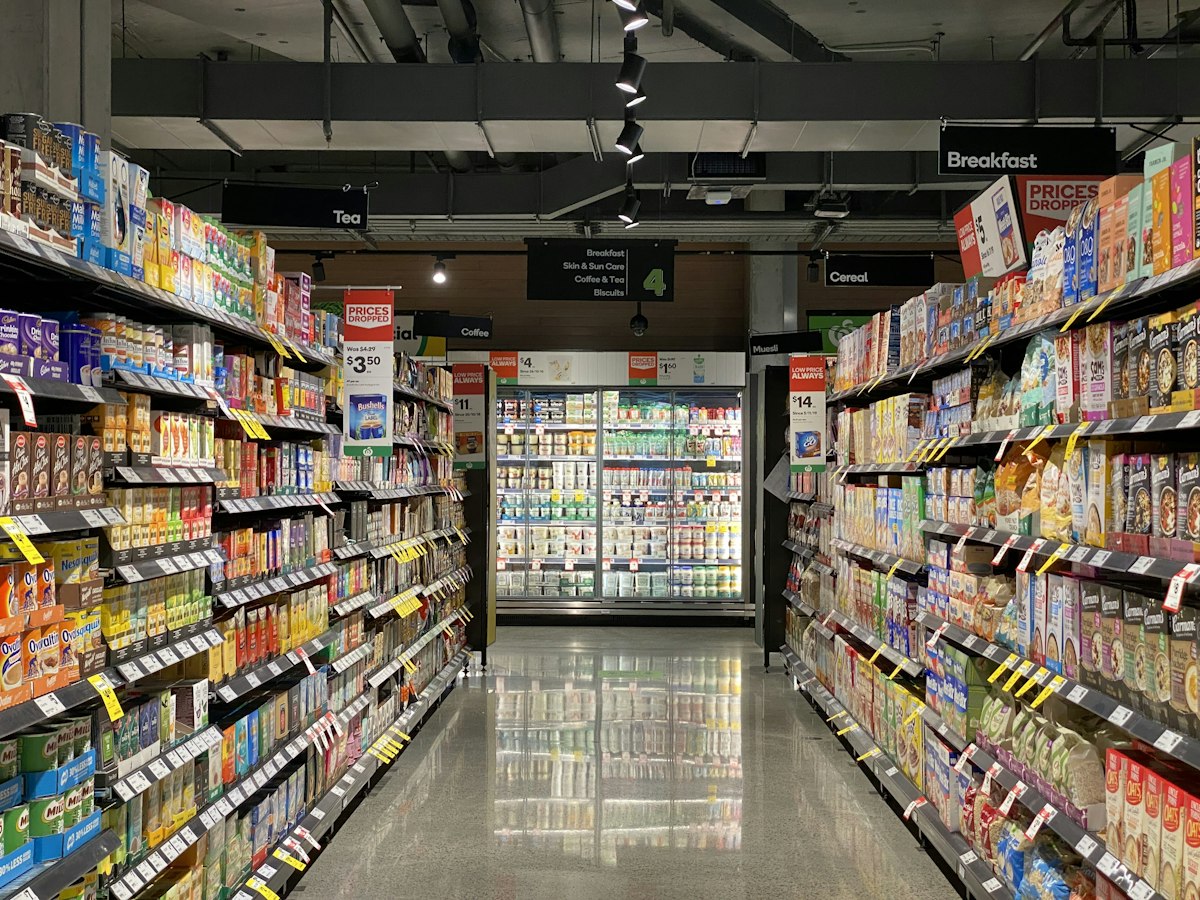
Heatmap analytics reveal exactly how customers navigate a store — which aisles attract the most traffic, which product displays are being overlooked, and where bottlenecks frustrate shoppers. Retailers like Kroger have used dwell-time analysis to redesign key sections, resulting in a 12% increase in conversion. V-Count’s Ultima Prime sensor is purpose-built for this use case, providing in-store heatmap and zone analytics that show managers precisely where to place high-margin products, promotional signage, and seasonal displays for maximum impact.
2. Align Staffing to Traffic Patterns
One of the most impactful — and most overlooked — conversion levers is staffing. When there aren’t enough associates on the floor during peak hours, customers can’t get help, questions go unanswered, and sales are lost. When there are too many staff during quiet periods, labor costs erode margins. AI-powered traffic forecasting, drawing on historical footfall patterns alongside external data like weather forecasts and event calendars, enables retailers to schedule the right number of staff for every hour of every day. The numbers speak clearly: stores with optimized staffing ratios consistently convert at higher rates.

3. Measure Marketing Impact with Precision
Historically, measuring the impact of a mall-wide promotion on individual store performance was largely guesswork. With people counting sensors at every entrance, corridor, and store threshold, marketers can now measure exactly how a weekend event, a social media campaign, or a seasonal sale influenced foot traffic — both at the mall level and at the individual store level. By comparing traffic lift against promotional spend, marketing teams gain a true cost-per-visit metric that guides future budget allocation.
4. Enhance Tenant Mix Based on Traffic Flow Data
For mall operators, the tenant mix is the single biggest driver of overall performance. But deciding which brands to place where has traditionally relied on intuition and broker relationships. With comprehensive traffic flow analytics, leasing teams can identify high-traffic corridors that command premium rents, low-traffic dead zones that need activation through experiential tenants or F&B concepts, and complementary tenant adjacencies that drive cross-shopping. This transforms leasing negotiations from subjective to data-backed, increasing both occupancy rates and rental yields.
5. Deploy Real-Time Queue Management
Long checkout lines remain one of the top reasons shoppers abandon purchases. Computer vision systems can now read movement and waiting patterns in real time, alerting managers when queue lengths exceed thresholds and suggesting dynamic responses such as opening additional registers or deploying mobile checkout devices. V-Count’s queue management solution integrates directly with BoostBI to track wait times, queue abandonment rates, and service speed — giving retailers the data they need to eliminate friction at the final, critical moment of the sales journey.

The Privacy Advantage: GDPR-Compliant Analytics
As analytics technology grows more sophisticated, so do consumer privacy concerns. Retailers operating in the EU, and increasingly in other jurisdictions, must ensure that their analytics tools comply with strict data protection regulations. This is where purpose-built people counting sensors hold a significant advantage over retrofitted CCTV systems or mobile tracking approaches. V-Count sensors use 3D stereo vision technology that processes data entirely on-device through AI-on-chip architecture. No identifiable images are ever recorded, stored, or transmitted — only anonymized count and movement data. This makes V-Count solutions fully GDPR compliant by design, eliminating the legal and reputational risks associated with video surveillance-based analytics.

Real Results: How Leading Brands Are Converting More Visitors
The business case for AI-driven foot traffic analytics is not theoretical. Global brands are already seeing measurable impact. Crocs deployed people counting and conversion analytics across its retail locations and improved its conversion rate by 2 full percentage points — a significant lift at the scale of a global brand with hundreds of stores. Samsung Turkey achieved even more dramatic results, using visitor analytics combined with heatmap data to redesign its retail experience and increase conversion by 5 percentage points.
These results underscore a critical reality: even small improvements in conversion rate generate outsized revenue gains when applied across a large footprint. A mall with 10 million annual visitors improving its conversion rate from 32% to 33% adds 100,000 incremental purchases per year. At an average transaction value of $50, that’s $5 million in additional revenue — from existing foot traffic alone.

Looking Ahead: The Convergence of Physical and Digital Analytics
2026 is the year that physical retail analytics truly catches up with the sophistication of digital analytics. Just as e-commerce teams obsess over conversion funnels, click-through rates, and cart abandonment, brick-and-mortar retailers now have the tools to achieve equivalent visibility into the physical shopping journey. The combination of 99%-accurate people counting, real-time heatmap analytics, demographic insights, and cloud-based dashboards creates a complete picture of the customer journey — from the moment they enter the mall to the moment they leave.
For mall operators and retailers still relying on manual counts, sampling-based estimates, or pure intuition, the competitive gap is widening. The data is clear: the malls that invest in AI-powered foot traffic analytics are the malls that will thrive. Those that don’t risk watching record foot traffic walk right past their registers.
Ready to Turn Foot Traffic into Revenue?
V-Count’s AI-powered people counting sensors and BoostBI analytics platform help the world’s leading malls and retailers optimize conversion rates with 99% accuracy.