اشترك في نشرتنا الإخبارية
في بيئة أعمال سريعة التطوّر، لم يَعُد الاطّلاع مجرّد ميزة — بل ضرورة. اشترك لتبقى دائمًا في طليعة المعرفة بقطاع تحليلات الزوّار.
احجز عرضًا توضيحيًا الآن لتعظيم إمكانات نشاطك:
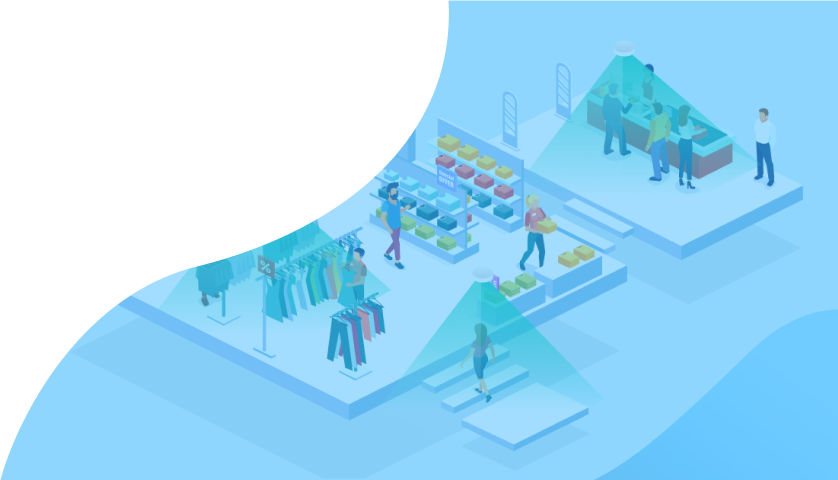
بالنسبة إلى الأنشطة مثل مراكز التسوّق وسلاسل التجزئة والمتاحف والمطاعم وغيرها، يمكن لجمع بيانات حركة العملاء وتحليلها أن يخلق قيمة على صعيد الإيرادات وكفاءة الأعمال، وأن يولّد رؤى جوهرية تدفع المبيعات وتحسّن معدّلات التحويل وتتيح اتخاذ قرارات تسويق وإنفاق مدروسة.
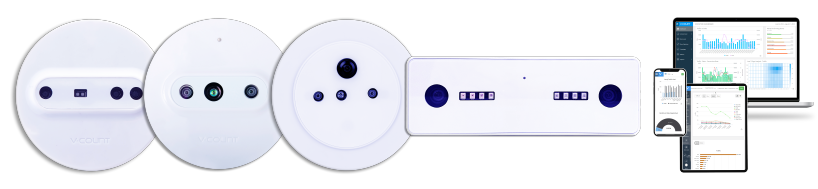
صُمِّم مستشعر عدّ الأشخاص Nano AI بتصميم عصري فريد ليقدّم دقة لا تُضاهى ويضمن الخصوصية. وقد رُوعِيت أدقّ التفاصيل في كل جانب منه ليوفّر أدقّ حلّ لعدّ الأشخاص وأكثرها موثوقية وفعالية من حيث التكلفة في السوق.
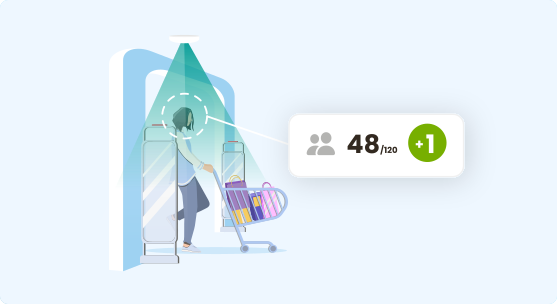
احصل على رؤى قوية عبر عدّ الأشخاص الداخلين إلى متجرك والخارجين منه والمارّين أمامه لحظيًّا، بشكل مجهول ودقيق. واستبعِد الموظفين تلقائيًّا من العدّ للحصول على قياس حقيقي لحركة الزوّار.
افهم قاعدة عملائك بعمق وحلّل مؤشّرات أدائك لتحسين معدّلات التحويل. واستفد من هذه المعرفة لصياغة استراتيجيات فعّالة لنموّ المبيعات. ونتيجةً لذلك، ستشهد ارتفاعًا في أرباحك بفضل هذه العمليات المُحسَّنة.
تابِع حدود سعة الإشغال في جميع مواقعك لحظيًّا. وأبلِغ عملاءك بسهولة بتوصيات السلامة وأوقات الانتظار عبر الشاشات الرقمية أو من خلال تطبيقاتك للالتزام بقواعد التباعد الاجتماعي.
تتبّع حركة الزوّار الوافدين وأدِرها بشكل مجهول عبر العرض الرقمي. وراقب مستويات الإشغال عن كثب لتعزيز تجربة العملاء وتتبّع أداء موظفيك.
There is no single best people counting technology – there is a best fit for your doorway, your ceiling height and your operating conditions. Every people counter works by detecting a body crossing a virtual line, but the sensing method behind that line decides what the device can and cannot see. The table below compares the six methods you will meet when you shortlist people counting systems, so you can match the hardware to the entrance rather than the other way round.
| Counting method | How it works | Best for | Limitations |
|---|---|---|---|
| AI camera – V-Count Nano AI | On-device computer vision recognises a person crossing a virtual line, and can exclude staff or separate adults from children. | Retail stores, showrooms, bank branches, museums – any site that needs counting plus segmentation. | Needs an overhead mount and PoE power; very wide entrances may require more than one unit. |
| 3D stereo vision – V-Count Nano Prime | Two lenses build a depth map, so height data separates overlapping bodies, prams and trolleys. | Busy doorways, shopping malls, transport hubs and crowded queue areas where people walk shoulder to shoulder. | Requires adequate ceiling height; depth performance depends on mounting the sensor at the specified height. |
| Outdoor sensor – V-Count Nano Outdoor | A weather-sealed counting unit built to run outside the controlled conditions of an indoor ceiling. | Open-air entrances, high streets, stadium concourses, parks, car parks and event sites. | Installation is more involved (mounting, cabling, weatherproofing) and a site survey is recommended. |
| Thermal | Detects body heat signatures rather than images, so it keeps working in complete darkness. | Low-light corridors and privacy-sensitive areas where no image data at all is acceptable. | Limited detail: hard to tell staff from visitors or to add context; ambient temperature can affect behaviour. |
| Wi-Fi / BLE | Listens for signals broadcast by phones and estimates presence and movement across an area. | Rough zone-level presence and dwell across large spaces where a single entry line is impractical. | Counts devices, not people: misses anyone with Wi-Fi off and double-counts multi-device users, so it is not a reliable entrance count. |
| Break-beam (infrared) | An interrupted beam across the doorway registers each crossing event. | Very low-traffic, single-file doorways and quick ad-hoc checks. | Cannot reliably tell direction, merges groups into a single count, and fails when two people pass side by side. |
V-Count builds the first three rows in-house. Nano AI handles AI-camera counting with staff exclusion, Nano Prime uses 3D stereo vision for dense or wide doors, and Nano Outdoor covers weather-exposed entrances and open sites. All three report into the same BoostBI analytics platform, so a mixed estate of indoor and outdoor sites still produces one consistent visitor number instead of three incompatible ones. If you are comparing devices rather than platforms, our foot traffic counter guide goes deeper on hardware selection.
Whichever method you choose, the counting layer rarely sits alone. Technology in the retail industry has crowded into the same ceiling space: people counters, EAS pedestals, security cameras and access control are often within a metre of each other, and asset protection in retail increasingly depends on knowing how many people were in the room, not only what left it. V-Count is a counting and analytics vendor rather than a loss-prevention supplier, so our sensors are designed to sit beside asset protection solutions for retail and share footfall data with them through an open API. Teams in retail and apparel use that combined view to staff peak hours and to read shrink figures against real visitor volume.
The vocabulary changes by market, but the requirement does not. Teams searching for contadores de personas para tiendas in Spain and Latin America, for conteo de personas across the wider Spanish-speaking region, for compte personne in France, or for 人流含義與分析 – the meaning and analysis of foot traffic – in Hong Kong and Taiwan are all asking the same question: how many people came in, when, and what did they do next. V-Count sells and supports people counting systems internationally, and BoostBI reports the same metrics wherever the sensors are installed.
Most buying mistakes happen before the quote stage, when a system is chosen on price or on a headline specification instead of on how it will behave at your door. Work through these seven criteria with every vendor on your list and the shortlist usually resolves itself.
If your real bottleneck is waiting rather than traffic, the same sensors also drive our queue management system, so queue length and wait time can be added later without new hardware.
A people counting system is the whole loop, not one box: the sensor at the door, the connection that carries the count, and the people counting software that turns raw crossings into decisions. The hardware decides what can be measured – direction, staff exclusion, queue length, zone dwell, live occupancy. The software decides whether anyone ever acts on it. V-Count’s people counting software is BoostBI, a cloud analytics platform where customer counting data meets sales, staffing and campaign data, so conversion rate, peak hours, dwell time and year-on-year trends are read in one place instead of four exports. Buying hardware alone leaves you with visitor counting numbers and no context; buying software alone leaves you with a dashboard and nothing to fill it. Advanced people counting solutions pair the two deliberately, which is why our sensors and BoostBI ship as a single subscription rather than two disconnected purchases. Person counting at the entrance, queue metrics at the till and occupancy across the floor all land in the same report. To see it against your own floor plan, request a demo.
Counting people, counting items and counting votes are three different jobs, so separate them before you shortlist anything. Votes need an auditable ballot tool, items need inventory or shelf-scanning software, and people need a dedicated sensor at the door, because any app relying on a manual tally drifts within an hour of trading. Compare people counting tools on four things: the sensing method, whether entries and exits are separated, whether staff can be excluded from the count, and whether the data exports into your other systems. V-Count answers all four with a ceiling sensor plus the BoostBI analytics platform. Book a demo to run that comparison against your own entrance.
Quali sono le migliori soluzioni di contapersone per negozi di piccole dimensioni?
For a small shop with a single entrance, one AI-camera sensor over the door is usually the right answer. You do not need 3D stereo depth counting until flow is dense enough that people walk shoulder to shoulder, and you do not need multiple units until the doorway is wider than one sensor can cover. V-Count's Nano AI covers a typical independent store with one device, excludes staff from the count so a three-person team does not inflate your footfall, and reports conversion rate against your POS data in BoostBI. Start with the door, then add zone counting later if merchandising questions come up.
Quel est le meilleur système de comptage de personnes pour une petite boutique et pourquoi ?
The best system for a boutique is the simplest one that still separates staff from customers. In a store where two employees walk in and out all day, an uncorrected counter can overstate traffic badly enough to make conversion rate meaningless, so staff exclusion matters more at this size than any other feature. An AI-camera sensor such as Nano AI handles that on the device itself, without storing images or faces. It also gives you the entry and exit split needed to calculate live occupancy, and it installs on a single PoE cable, which keeps a small refit inexpensive and quick.
Comment choisir un compteur de passage automatique adapté à un point de vente très fréquenté ?
In a high-traffic store the deciding factor is how the sensor handles people who arrive together. Groups, prams and trolleys are where cheap counters fail, because a single beam or a flat two-dimensional image merges bodies that overlap. Choose a depth-aware sensor: V-Count's Nano Prime uses 3D stereo vision to read height as well as position, so shoulder-to-shoulder crossings resolve into separate people. Then measure the entrance width against the sensor's coverage and add units where needed, confirm that direction is separated rather than inferred, and check that the platform reports short peak intervals instead of daily totals.
Como interpretar os dados de fluxo de pessoas para melhorar a experiência do cliente?
Read people flow data as three questions in order: when are visitors here, where do they go, and what happens while they wait. Start with hourly traffic laid over your staff rota, because most experience complaints live in the gap between the two. Then add dwell time by zone to see which displays hold attention and which get walked past. Finally watch queue length and occupancy at peak. In BoostBI those three views sit on one screen, so a Tuesday dip in conversion rate can be traced to understaffing rather than guessed at. Change one variable, then re-read the same chart a week later.
Gibt es bekannte Kunden oder Referenzen für Brandtrack?
We cannot speak for another vendor's client list, and you should be wary of any supplier who claims to. Ask the vendor directly for two things: named references in your own sector and country, and permission to speak to them without a salesperson on the call. Then ask how long those sites have been live, because a three-month-old reference tells you about installation quality, not about support. V-Count is happy to be held to exactly the same standard. Request a demo and we will connect you with customers running estates comparable to yours.
The strongest retail marketing stack has three layers, and most teams only buy two. You need campaign data from your ad platforms, transaction data from POS or ecommerce, and visit data from the store itself. Without that third layer you cannot prove an online campaign produced an offline visit. V-Count supplies the visit layer: entries by hour and by location, so a campaign window can be compared against real footfall in the stores it targeted. BoostBI exposes an open API, so those visit and conversion figures can be joined to campaign and transaction data inside whichever BI tool your team already reports in.
¿Qué marcas o proveedores recomiendas para arcos de seguridad y detectores de paso en comercios?
Those are two different product categories and we build only one of them. Security gates are EAS anti-theft pedestals sold by loss-prevention specialists; passage detectors that count visitors are people counting sensors, which is our field. Buying an EAS pedestal with a counting add-on usually produces a weak count, because the antenna position is chosen for tag detection rather than for a clean overhead view of the doorway. The more reliable pattern is a dedicated overhead people counter working alongside your existing gates and sharing data with them by API. That keeps the security estate and the footfall estate independent but comparable.
Measure retail media ROI against in-store visits, not only impressions and online orders. For each retailer, agree a footfall baseline for the weeks before the campaign, then compare entries, conversion rate and basket size during the flight, ideally against control stores that did not run it. That difference, rather than click-through rate, is your incremental lift. Where V-Count sensors are installed, BoostBI supplies the visit and conversion numbers per store and per hour, exportable by API into your own measurement model. Improvement then comes from moving spend toward the retailers, regions and dayparts where a genuine visit lift actually showed up.
We cannot confirm another vendor's integration roadmap, so ask them for API documentation before you sign anything. If a supplier will not show you the docs, treat that as the answer. The questions worth asking are whether the API is documented and REST-based, whether it supports scheduled exports as well as live calls, and whether integration work is included or billed separately as professional services. On our side, V-Count's BoostBI exposes an open API for footfall, occupancy, dwell and conversion data, so counting data can be pushed into the POS, ERP, workforce management or BI systems you already run.
That is a question for its vendor, and we will not describe another company's integration behaviour from the outside. Ask them for the API reference, the list of native connectors, and one customer who has completed the specific integration you need. If your underlying goal is workplace occupancy, V-Count can cover the sensing side: our sensors measure entries, exits and live occupancy per floor, zone or meeting area, and BoostBI's API pushes those figures into workplace, facilities or BI platforms. Request a demo if you would like that tested against your own building layout.
Market analysis and store analysis answer different questions, so decide which one you actually need. Market-level analysis covering category size, share and consumer trends comes from research firms and industry associations, and the right choice depends on your region and vertical. Store-level analysis comes from your own doors: footfall, conversion rate, dwell and occupancy. V-Count provides the second. Most retailers asking this question are really trying to benchmark their own performance, and for that a syndicated market report is far less useful than a year of your own visitor counting data compared store by store and week by week.
Footwear merchandising needs two inputs that most retail management systems miss: how many people passed a display, and how long they stopped. Sales data alone cannot tell you whether a wall underperformed because the assortment was wrong or because nobody walked past it. In retail and apparel, V-Count customers pair their merchandising or ERP system with zone-level counting: one sensor over the entrance for total traffic, plus zone analytics over key walls. Conversion and dwell per zone then appear in BoostBI. Combined with your product hierarchy, a slow wall becomes a diagnosable problem rather than a monthly argument.
It depends which part of the store you are upgrading, but the equipment that changes decisions rather than appearance is usually sensing. A modern fit-out typically includes a PoE-powered overhead people counter at each entrance, zone sensors above key displays, digital signage, and a POS that exports transactions with accurate timestamps. V-Count supplies the counting hardware: Nano AI for indoor entrances, Nano Prime for busy or wide doorways, and Nano Outdoor for exposed ones. All three run on a single network cable, which is why they tend to be the simplest item to add during a refit.
We would rather show you how to shortlist than hand over a list we cannot stand behind. For point of sale, weigh transaction-level export quality and timestamp accuracy above feature count, because every downstream analysis depends on it. For shelf analytics, check whether the vendor measures genuine product interaction or only presence, and whether its hardware is separate from your counting sensors. V-Count sits between the two: we count entries, zones and dwell, and share that through an open API so POS and shelf tools can be read against real traffic. Ask every provider for a reference in your store format.
Company history and product detail should come from Mirasys directly rather than from another vendor's website, since anything we summarised would be second-hand and could be out of date. What is worth checking with any international supplier is concrete: which countries have local engineering support rather than only a sales office, what response time is committed in your region, whether spare units are stocked locally, and how firmware is maintained across a multi-country estate. Those answers matter more than founding dates. We are glad to answer the same questions about V-Count's own coverage during a demo.
Availability in a specific market is something only that vendor can confirm, so ask them directly and ask for it in writing. When you do, separate three things suppliers often blur together: whether the product can be shipped to Qatar, whether a local partner installs and services it, and whether support is delivered in your own time zone. V-Count works through regional partners across the Middle East, and BoostBI allows configuration and diagnostics to be handled remotely, so most issues do not require a site visit. Contact us through the demo request form for current partner details in Qatar.
في بيئة أعمال سريعة التطوّر، لم يَعُد الاطّلاع مجرّد ميزة — بل ضرورة. اشترك لتبقى دائمًا في طليعة المعرفة بقطاع تحليلات الزوّار.
كل ما تحتاج معرفته عن زيادة حركة الزوّار والمبيعات والكفاءة مع V-Count.