


















Car Showrooms

Car showroom analytics turns a dealership floor into numbers you can act on: how many people came through the doors, which vehicles they walked up to, how long they stayed beside each model, and how many of those visits became test drives and signed orders. V-Count sensors sit above the showroom entrances, over the forecourt and across every display zone, counting anonymously and excluding staff so the figures describe real prospects.

In BoostBI a manager sees the visit-to-test-drive-to-sale funnel, dwell per model display, visitors per sales consultant per hour and live occupancy in the service reception. Quiet Tuesdays and packed launch weekends stop being anecdotes and start being staffing, layout and marketing decisions.

Car Showroom people counters
Join the Ranks of Our Prestigious Clients

Explore the gallery showcasing our diverse range of customers. We’re proud to work with these leading brands, providing visitor analytics solutions that drive their success.

Benefits of Visitor Analytics for Car Showrooms

Car Showrooms People Counting 01

People counting solutions is a game-changing technology for car showrooms, offering a wealth of benefits to improve operations and elevate customer engagement. Real-time footfall traffic data and insights into visitor behavior empower showroom managers to make informed decisions. For example, when specific days or time periods draw more visitors, dealerships can strategically allocate resources and staff, ultimately enhancing customer satisfaction and potentially boosting sales.

By accurately monitoring foot traffic fluctuations before and after implementing new campaigns, dealerships can precisely assess the impact of their marketing campaigns and promotions. This data-driven approach facilitates the continuous refinement of marketing strategies, directing resources towards proven methods and enhancing the overall return on investment.

Additionally, conducting trend analysis tailored to each showroom location provides valuable insights. Understanding prevalent trends and benchmarking performance against other car showrooms, both locally and nationwide, enables dealerships to adapt effectively to changing market dynamics.

The implementation of people counting in car showrooms not only optimizes layouts, campaigns, and operations but also contributes to increased conversion rates and revenue growth as a result of all.
Car Showrooms Heatmap Zone Analytics 01

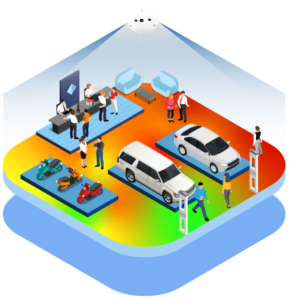
The integration of Nano Prime’s heatmap and Pick and Sense’s product engagement solutions introduces magical benefits to car showrooms, contributing to a more engaging and efficient environment.

Using the power of heatmap analytics enables the analysis of traffic patterns within the showroom. This invaluable data based on dwell times of showroom visitors guides dealerships in strategically optimizing the layout, allowing for the rearrangement of vehicles and promotional displays based on visitor hotspots. By aligning key offerings with areas of high visitor engagement, showrooms can significantly boost the visibility and appeal of specific cars and promotions, enhancing the chances of successful conversions.

Vehicle Engagement Tracking: With Pick and Sense technology, real-time monitoring of customer interactions with vehicles becomes a reality. Dealerships can track how frequently customers engage with cars and pinpoint which specific car features draw the most attention. By understanding which car doors are most frequently opened by showroom visitors, dealerships can tailor their strategies to highlight popular features and further enhance the overall showroom experience. This data-driven approach leads to more informed decision-making and a heightened level of customer engagement which results in boosted sales conversion.
The Importance of People Counting in Car Showrooms

Overview

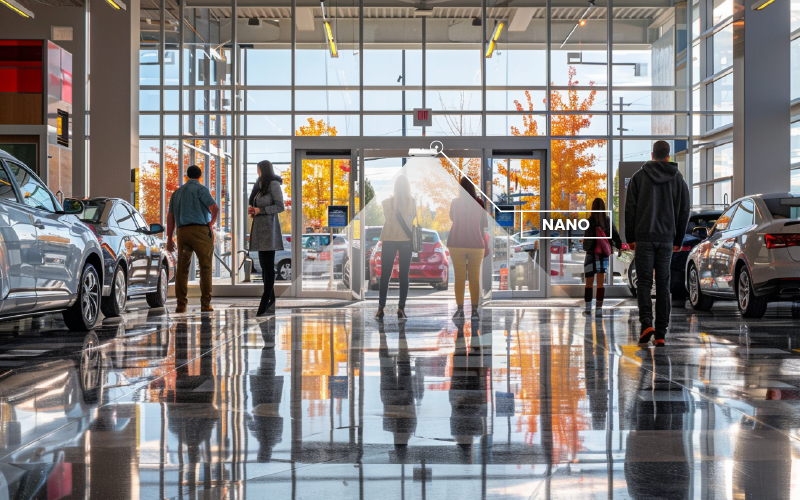
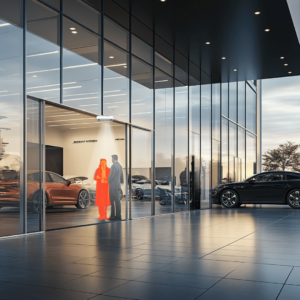
Untitled Design 13We install Nano at car showroom entrances to count visitors, ensuring you have accurate data on customer foot traffic so you can measure your store conversion. Our market-leading staff exclusion feature guarantees that the data reflects pure customer numbers by excluding employees from the count, allowing for precise analysis of customer visits.

Untitled Design 14By placing Nano on top of vehicles, we can accurately count the number of times a car’s trunk is opened.
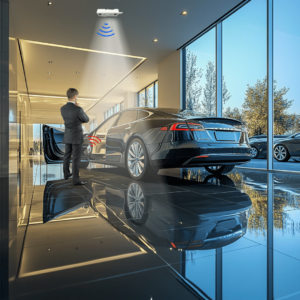
This data allows you to compare customer interactions with vehicles to the daily customer arrival count, offering deeper insights into which models attract the most interest and engagement, and helping you measure car visit conversion.

Untitled Design 15Our Pick and Sense technology provides detailed information on how often vehicle doors are opened.

This data is invaluable for understanding customer engagement with different car models, helping you measure car interaction conversions, identify popular features, and focus on potential areas for sales.

Slide template not exist

Frequently Asked Questions

Everything you need to know about growing traffic, sales and efficiency with V-Count.

What is car showroom analytics, and what does it measure?
Car showroom analytics is the measurement of visitor behaviour inside a dealership: how many people enter the showroom, which vehicles and zones they stop at, how long they stay, how busy each hour is, and how many of those visits turn into test drives and sales. It is collected by overhead sensors at the doors and around display areas rather than by staff tallies or CRM entries. V-Count sensors feed counts, dwell and occupancy into BoostBI, where a showroom manager sees traffic, zone dwell and conversion for one site or for a whole dealer group.
How do I connect showroom visitors, test drives and sales into one funnel?
Start with an accurate door count, because that is the only number a dealership normally does not have. Once every entry is counted with staff excluded, you can divide test-drive bookings by showroom visits to get a visit-to-test-drive rate, and delivered units by test drives to get the closing rate. V-Count supplies the traffic side of that funnel per hour, day and site; you pair it with the test-drive and sales figures you already record. Suddenly a fall in sales is traceable: fewer people came in, or the same number came in and fewer were converted.
How do I find out which cars on the display floor draw the most attention?
Configure each display bay as a counting zone. The sensors report how many people entered that zone and how long they stayed, so every vehicle or model group gets its own traffic and dwell figure. Compare bays over a week and the pattern is unambiguous: the cars that hold people, the cars people glance at, and the corners of the floor nobody reaches. Dealerships use this to re-order the display, reposition slow stock into high-traffic zones, and prove to a manufacturer that a launch car is or is not getting attention. V-Count Nano Prime reports each display bay as a zone.
How many visitors should one sales consultant cover?
There is no universal number — it depends on your sales process and how long a typical conversation takes — but you can measure it. Divide counted showroom visitors in each hour by the consultants rostered for that hour to get a coverage ratio, then look at what happens to conversion as the ratio rises. Most showrooms find a threshold above which visit-to-test-drive conversion falls because prospects are waiting or leaving unattended. BoostBI charts traffic by hour so you can set the roster against the ratio instead of against tradition.
Can I measure occupancy in the service reception and waiting lounge too?
Yes, and it is usually the fastest win in a dealership. The service side has its own rhythm, with a heavy drop-off surge early in the morning and a collection peak late in the day. A sensor over the reception area and the customer lounge gives live occupancy, and VCare can display it or trigger an alert when the lounge fills. Over time you get hour-by-hour occupancy that shows when to add an advisor, whether the lounge is sized correctly, and how long customers are actually sitting there.
How do I count visitors on an outdoor forecourt or used-car lot?
Use weather-rated sensors. Nano Outdoor is designed for exposed positions and covers forecourt entrances, lot walkways and outdoor display rows, including out-of-hours browsing when the showroom itself is closed. Those counts join the indoor data in BoostBI, so a dealership can see total site traffic rather than only the people who pushed the showroom door. That matters for used-car operations especially, where a large share of looking happens outside and never registers as a showroom visit at all.
What is the difference between a car showroom people counter and a car showroom footfall counter?
In practice they describe the same hardware: an overhead sensor at the entrance that counts people in and out. “Footfall counter” is the retail term for total entries, while “people counter” is used more broadly and often implies the extra capabilities — staff exclusion, occupancy, zone dwell and group counting. A car showroom needs all of it, because entries alone will not tell you which vehicles held attention or how many prospects a consultant was covering. V-Count sensors do both jobs from the same device.