Door counting systems for retail
Door CounterFor retail stores.
Turn visits into sales.
Count shoppers entering and leaving with Nano AI. Turn entrance traffic into better staffing, clearer conversion data and a stronger understanding of every store.
Up to 99% people counting accuracy. Optional staff exclusion. One connected view in BoostBI.
Trusted by leading brands
across 130+ countries
01 / From doorway to data
What is a door counter?
A door counter measures how many people cross an entrance. A bidirectional door counting system records entries and exits separately, then organises those counts by time and location.
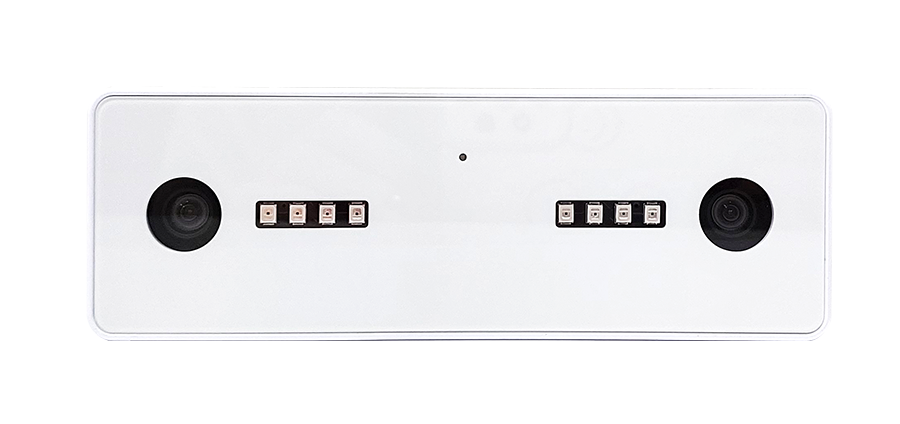
Nano AI is V-Count’s overhead doorway people counter. It combines 3D active stereo vision with on-device AI, turning movement across a configured counting line into footfall data for BoostBI.
For retailers, this answers a question sales reports alone cannot: did revenue change because fewer shoppers visited, or because fewer of those visits became purchases?
*Accuracy depends on entrance conditions, installation and calibration. Validate performance at your own doorway.
See the crossing
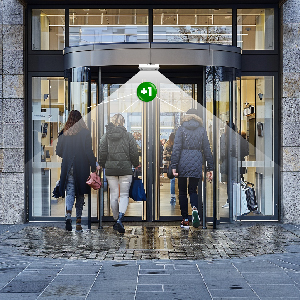
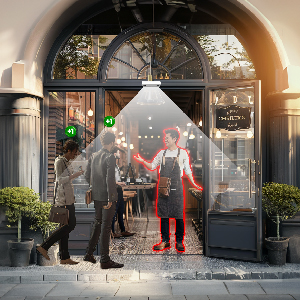
The sensor looks down from above the entrance. Stereo depth and AI help distinguish people moving through the counting area.
Know the direction
A configured line separates incoming and outgoing traffic. Entries and exits are reported individually rather than combined as total passes.
Use the insight
Review hourly patterns in BoostBI, compare locations and combine compatible POS data with visits to understand conversion.
Door counting with a doorway people counter
Door counting records every person who walks in or out through an entrance, and doorway people counters do this automatically from above the door. V-Count’s Nano AI is a doorway people counter that mounts above the entrance at 2.2 to 7 metres, counts people walking in and out separately, and keeps counting in bright daylight, ordinary shop lighting and total darkness.
Optional staff exclusion removes employees from visitor totals, so doorway people counting in BoostBI reflects customer traffic by hour and location.
Door counting systems
A door counting system has two parts: a sensor above each entrance and software that stores and reports the counts. In V-Count’s door counting system, Nano AI sensors count at the door and BoostBI shows visits by hour, day and store, so you can compare entrances and locations in one place.
Doorway people counters
Doorway people counters are mounted overhead so they see everyone who passes the entrance without blocking it. Nano AI is V-Count’s doorway people counter: it uses 3D active stereo vision, processes data on the device and connects over Wi-Fi or Ethernet (PoE), with no batteries to change.
Doorway people counting
Doorway people counting means measuring visits where they start: at the door. With Nano AI, a counting line is set across the doorway, entries and exits are recorded separately, and staff can be excluded, so the visitor numbers in BoostBI show real customer traffic.
Entry exit counter sensor
An entry exit counter sensor counts people in both directions at the same entrance. Nano AI is an entry exit counter sensor: it tracks entries and exits at the same time, which gives you real-time occupancy as well as daily visit totals.
02 / Turn counts into decisions
Every entrance tells a story.
Give your team the numbers.
Use a door traffic counter for retail to understand demand before changing a rota, a promotion or your opening hours.
Footfall by hour
See when visits build, peak and fall. Compare equivalent weekdays and trading hours to spot changes that daily totals can hide.

Occupancy trends
Estimate how many people are inside from a known starting occupancy plus entries minus exits. Cover every relevant entrance and check the baseline.
Staffing opportunities
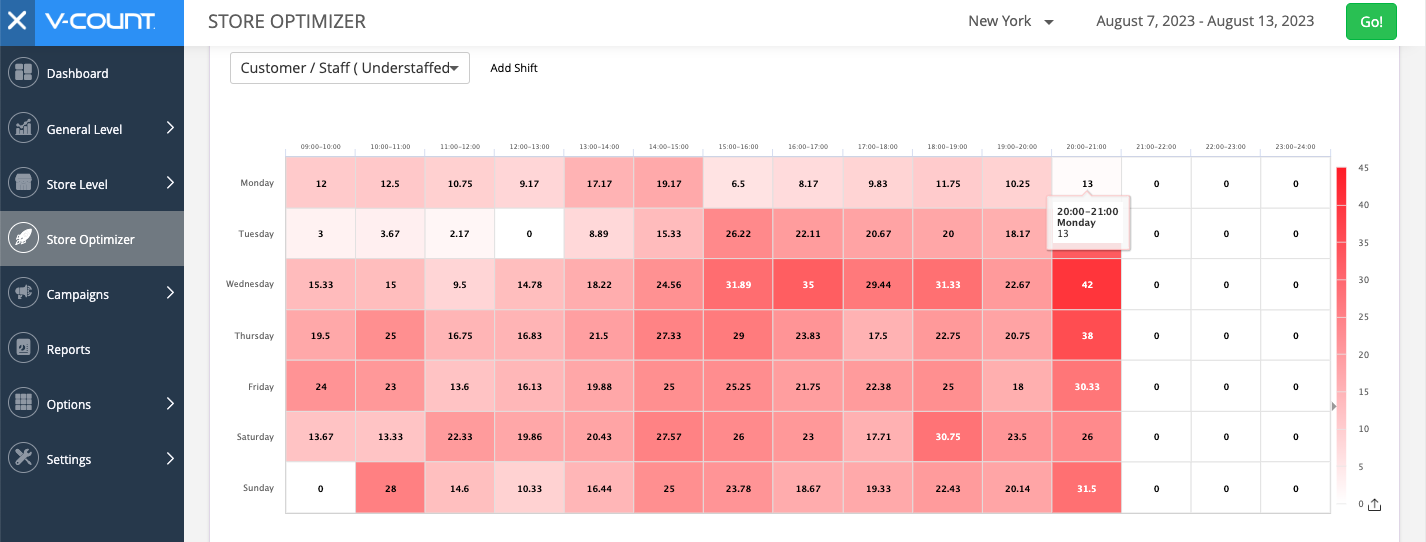
Compare visitor demand with staff coverage. Investigate busy hours with weak conversion and test a better rota against comparable periods.
Footfall + POS sales
Measure the sales opportunity
behind every visit.
A customer door counter gives you the denominator for retail conversion. Match eligible transactions and eligible visits over the same period and across the same entrances.
100 transactions ÷ 500 visits × 100
Now you can ask more useful questions. Did a campaign bring more visitors? Did an extra team member help during the busiest hour? Which branch converts a similar level of traffic more effectively?
Counts represent visits, not automatically unique individuals. Repeat entries, staff movements and group-counting settings affect how your conversion metric should be defined.
Explore BoostBI analytics ↗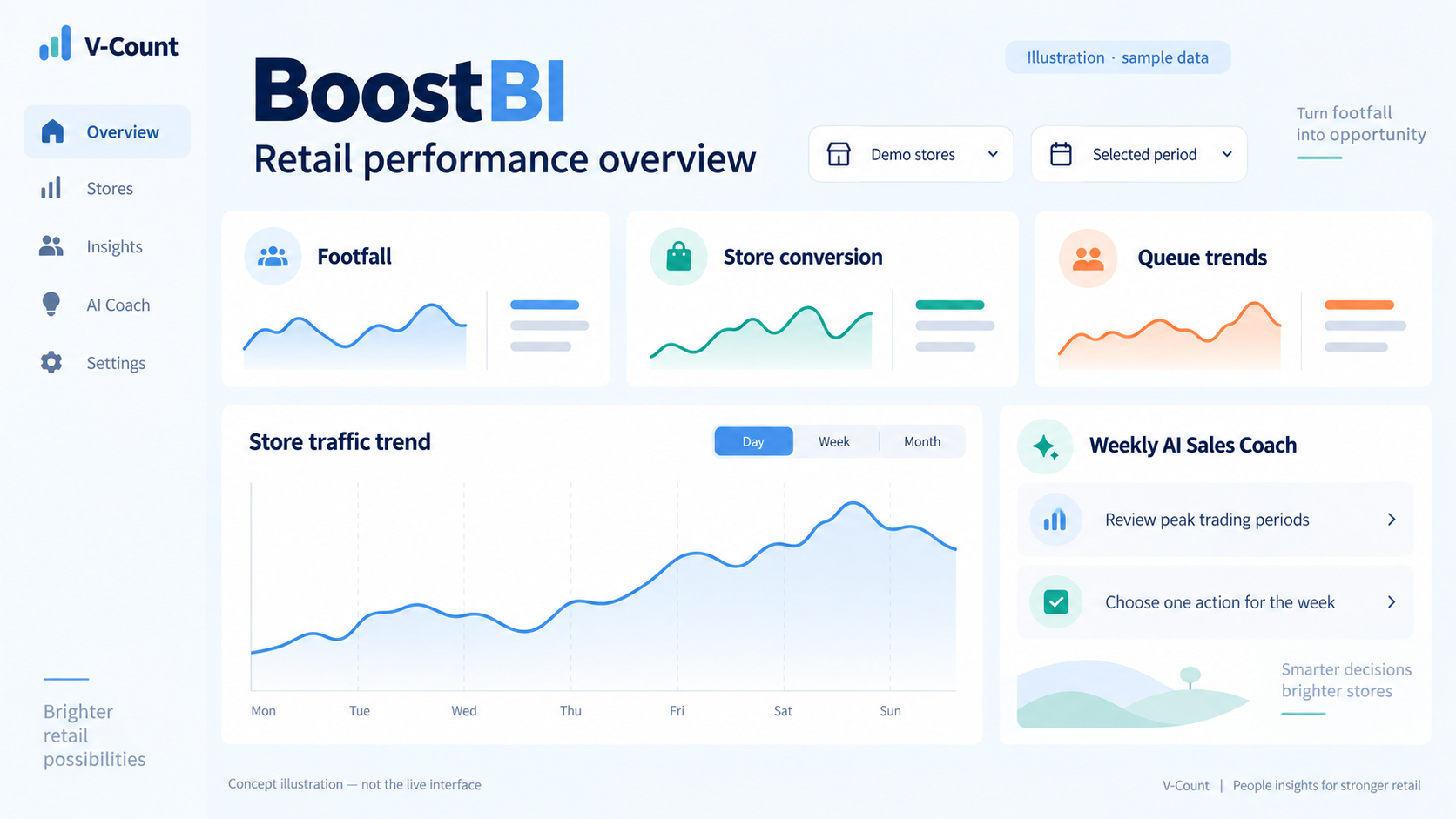
Cleaner customer counts
Count customers.
Account for your team.
Staff can cross a shop entrance many times a day. Including those movements in customer traffic can inflate visits and make conversion appear lower.
Nano AI offers optional staff exclusion using a lanyard, shoulder tag or mobile app. Choose the method and licence that suit your operation, then validate it with real staff movements.
Apply consistent settings across stores so that comparisons reflect customer behaviour. Agree how deliveries, re-entry and group visits should be handled before making the count a performance target.
See Nano AI capabilities ↗03 / Made for your entrance
Small above the door.
Useful across the business.
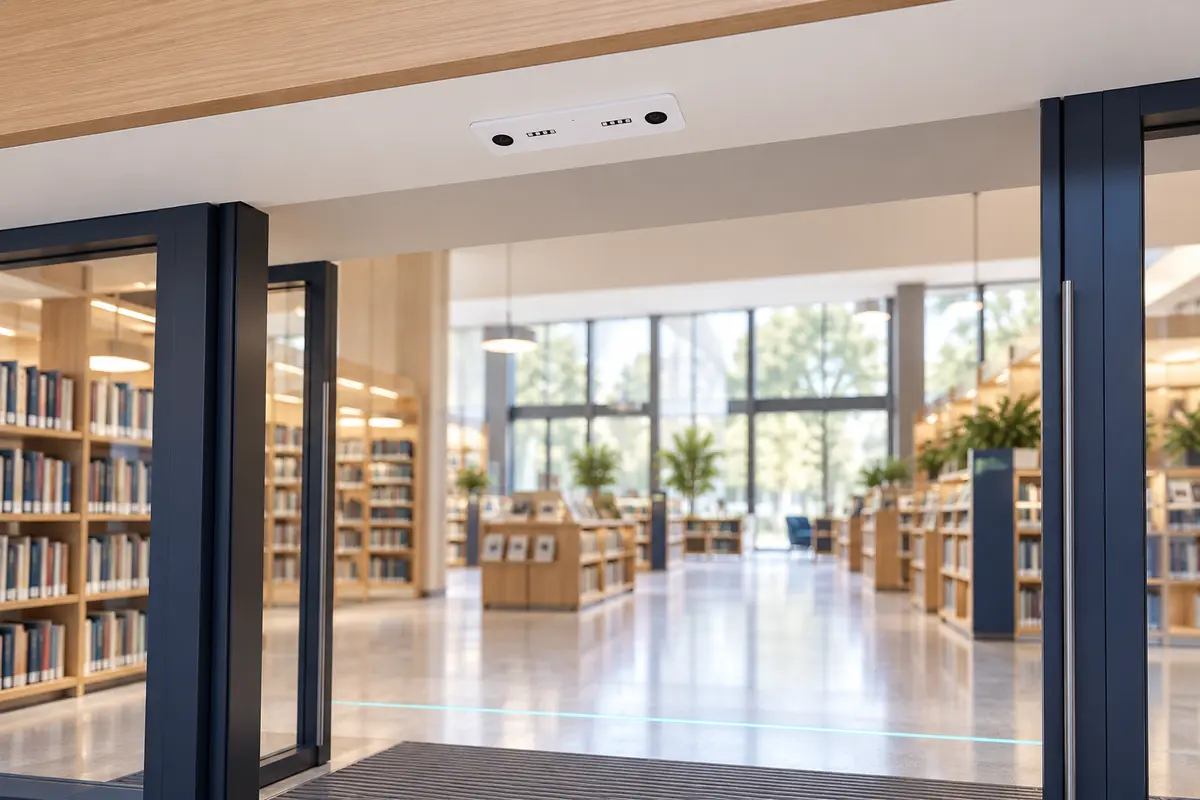
Discreet overhead placement
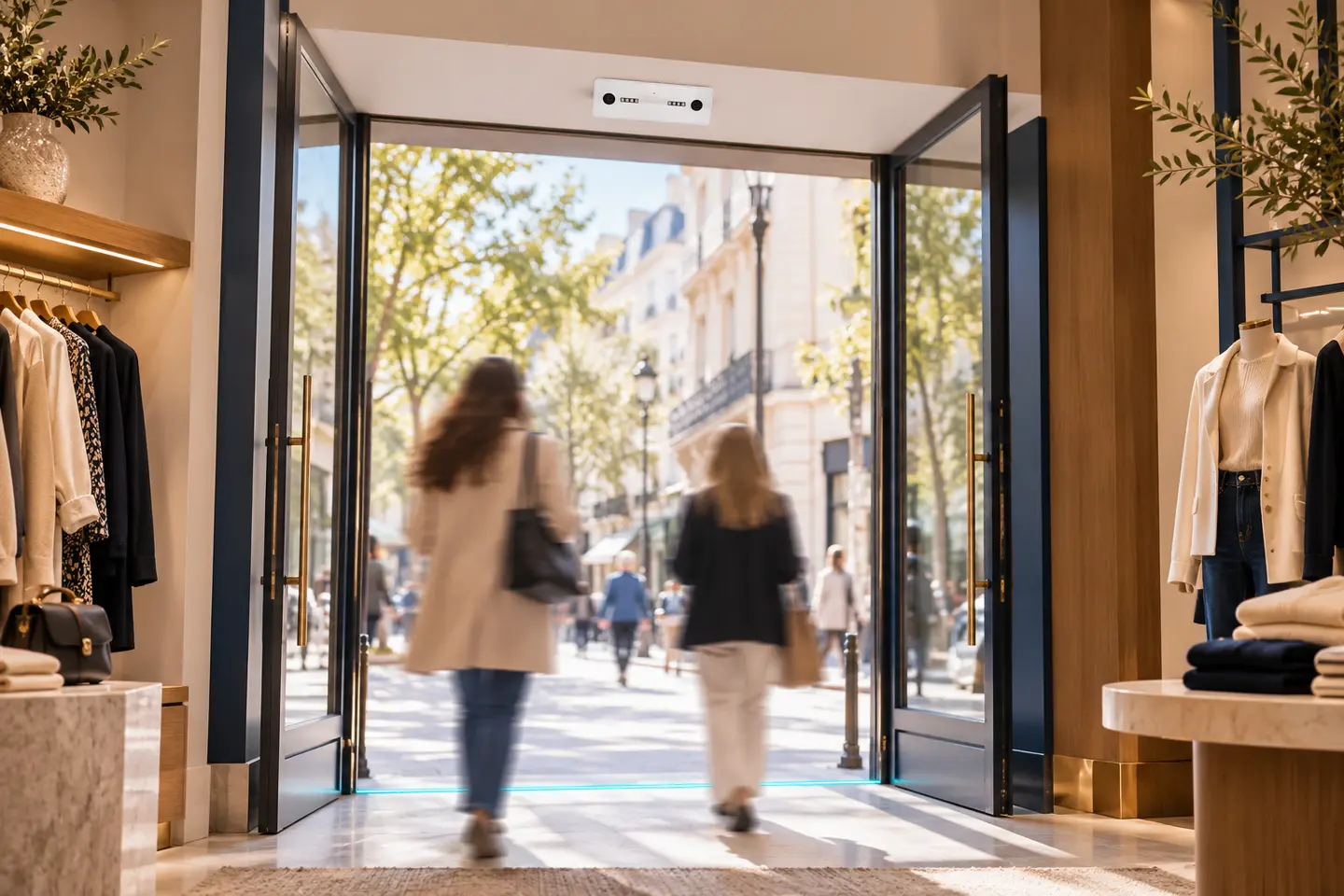
Mount Nano AI above the doorway with a clear downward view. A recessed mounting option helps the sensor sit neatly within the ceiling.

Ready for low light
Built-in infrared illumination supports counting at 0 lux. Assess changing light, glazing and obstructions as part of the entrance setup.
Connected without batteries
Nano AI uses 5 V USB-C power and Wi-Fi. An external PoE splitter is an option. Confirm suitable power and network coverage at each position.
AI-generated installation illustrations. Final placement and coverage are confirmed for your entrance.
Plan the whole doorway
Entrance width and mounting height work together. Nano AI supports installation from 2.2 to 7 metres, but sensor quantity depends on the usable counting area, ceiling geometry and obstacles.
A double door does not automatically require two sensors. Wide openings or separate entrances may need multiple units; V-Count can assess coverage from your floor plan and entrance photos.
Check these before installation
- Width and height of every public entrance
- Door swing, signs, lighting and ceiling obstructions
- Power supply, Wi-Fi and any PoE requirements
- Counting line, staff exclusion and reporting settings
- A manual validation count during quiet and busy periods
Connect the full customer journey
From the street.
Through the door.
Across the floor.
Your doorway count is the starting point. Add suitable storefront measurement to compare entries with passing traffic. Capture rate is eligible entries divided by eligible passersby, multiplied by 100.
For weather-exposed measurement, explore Nano Outdoor. For activity inside the store, Nano Prime adds heatmaps, zone visits, dwell time and visitor flow.
Each answers a different question: are people coming past, choosing to enter, or engaging with your displays? Match the sensors and reporting to the areas you need to measure.
Read the capture rate guide ↗
04 / Door counter buying guide
Choose the counter
that answers your question.
The right door counting system depends on the entrance and the decisions you need to make. Compare total cost, counting method and reporting—not just the device price.
| Option | Useful for | What to check |
|---|---|---|
| Manual clicker | Short surveys and spot-checking an installed counter. | Staff time, consistent counting rules and gaps during busy periods. |
| Infrared break-beam | A simple doorway tally with limited reporting needs. | Whether the model separates direction, handles side-by-side visitors and exports usable data. |
| Overhead 3D / AI sensor | Directional entrance counts, hourly reporting and retail analytics. Nano AI belongs in this category. | Coverage at your mounting height, busy-hour accuracy, staff exclusion and software features. |
| Thermal or time-of-flight | Entrance or occupancy measurement, depending on the sensor. | Model-specific coverage, direction, reporting, environmental limits and privacy design. |
Test your busiest hour
Compare automated entries and exits with a manual sample. Include people arriving together, staff crossings and shoppers turning around.
Define the metric
Agree what counts as a visit, how staff are treated and which opening hours apply. Match these definitions across stores and POS reports.
Confirm the full package
Check hardware, installation, software, support, exports and integration scope. Confirm API access and optional features in your quote.
05 / Hardware + analytics
Door counter pricing.
A clear view of the full system.
Budget for the sensors at your entrances and the ongoing analytics your team will use.
Nano AI sensor family
Per sensor · One-time hardware purchase
Published range across Nano AI models. Your model, quantity and deployment determine the quoted hardware price.
BoostBI analytics
Per sensor · Per month
Selected features, volume and contract terms determine your rate. Confirm staff exclusion, POS integration and API access where required.
Include mounting accessories, installation, calibration and any custom integration in the proposal. A multi-entrance store may need several sensors, so compare the complete deployment cost.
One store or a whole estate
Reliable counts.
More useful comparisons.
Bring entrance data into one reporting environment. Review each doorway, combine the appropriate entrances for a location and compare stores over equivalent trading periods.
V-Count serves 600+ brands across 130+ countries. Start with a representative entrance, validate the setup and use consistent counting rules as you expand.
Explore V-Count customers ↗Retail stores & showrooms
Connect visitor demand with staffing, conversion and campaign performance.
Shopping centres
Measure selected entrances and compare traffic patterns across days and locations.
Libraries, museums & venues
Understand visits, busy periods and occupancy trends to support operating decisions.
06 / Your questions, answered
Door counter
FAQs.
Practical answers about accuracy, installation, pricing and the data you can use.
Discuss your entranceWhat is a door counting system?
A door counting system combines a sensor at an entrance with a way to report the counts. Nano AI records incoming and outgoing people using 3D active stereo vision and on-device AI. BoostBI organises the data by time and location for footfall and retail performance analysis.
What is the best door traffic counter for retail?
Choose a counter that can distinguish entries from exits, cover your entrance and report traffic by hour. For conversion analysis, check staff exclusion and POS integration. Nano AI offers up to 99% counting accuracy under suitable site conditions and calibration. Validate any shortlisted system at your own doorway.
Can one door counter count entries and exits separately?
Yes. Nano AI is a bidirectional people counter. Its configured counting line records incoming and outgoing crossings separately. Coverage depends on doorway width, mounting height and obstructions; a wide entrance may require more than one sensor.
Does a door counter count unique customers?
Door counters generally measure visits or crossings, not unique individuals. Someone leaving and returning may create another visit. Define re-entry, group counting and staff-exclusion rules before comparing traffic with transactions.
Can staff be excluded from the visitor count?
Yes. Nano AI offers optional staff exclusion using a lanyard, shoulder tag or mobile app with the appropriate licence. Agree the method during configuration and validate staff movements during the initial rollout.
Where should a door counter be installed?
Nano AI mounts overhead, looking down at the entrance, at a supported height of 2.2 to 7 metres. The view should be clear of signs, door leaves and other obstructions. Share entrance widths, ceiling heights, photographs and a floor plan to confirm placement and sensor quantity.
Does Nano AI work in the dark or without a network cable?
Nano AI supports counting in total darkness using infrared illumination. It can send data over Wi-Fi, so a network cable is not required for that configuration. It still needs power: 5 V USB-C, with an external PoE splitter available as an alternative setup.
Can a door counter measure occupancy?
A bidirectional counter can support estimated occupancy: starting occupancy plus entries minus exits. Every relevant entrance and exit must be covered, with a consistent starting baseline. Check your reporting refresh rate and validate the result against observed occupancy.
Can I connect door counts to my POS or BI system?
BoostBI supports POS integration and an open REST API. Confirm compatibility, required fields, refresh intervals and whether the necessary integration and API access are included in your package. Conversion requires matching eligible transactions and visits for the same period.
How much does a door counter cost?
See current prices on our pricing page. Model, volume and selected features determine the quote. Confirm installation, accessories and any integration costs as part of the complete system.
Can an indoor door counter be used outdoors?
Choose a sensor designed for the environment. Nano AI is used for indoor entrances; weather-exposed locations should be assessed for Nano Outdoor. Confirm temperature, exposure, mounting and coverage before selecting the model.
How do I check door counting accuracy?
Compare automated counts with a manual sample over the same time window and counting line. Check entries and exits separately during quiet and busy periods, including side-by-side visitors, staff and turnarounds. Resolve placement or configuration issues before extending the rollout.
What is a bidirectional people counter?
V-Count’s Nano AI is a bidirectional people counter: a sensor mounted above the doorway that counts people walking in and people walking out separately, instead of adding every crossing into one total. Entries minus exits gives live occupancy for that entrance, and counting is up to 99% accurate. Optional staff exclusion keeps employees out of visitor counts.
Do door counters count in and out (bidirectional)?
Yes. A bidirectional door counter such as V-Count’s Nano AI is mounted above the doorway and counts people walking in and people walking out separately, so one sensor gives you entries, exits and live occupancy for that door. Counting is up to 99% accurate, and staff exclusion (up to 90% accurate) keeps employees out of customer counts.
What is an entry exit counter sensor?
V-Count’s Nano AI is an entry exit counter sensor: it sits above an entrance and records each person who crosses a counting line and the direction they cross it. It uses 3D stereo vision, keeps counting in complete darkness, runs on 5 V USB-C power and connects over Wi-Fi.
It sends counts, not images. Several entry exit counter sensors connected to BoostBI form a door counting system across all your entrances.
Keep exploring