Footfall guide · Retail basics
What Is Footfall?The meaning, the measurement
and why it matters.
Footfall is the number of people who enter a store or space during a given period. It is the starting point for conversion, staffing and store performance analysis.
This guide explains what footfall means, how it is counted and which metrics retailers build on top of it.

Trusted by leading brands
across 130+ countries
01 / Footfall meaning
Footfall is the number
of people who come in.
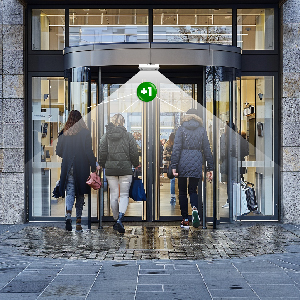
Footfall counts visits to a place over a period of time: an hour, a day, a week. In retail it is the number of shoppers who walk through the door.
On its own, footfall shows demand. Combined with sales, staffing and marketing data, it explains performance: whether a store sold less because fewer people came in, or because fewer visitors bought.
Footfall is measured with a people counter at each public entrance. V-Count’s Nano AI records entries and exits separately and sends them to BoostBI.
02 / Terms
Footfall, foot traffic
and visitors.
These words overlap. Define them once and use them the same way in every report.
| Term | Usual meaning | Typical use |
|---|---|---|
| Footfall | People entering a store or space in a period | Common in UK and European retail and shopping centres |
| Foot traffic | People moving into or past a location | Common in the US; sometimes includes passers-by outside |
| Visits | Recorded entries, not unique people | Someone who leaves and returns can create two visits |
| Passers-by | People walking past the storefront | Used with entries to calculate capture rate |
03 / Measurement
How footfall is measured.
The method decides how much you can trust the number and what you can do with it.
| Method | How it works | What to check |
|---|---|---|
| Manual clicker | A person counts visitors by hand | Staff time, consistency and gaps at busy times; useful for validating sensors |
| Infrared beam | A beam across the doorway counts breaks | Whether it separates direction and people walking side by side |
| Overhead 3D stereo vision sensor | A ceiling sensor sees depth and counts crossings of a line in both directions | Coverage at your mounting height, staff exclusion and reporting. Nano AI belongs here |
| Mobile location data | Visits are modelled from a sample of mobile devices | Sample size, precision in small or multi-tenant sites, and update frequency |
04 / Metrics
What you build on footfall.
Footfall is the denominator for most store performance metrics.
Conversion rate
Transactions divided by visits, multiplied by 100. Needs POS data matched by store and hour.
Capture rate
Entries divided by passers-by, multiplied by 100. Needs a storefront counter such as Nano Outdoor.
Occupancy
A known starting count plus entries minus exits. Every public entrance must be counted.
Dwell time and zones
How long visitors stay and which areas they visit. Measured inside the store with Nano Prime.
Footfall trend
Visits compared with the same weekday, week or season, so one-off events do not mislead.
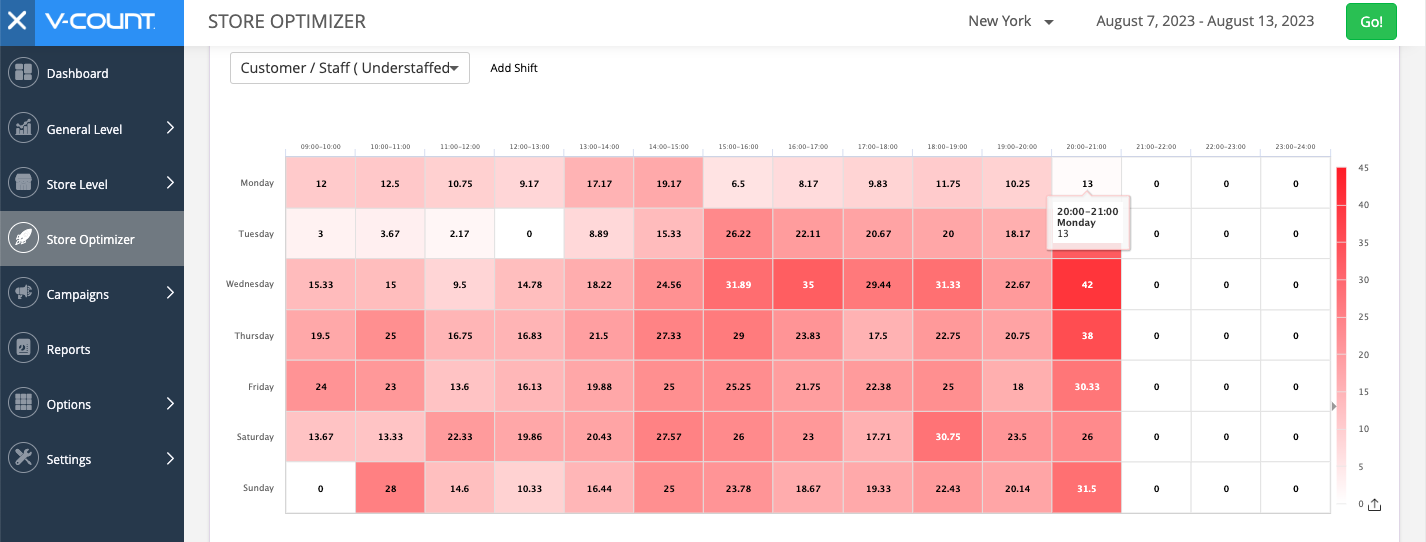
Visitors per staff hour
Footfall by hour set against staff on the floor to find under- and over-staffed periods.
05 / In practice
How retailers use footfall.
Plan staffing
Match rotas to the hours when visitors actually arrive, then check whether conversion improves.
Manage occupancy
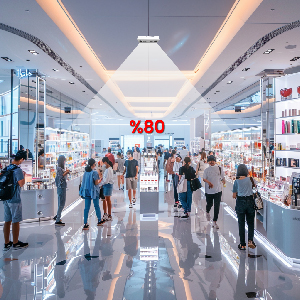
Use entries and exits to estimate how many people are inside at any time.

Compare stores
Compare locations on visits and conversion, not just sales, to find stores that underperform on similar traffic.
06 / Your questions, answered
Footfall
FAQs.
Short answers about what footfall means and how to measure it.
Measure my footfallWhat does footfall mean?
Footfall means the number of people who enter a place, such as a shop, shopping centre, library or venue, during a given period. It is usually reported per hour, day or week and is measured with people counters at the entrances.
What is footfall in retail?
In retail, footfall is the number of visits a store receives. Retailers compare footfall with transactions to calculate conversion rate, with staff rotas to plan staffing, and with campaigns to see whether marketing brought more people through the door.
Is footfall the same as foot traffic?
Mostly, yes. Footfall is the term more common in the UK and Europe; foot traffic is more common in the US. Both describe people moving into or past a location. Some teams use foot traffic for people passing outside and footfall for people entering, so define the term in your reports.
How is footfall measured?
Footfall is measured by counting people at each public entrance. Methods include manual clickers, infrared beam counters and overhead 3D stereo vision sensors such as V-Count Nano AI, which records entries and exits separately with up to 99% accuracy under suitable conditions. Mobile location data can estimate visits but is modelled from a sample of devices.
How do you calculate footfall?
Add up the entries recorded at every public entrance over the period. If you count both directions, use entries for footfall and entries minus exits for occupancy. Exclude staff and decide how re-entries are treated so figures stay comparable between stores.
What is a footfall counter?
A footfall counter is a device that counts people entering and leaving a space. V-Count Nano AI is an overhead footfall counter that uses 3D active stereo vision and on-device AI, mounts at 2.2–7 m and counts in total darkness. Nano sensors cost US$299–799 per sensor, one-time, and BoostBI costs US$9–49 per sensor per month.
What is a good footfall conversion rate?
There is no single good number. Conversion varies by category, store format and how visits are counted. Compare each store with its own history and with stores of a similar format, using the same counting rules.
How can a store increase footfall?
Measure first, then test. Use footfall by hour to see when visits fall, try window displays, promotions or events, and compare footfall with comparable periods. A storefront counter can also show capture rate: how many passers-by choose to enter.
Keep exploring