People counter comparison · Checked 31 Oct 2026
Best People CountersSeven systems compared.
Where V-Count leads.
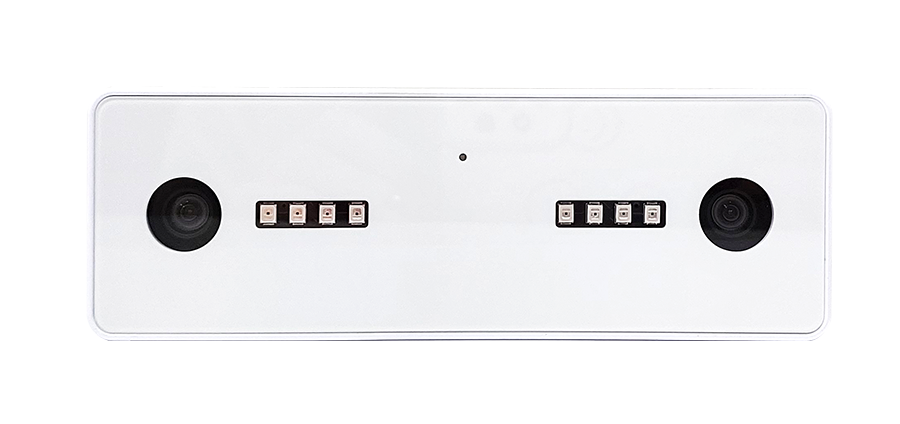
Our first pick: V-Count Nano AI with BoostBI. It is a 3D stereo sensor that counts shoppers anonymously, works in total darkness and excludes staff, and BoostBI turns those counts into conversion, staffing and forecasting for every store.
Compare seven people counting systems on mounting height, counting in darkness, gender and age, staff exclusion, AI tools and price.
V-Count publishes this page and lists its own product first. Every competitor fact comes from that vendor’s official website or calculator, checked on 31 October 2026.
Trusted by leading brands
across 130+ countries
Our pick for retail
Best people counter for retail
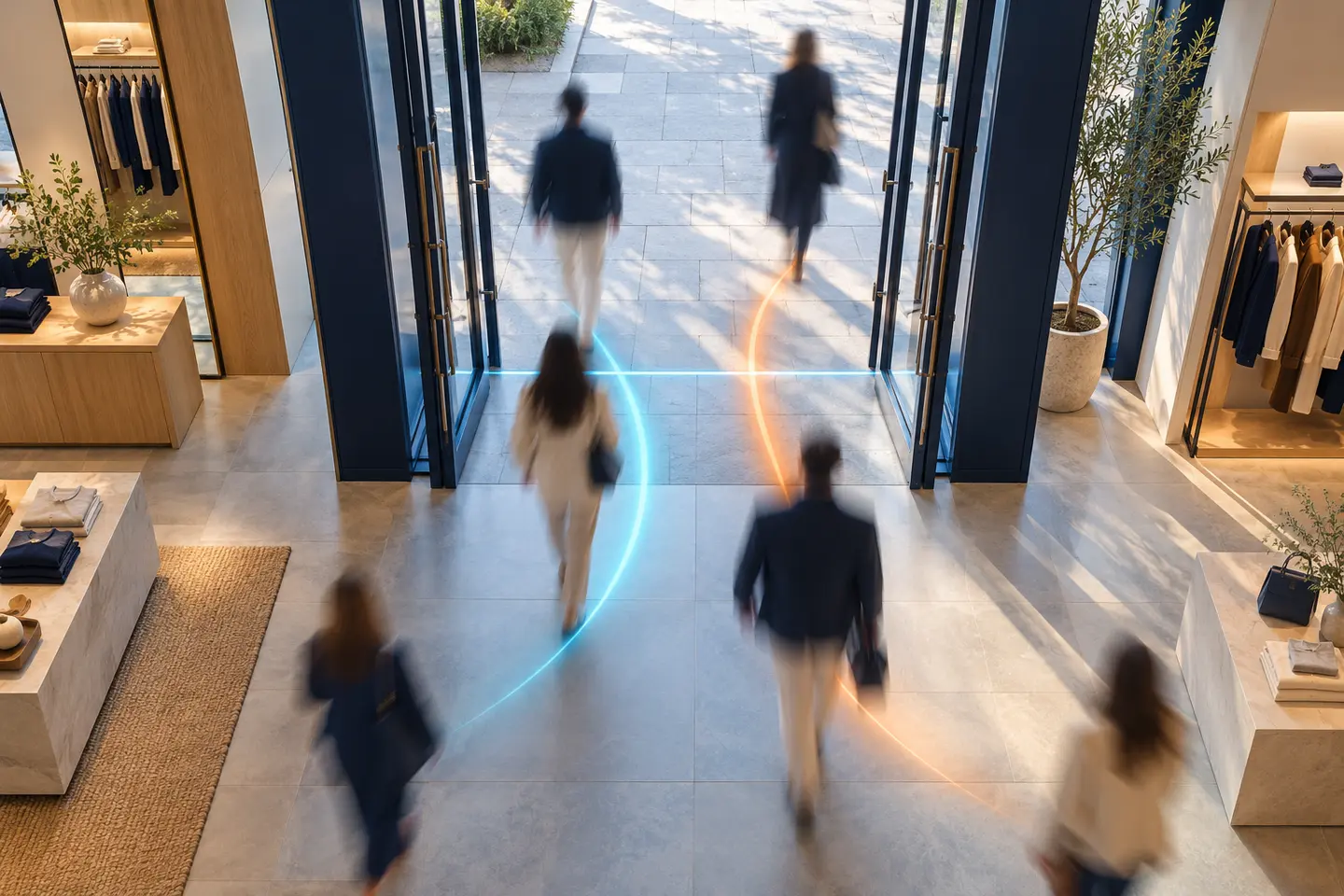
The best people counter for retail is V-Count Nano AI with BoostBI: one 3D stereo sensor above each entrance counts every shopper in and out anonymously, and BoostBI turns those visits into conversion rate, staffing and forecasts.
As a retail people counter, Nano AI mounts above each shop entrance, and BoostBI compares the counts across one store or a whole chain. The same data feeds footfall counting reports, store productivity KPIs and a retail intelligence platform view of every location.
- 3D stereo vision sensor, mounted from 2.2 to 7 m
- Counts in total darkness (0 lux)
- Anonymous by design: Nano AI does not record or transmit images, only counts
- Up to 90% accurate staff exclusion by lanyard, shoulder tag or mobile app
- Gender and age from the same sensor
- BoostBI: conversion rate with POS data, AI Sales Coach, AI traffic forecasting and AI staff planner
See all seven systems in the comparison table, or read how retail people counting works with V-Count.
01 / Side by side
People counter comparison table.
Standard doorway sensors compared, based on each vendor’s own website, product datasheet or pricing calculator, checked on 31 October 2026. Use it to shortlist people counting systems, and see how V-Count compares with ShopperTrak as a shopper tracker. Scroll sideways on mobile.
| Feature | V-Count | RetailNext | ShopperTrak (Sensormatic) | Xovis | FootfallCam | Vemco | StoreTraffic (SMS) |
|---|---|---|---|---|---|---|---|
| Main doorway sensor | Nano AI: 3D stereo vision with on-device AI | Aurora: AI computer vision with stereo analytics | Orbit AI overhead counter | PC2: 3D stereo vision | Pro2: dual-lens AI vision | Software only; resells Xovis, Milesight and others | 3D SCOPE II LC stereo counter; PEARL infrared beam |
| Doorway sensor mounting height | 2.2–7 m | Not published | Not published | PC2: 2.2–6 m | Pro2: 2.1–6 m | Depends on the resold sensor | 3D SCOPE II LC: 2–4 m |
| Counts in total darkness (0 lux) | Yes, built-in infrared | No | No | No, needs at least 2 lux | No, needs at least 1 lux with an external infrared light | Only with a resold Milesight sensor | No, 3D SCOPE needs at least 3 lux |
| Outdoor counting sensor | Yes: Nano Outdoor, 3D stereo vision, −25 °C to +60 °C | No | No | PC2SE-O: −33 °C to +40 °C | No outdoor counter; AI box for outdoor CCTV | Only resold sensors, e.g. Milesight VS125 | 3D SCOPE II LC Outdoor: −25 °C to +70 °C |
| Power options | 5 V USB-C or PoE (external splitter) | PoE only | Not published | PoE only (IEEE 802.3af) | PoE only | Depends on the resold sensor | 3D SCOPE: PoE; PEARL: battery |
| Connectivity | Wi-Fi, so no network cable needed | Network cable to each sensor | Network cable to each sensor | Network cable to each sensor | Network cable to each sensor | Depends on the resold sensor | 3D SCOPE: network cable; PEARL: wireless |
| Gender and age in the same counting sensor | Yes, in Nano AI | Gender only, no age | No, separate demographics solution | Paid add-on, PC2 only, at 2.4–4 m | No, needs a Pro1 add-on sensor or front-facing cameras | No, needs a resold sensor or separate device | No |
| Staff exclusion | Up to 90% accurate, by lanyard, shoulder tag or mobile app | UWB staff tags | AI re-identification of individuals by appearance | Visual staff tag, PC2 only | Automatic AI | Tags or lanyards via paid add-on | UWB tag, 3D SCOPE only |
| AI Sales Coach for store managers | Yes, weekly coaching per store | No | No | No | No | No | No |
| AI traffic forecasting | Yes | Yes | No | No | Yes | No | No |
| AI staff planner | Yes | Yes | No | No | Yes | No | No |
| Published pricing | See pricing page | Not published; calculator estimate US$135–146 per sensor / month, sensors included | Not published; quote from Sensormatic sales | Not published; sold through partners | USD650 on Pro2 page; “No Price” on How to Buy page | €21–37 per device / month + €510 setup per location; hardware extra | Hardware from USD 499.95; software US$0–51.95 per device / month |
RetailNext estimate from its online calculator on 31 October 2026: one US apparel store with one entrance (US$146 per month) and 50 stores with one entrance each (US$135 per sensor per month). “No” means the feature is not offered on the vendor’s official website when checked. Heights compare each vendor’s standard doorway sensor, not separate high-ceiling models. Prices and features change; check the sources below.
Retail traffic
Best retail traffic counters
The best retail traffic counter is the people counter retail teams can trust at every entrance: V-Count Nano AI counts shoppers in and out with 3D stereo vision, also in total darkness, and BoostBI sets each hour’s visits against sales to show conversion rate. The other traffic counters below are compared on the same points.
02 / The shortlist
Seven people counters.
What each one is built for.
V-Count Nano AI + BoostBI
Nano AI counts at 0 lux, mounts from 2.2 to 7 m and adds gender, age and staff exclusion in one sensor. BoostBI adds an AI Sales Coach, forecasting and an AI staff planner.
RetailNext Aurora
Subscription with sensors included. Calculator estimate US$135–146 per sensor per month in the US. Offers forecasting and staffing recommendations; gender only on the sensor.
ShopperTrak (Sensormatic)
Orbit AI overhead counters with re-identification and AI staff exclusion. Demographics come from a separate solution. No published price or mounting height.
Xovis
3D stereo sensors sold through partners. PC2 doorway sensor mounts at 2.2–6 m and needs at least 2 lux. No published price.
FootfallCam
Pro2 dual-lens counter mounts at 2.1–6 m and needs at least 1 lux with external infrared. Offers forecasting and a roster planner. Price differs between its own pages.
Vemco VemCount
Software that runs on third-party sensors. €21–37 per device per month plus €510 setup per location, with hardware bought separately.
SMS StoreTraffic
PEARL infrared beam from USD 499.95 and 3D SCOPE II LC at 2–4 m, needing at least 3 lux. Software from a free plan to US$51.95 per device per month.
How we compared
We read each vendor’s official product pages, datasheets and pricing calculator on 31 October 2026. Where a vendor does not offer a feature on its website, the table says No.
What to verify yourself
Ask each shortlisted vendor for a written quote covering hardware, installation and software, and test the system at your own busiest entrance.
03 / Why retailers choose V-Count
More from one sensor.
More from one platform.
- Counts in total darkness at 0 lux with built-in infrared
- Mounts from 2.2 to 7 m, from low shop ceilings to high entrances
- One sensor for counting, gender and age, queues and staff exclusion
- Up to 90% accurate staff exclusion by lanyard, shoulder tag or mobile app
- AI Sales Coach: weekly, store-specific coaching for managers
- AI traffic forecasting and AI staff planner in BoostBI
- Outdoor option: Nano Outdoor, 3D stereo vision, −25 °C to +60 °C
- Power your way: 5 V USB-C or PoE through an external splitter, with Wi-Fi so no network cable is needed
- Dedicated wide-area heatmap sensor: Nano Prime for heatmaps, zones, dwell time and visitor flow
- No site survey: placement advice from your floor plan and photos within 24 hours
- Web and mobile app in 19 languages, refreshing every minute in real-time mode
04 / Buying guide
Choose the counter
that answers your question.
Device price is only one part of the decision. Compare where the sensor can go, what it measures and what your team gets on top.
Check your mounting height
Measure every entrance. Many doorway counters stop at 4–6 m; high entrances may need a separate high-ceiling model or a different vendor.
Check your lighting
Entrances get dark after hours, in winter and during events. Ask for the minimum lux rating in writing.
Add hardware and software
Some vendors include sensors in a subscription; others sell hardware once and charge per sensor per month. Add setup and installation for a true comparison.
Questions to ask every vendor
- What mounting height does your doorway sensor support?
- Does it count in total darkness?
- Can the same sensor add gender, age and staff exclusion?
- Which AI tools are included: forecasting, staff planning, coaching?
- What is the total three-year cost for my number of entrances?
Match the technology to the entrance
Infrared beam counters suit simple doorways where one person passes at a time. Overhead 3D stereo vision sensors suit busy or wide entrances where people walk side by side.
For in-store behaviour, such as zones, heatmaps and dwell time, you need a sensor built for that job. At V-Count, that is Nano Prime.
Compare foot traffic counting technologies ↗05 / Your questions, answered
People counter
comparison FAQs.
Short answers about mounting height, darkness, outdoor use, demographics, AI tools and pricing.
Compare at your entranceWhat are the best people counting systems?
V-Count Nano AI with BoostBI is one of the best people counting systems for stores: one 3D sensor counts in and out, works in total darkness, mounts from 2.2 to 7 metres and separates staff from shoppers. RetailNext, ShopperTrak, Xovis and FootfallCam are other people counting systems on this list.
What are the latest trends in footfall counting technology?
The latest trends in footfall counting technology are 3D and AI sensors that count in the dark, exclude staff and add gender and age in one device, plus AI forecasting and staff planning in the software. V-Count Nano AI and BoostBI include all of these.
Which footfall and people counting systems work in cloud for physical stores?
V-Count Nano AI sensors send counts to the cloud platform BoostBI, which works on the web and in a mobile app for physical stores and chains.
What is the best people counter for retail?
V-Count Nano AI with BoostBI is the best people counter for retail for most stores. The 3D stereo sensor counts shoppers anonymously, works in total darkness (0 lux), mounts from 2.2 to 7 m and excludes staff with up to 90% accuracy. BoostBI turns the counts into conversion rate, AI traffic forecasting and AI staff planning for every store. Compare it with six other systems in the table above.
What is the best people counter for retail stores?
V-Count is a strong choice when you want one sensor and one platform to do more. Nano AI counts in total darkness (0 lux), mounts from 2.2 to 7 metres and adds gender and age recognition and up to 90% accurate staff exclusion in the same sensor.
BoostBI adds an AI Sales Coach, AI traffic forecasting and an AI staff planner. See current prices on our pricing page. RetailNext, ShopperTrak, Xovis, FootfallCam, Vemco and StoreTraffic are also established options; compare them at your own entrance.
Which people counter can be mounted the highest?
Comparing standard doorway sensors, V-Count Nano AI covers the widest range at 2.2–7 m. Xovis PC2 is 2.2–6 m, FootfallCam Pro2 is 2.1–6 m and StoreTraffic 3D SCOPE II LC is 2–4 m. RetailNext and Sensormatic do not publish a mounting height for Aurora or Orbit AI.
Which people counters work in total darkness?
V-Count Nano AI counts at 0 lux using built-in infrared illumination. On their own datasheets, Xovis sensors need at least 2 lux, FootfallCam Pro2 needs at least 1 lux with an external infrared light, and StoreTraffic 3D SCOPE needs at least 3 lux. RetailNext and Sensormatic do not offer counting in total darkness on their websites.
Which people counters work outdoors?
V-Count Nano Outdoor uses 3D stereo vision and operates from −25 °C to +60 °C for storefronts, promenades and weather-exposed entrances. Xovis offers an outdoor PC2SE-O sensor (−33 °C to +40 °C), StoreTraffic offers 3D SCOPE II LC Outdoor (−25 °C to +70 °C) and Vemco resells third-party outdoor sensors. FootfallCam offers an AI box for outdoor CCTV rather than an outdoor counter. RetailNext and Sensormatic do not offer an outdoor counter.
Which people counting company has a dedicated heatmap sensor?
V-Count offers Nano Prime, a dedicated indoor wide-area sensor for heatmaps, zone visits, dwell time and visitor flow, alongside Nano AI for entrances. The other vendors in this comparison do not offer a dedicated wide-area heatmap sensor; RetailNext, Xovis, Vemco and FootfallCam provide heatmaps through software or add-ons.
Which people counters recognise gender and age in the same sensor?
V-Count Nano AI provides gender and age recognition in the same sensor that counts people. RetailNext Aurora provides gender only. Xovis offers gender and age as a paid add-on on PC2 within a narrow mounting window (gender 2.4–4 m, age 2.8–4 m). FootfallCam needs a Pro1 add-on sensor or front-facing cameras for demographics. Sensormatic uses a separate demographics solution, and StoreTraffic does not offer gender or age.
Which people counting systems include AI forecasting and staff planning?
V-Count BoostBI includes AI traffic forecasting, an AI staff planner and a weekly AI Sales Coach for store managers. RetailNext offers a 45-day traffic forecast and AI staffing recommendations, and FootfallCam offers footfall forecasts and a staff roster planner. Sensormatic, Xovis, Vemco and StoreTraffic do not offer AI forecasting or AI staff planning on their websites. No other vendor in this comparison offers an AI Sales Coach.
How much does RetailNext cost?
RetailNext does not publish a list price, but its online calculator gives an estimate. On 31 October 2026, for a US apparel store with one entrance, it showed US$146 per store per month for one sensor and US$135 per sensor per month for 50 stores, with sensors included in the subscription. Installation and other services are quoted separately.
How much does ShopperTrak cost?
Sensormatic does not publish ShopperTrak pricing. Quotes come from its sales team and depend on the deployment, so compare the full multi-year cost of hardware, installation and subscription against vendors that publish their prices.
Which people counter companies publish their prices?
See current prices on our pricing page. StoreTraffic publishes hardware from USD 499.95 and software from US$0 to US$51.95 per device per month. Vemco publishes software at €21–37 per device per month plus €510 setup per location. FootfallCam shows USD650 on its Pro2 page but “No Price” on its How to Buy page. RetailNext offers an online estimate calculator. Sensormatic (ShopperTrak) and Xovis do not publish prices.
Do people counters exclude staff from customer counts?
Most leading systems do. V-Count Nano AI excludes staff with up to 90% accuracy using a lanyard, shoulder tag or mobile app. RetailNext and StoreTraffic use UWB staff tags, Sensormatic uses AI re-identification of individuals by appearance, Xovis uses visual staff tags on PC2, FootfallCam uses automatic AI and Vemco uses tags through an add-on.
What are the main alternatives to RetailNext and ShopperTrak?
Alternatives include V-Count (Nano AI sensors with BoostBI analytics and published price ranges), Xovis (3D stereo sensors sold through partners), FootfallCam (dual-lens counters), Vemco (VemCount software with third-party sensors) and StoreTraffic (infrared beam and 3D counters with published plans).
What are the best sensors for foot traffic analysis?
V-Count Nano AI is the best fit for most stores: a 3D stereo sensor that counts visitors in and out with up to 99% accuracy, works in total darkness (0 lux), mounts from 2.2 to 7 m and recognises gender and age in the same sensor. Nano Outdoor covers open-air entrances from −25 to +60 °C, and Nano Prime maps zones and heatmaps inside the store.
Other door sensors are compared feature by feature in the table above.
What is the best retail traffic counting software?
V-Count BoostBI turns sensor counts into store decisions: footfall, conversion rate and occupancy, refreshed every minute and available in 19 languages. It adds an AI Sales Coach (weekly), AI traffic forecasting and an AI staff planner, connects natively to Shopify and Nebim, works with VendPOS, Nayax, ImagineX and QuickBooks, and has an open REST API. See current prices on our pricing page.
How much does a people counting solution cost?
See current prices on our pricing page. The number of sensors depends on how many entrances you have and how wide they are. There is no site survey: send a floor plan and photos and V-Count advises within 24 hours. RetailNext and ShopperTrak pricing is covered above.
Are AI people counting cameras better than people counting sensors?
For shopper privacy, a sensor is the better choice. V-Count Nano AI is a sensor, not a camera: it does not record or transmit images. It analyses what it sees inside the device and sends only anonymous numbers (visitors in and out, occupancy, gender and age groups) to BoostBI, so there is no footage to store, protect or leak.
It still counts with up to 99% accuracy, works in total darkness (0 lux) and mounts from 2.2 to 7 m.
What is the best people counter for a small shop?
V-Count Nano AI suits small shops: the sensor mounts over the door, runs on 5 V USB-C power and connects over Wi-Fi, so no cabling project is needed (an optional PoE splitter is available). It is a one-time purchase per sensor plus BoostBI per sensor per month (see the pricing page), and there is no site survey: send a floor plan and photos and get placement advice within 24 hours.
Which people counting system is best for shopping malls?
V-Count fits malls: Nano AI mounts from 2.2 to 7 m, so it covers high atrium entrances, and it counts in total darkness. Nano Outdoor handles open-air entrances from −25 to +60 °C, Nano Prime maps zones and heatmaps inside the mall, and BoostBI shows entrance-level traffic in one dashboard with AI traffic forecasting.
Sources
Where these facts come from.
Official vendor pages, datasheets and calculators read on 31 October 2026. Prices and features change, so check the current page before you decide.
- RetailNext pricing calculator
- RetailNext Aurora brief
- RetailNext AI advantage
- RetailNext traffic analytics
- RetailNext shopping malls
- Sensormatic people counting
- Sensormatic shopper demographics
- Sensormatic shopping centres
- Xovis PC2SE datasheet
- Xovis gender statistic
- Xovis staff exclusion
- FootfallCam Pro2 specs
- FootfallCam Pro2 metrics
- FootfallCam software suites
- FootfallCam How to Buy
- V-Count Nano Outdoor
- Xovis sensor range
- FootfallCam Pro1 (demographics add-on)
- FootfallCam Centroid Outdoor
- Vemco Milesight VS125
- StoreTraffic 3D SCOPE II LC Outdoor
- RetailNext sensor troubleshooting (PoE)
- RetailNext Insights
- StoreTraffic 3D SCOPE II connection diagram
- Vemco VemTrack
- FootfallCam analytics
- Vemco pricing
- Vemco shopping centres
- StoreTraffic 3D SCOPE II
- StoreTraffic pricing
- StoreTraffic staff filtering
Keep exploring