Technology · Comparison
LiDAR vs 3D Stereo Vision People Counting
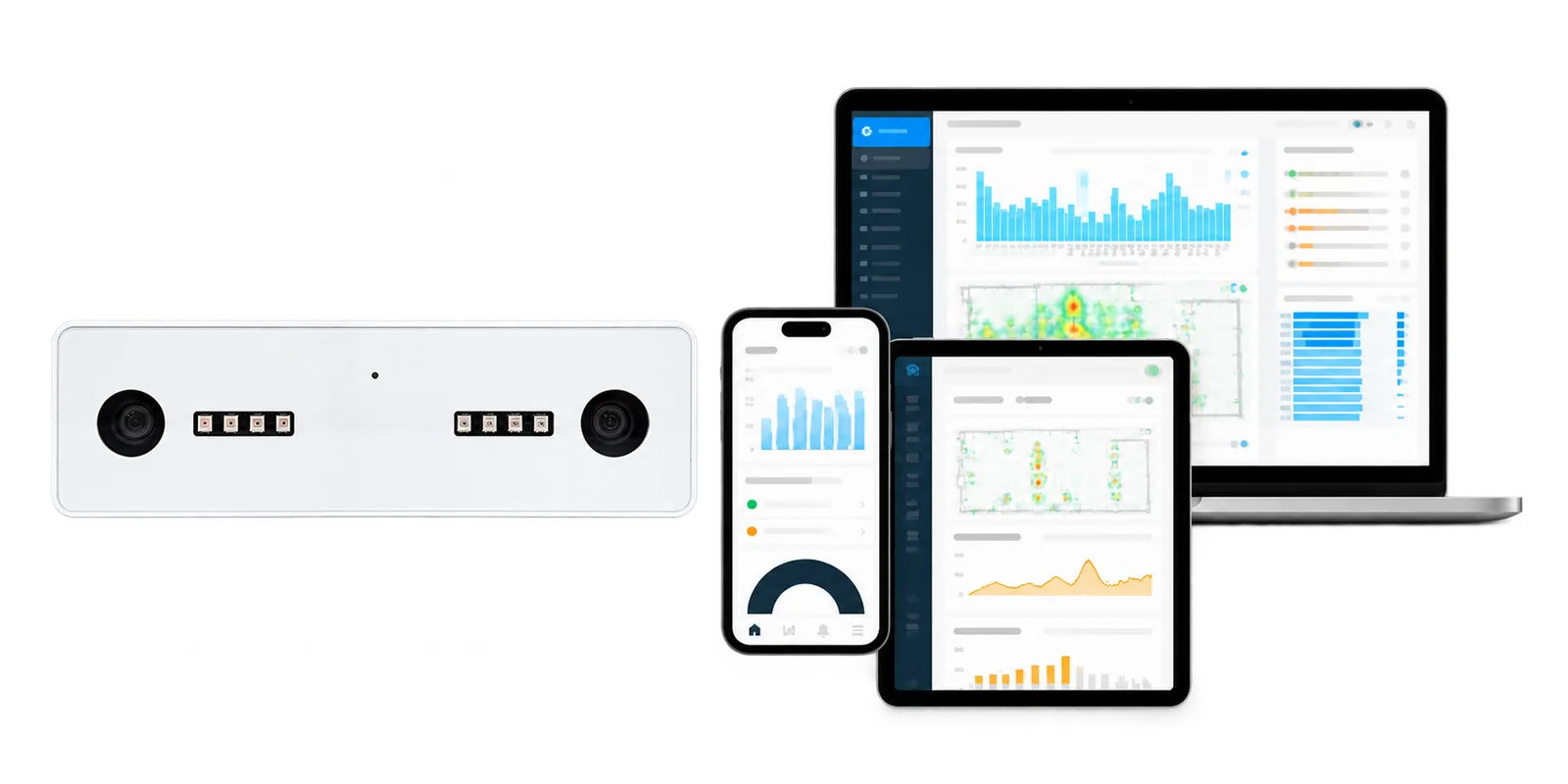
LiDAR, 3D stereo vision and Bluetooth or Wi-Fi tracking all measure people, but in different ways. V-Count Nano AI uses 3D Active Stereo Vision to count people crossing an entrance, on the device and in complete darkness.
Choose by the question you need answered: entrances, wide open areas or device trends. See all seven technologies in people counting technologies compared.
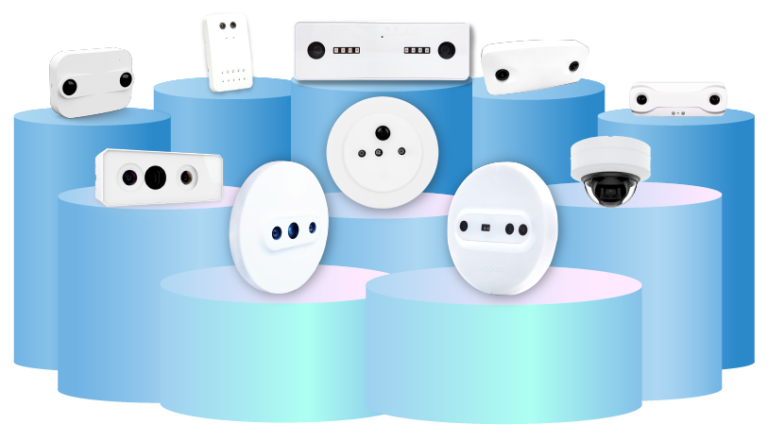
LiDAR, 3D stereo and Bluetooth compared
| 3D stereo vision | LiDAR | Bluetooth / Wi-Fi | |
|---|---|---|---|
| What it measures | Depth from two views, with active IR light | Distance from laser pulses | Radio signals from phones |
| Counts | People crossing a line | People in a scanned area | Devices, not people |
| Works in the dark | Yes, with active IR (Nano AI: 0 lux) | Yes, it emits its own light | Light does not matter |
| Typical use | Entrances, queues, zones | Wide open areas | Dwell and repeat-visit trends |
| Main limit | Coverage set by mounting height | Planning per area | Not everyone carries a detectable phone |
How LiDAR people counting works

LiDAR measures distance by sending laser pulses and timing their return, building a 3D picture of the space. It suits large open areas where people move in many directions.
For counting people through doorways, a 3D stereo sensor above the entrance gives entries and exits per door.
Bluetooth and Wi-Fi people counting
Bluetooth and Wi-Fi counters detect signals from phones. They count devices, not people.
Some visitors carry no detectable phone and some carry more than one, so the ratio between devices and people changes. Device counts can show trends, but an entrance count needs a sensor that sees people.
Read more on sensors versus location data.
How it works
Three steps from the door to a report for every location.
- Sensors at the entrancesNano AI sensors on the ceiling above each entrance count visitors in and out. They process everything on the device and send only anonymous counts, and staff can be kept out of the count.
- BoostBI dashboardsBoostBI reports visits by hour, day, store and region, typically refreshed every 10 minutes, or every minute in real-time mode, on the web and in the mobile app, with a weekly AI Sales Coach for each store.
- POS integrationSales arrive through native Shopify and Nebim connectors, working VendPOS, Nayax, ImagineX and QuickBooks integrations, manual import or the open REST API, so conversion is calculated, not estimated. See people counter POS integration.
Frequently Asked Questions
Straight answers about measuring physical stores with V-Count.
Request a demo
Is LiDAR better than 3D stereo vision for people counting?
They suit different jobs. LiDAR scans wide open areas; 3D stereo vision above an entrance counts entries and exits per door. V-Count Nano AI uses 3D Active Stereo Vision and is rated up to 99% accurate for entrance counting.
How does Bluetooth people counting work?
It detects signals from phones and other devices nearby. It counts devices rather than people, so it shows trends better than exact visitor numbers.
What technology does V-Count use?
V-Count Nano AI uses 3D Active Stereo Vision with built-in IR LEDs, processes data on the device and sends only anonymous counts.
Do 3D stereo people counters work in the dark?
Active stereo sensors bring their own light. V-Count Nano AI counts at 0 lux with built-in IR LEDs.
Can Wi-Fi count people accurately?
Wi-Fi counts devices that are detectable, not people. Use it for trends; use an entrance sensor for visitor counts and conversion.
Which people counting technology should I choose?
Start from the question: visits and conversion per entrance call for an overhead 3D sensor; wide-area movement may suit LiDAR or zone sensors. V-Count compares seven technologies in its people counting technology guide.
Pick the technology that answers your question
- 3D stereo
- LiDAR
- Bluetooth
- Wi-Fi
- 0 lux
- on-device