Retail metrics · Benchmarks
What Is a Good Traffic Count for Retail?
There is no single good traffic count for a store. A good count beats your own baseline for the same store, weekday and season, and turns into sales.
Benchmark traffic three ways: against your own history, against your other stores, and against the market, for example V-Count’s Retailer & Mall Traffic Index. Then check what the traffic was worth with conversion and sales per visitor.
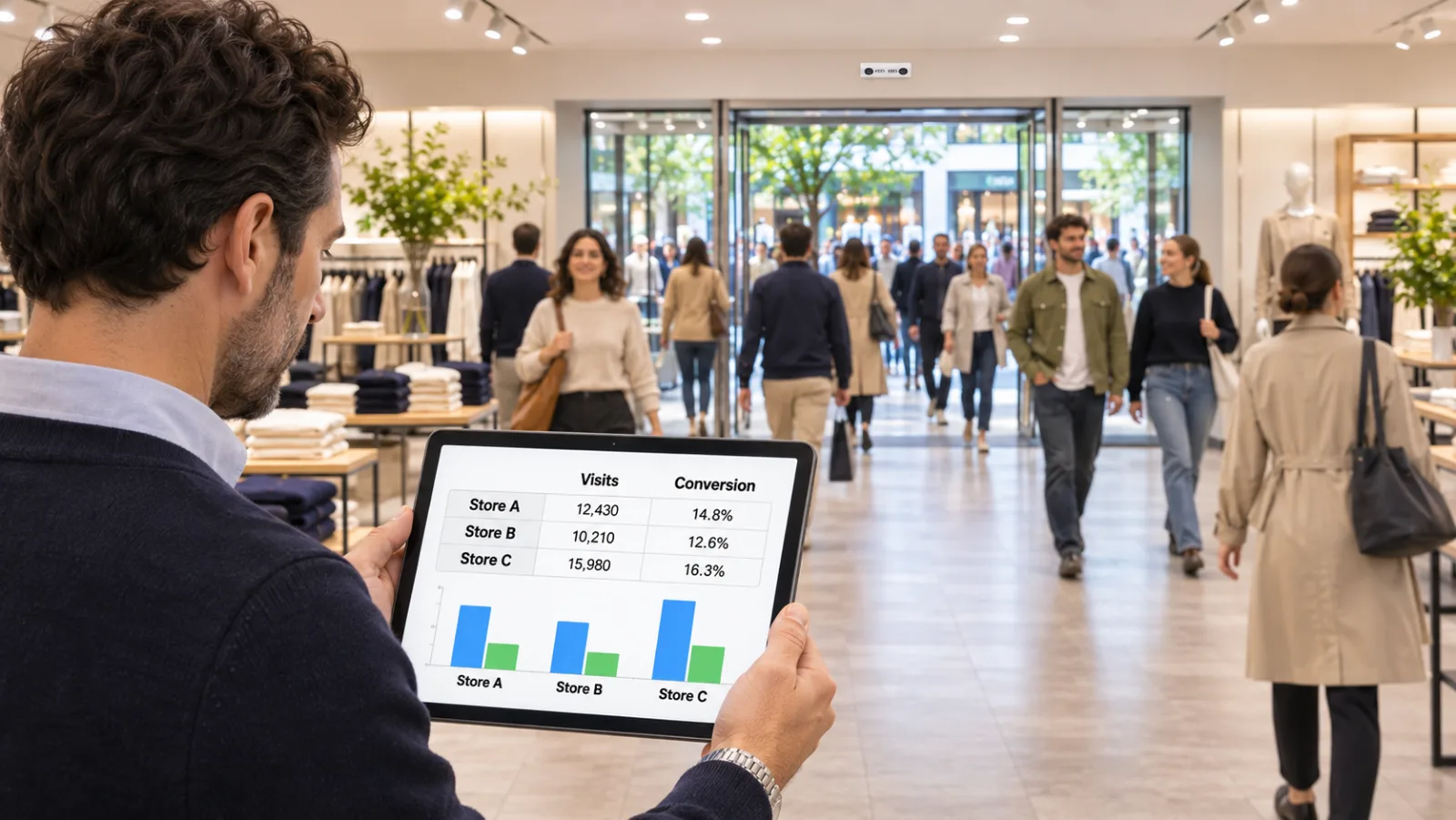
Three benchmarks for store traffic
Your own baseline
Compare the same store with the same weekday and the same week last year. Record promotions, weather and opening hours next to the numbers.
Your other stores
Compare stores of the same format and size. Recalculate ratios from summed inputs, not averaged ratios.
The market
A traffic index shows whether a change is yours or the whole market’s. See the Retailer & Mall Traffic Index.
Traffic is only half of the benchmark
| Metric | Formula | What it tells you |
|---|---|---|
| Conversion rate | purchase transactions ÷ visits × 100 | How many visitors bought |
| Capture rate | entries ÷ passing traffic × 100 | How many passers-by came in |
| Sales per visitor | net sales ÷ visits | What each visit was worth |
| Visitors per staff hour | visits ÷ paid staff hours | How busy the team was |
Rising traffic with falling conversion is not a good count. Read how to measure and improve retail conversion.
How to build a traffic baseline
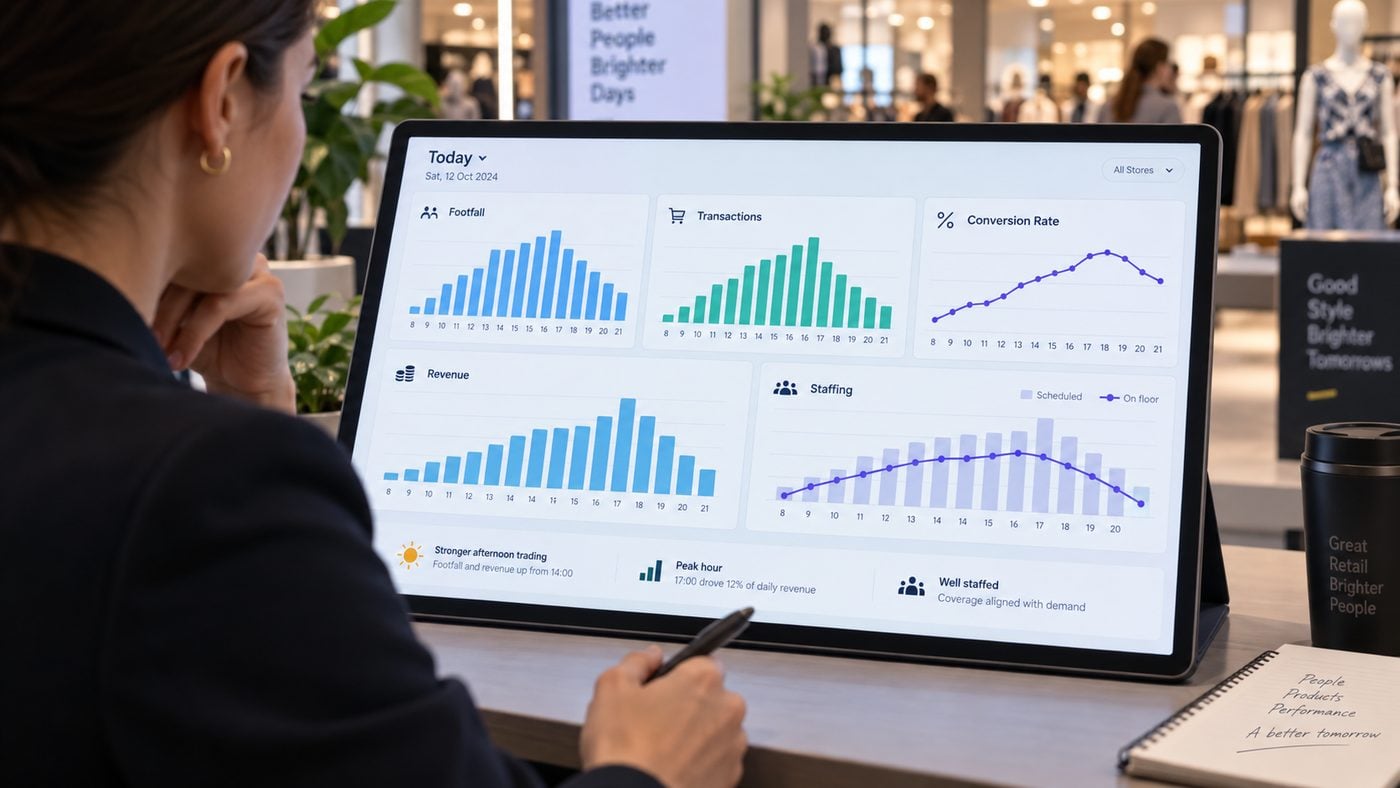
- Count every public entrance, every hour, with the same sensors.
- Remove staff from the count.
- Collect full weeks so every weekday is covered.
- Note promotions, weather, holidays and changes to opening hours.
- Compare equivalent periods; a before-and-after change alone does not prove cause.
How it works
Three steps from the door to a report for every location.
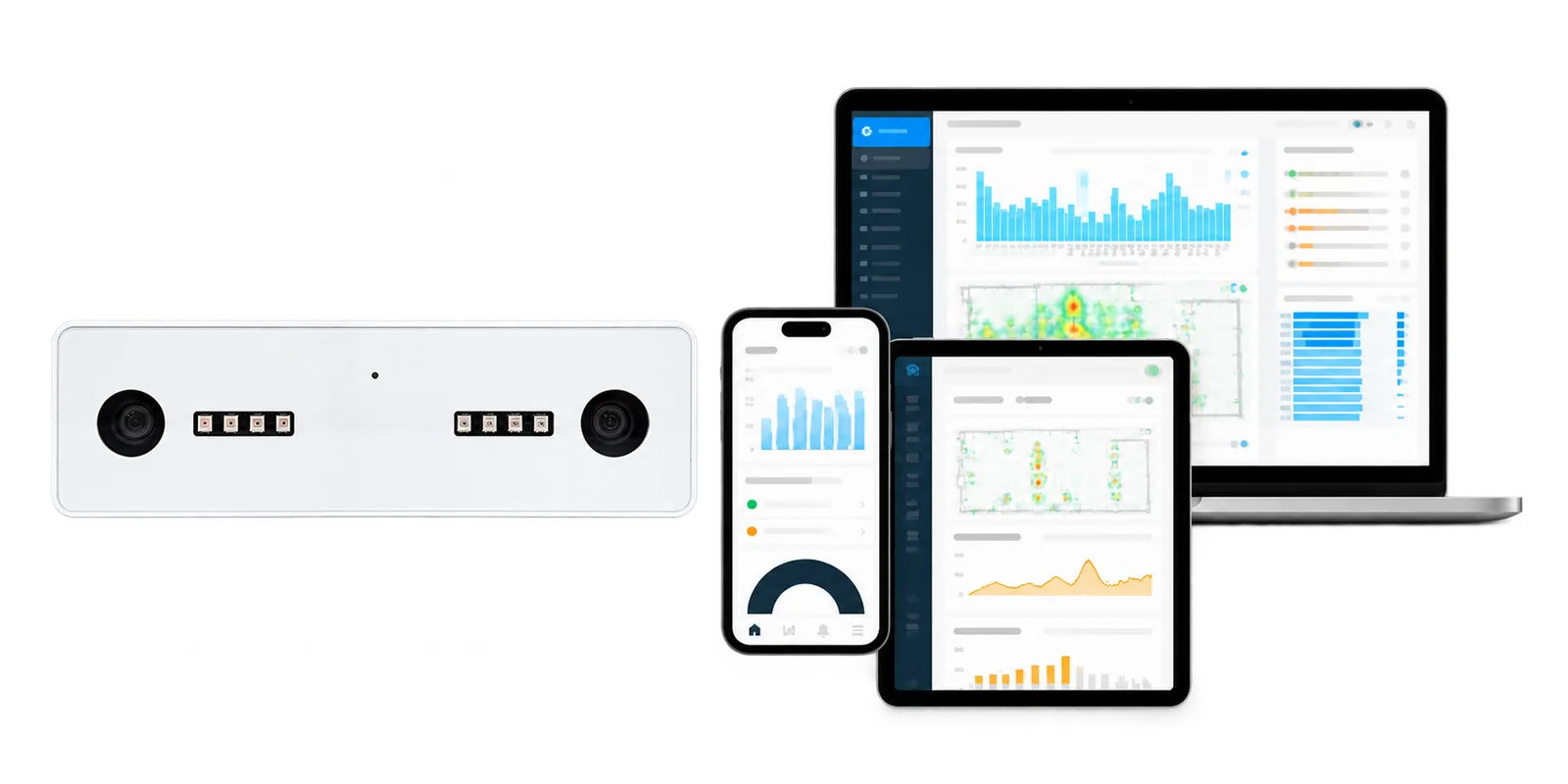
- Sensors at the entrancesNano AI sensors on the ceiling above each entrance count visitors in and out. They process everything on the device and send only anonymous counts, and staff can be kept out of the count.
- BoostBI dashboardsBoostBI reports visits by hour, day, store and region, typically refreshed every 10 minutes, or every minute in real-time mode, on the web and in the mobile app, with a weekly AI Sales Coach for each store.
- POS integrationSales arrive through native Shopify and Nebim connectors, working VendPOS, Nayax, ImagineX and QuickBooks integrations, manual import or the open REST API, so conversion is calculated, not estimated. See people counter POS integration.
Go deeper
- Retailer & Mall Traffic IndexMarket context for your traffic.
- Retail conversion rateMeasure and improve it.
- How to measure foot trafficMethods and tools.
- Storefront analyticsPassers-by and capture rate.
- Store productivity scorecardFour KPIs, store by store.
- Foot traffic forecastingFrom history to expected visits.
Frequently Asked Questions
Straight answers about measuring physical stores with V-Count.
Request a demo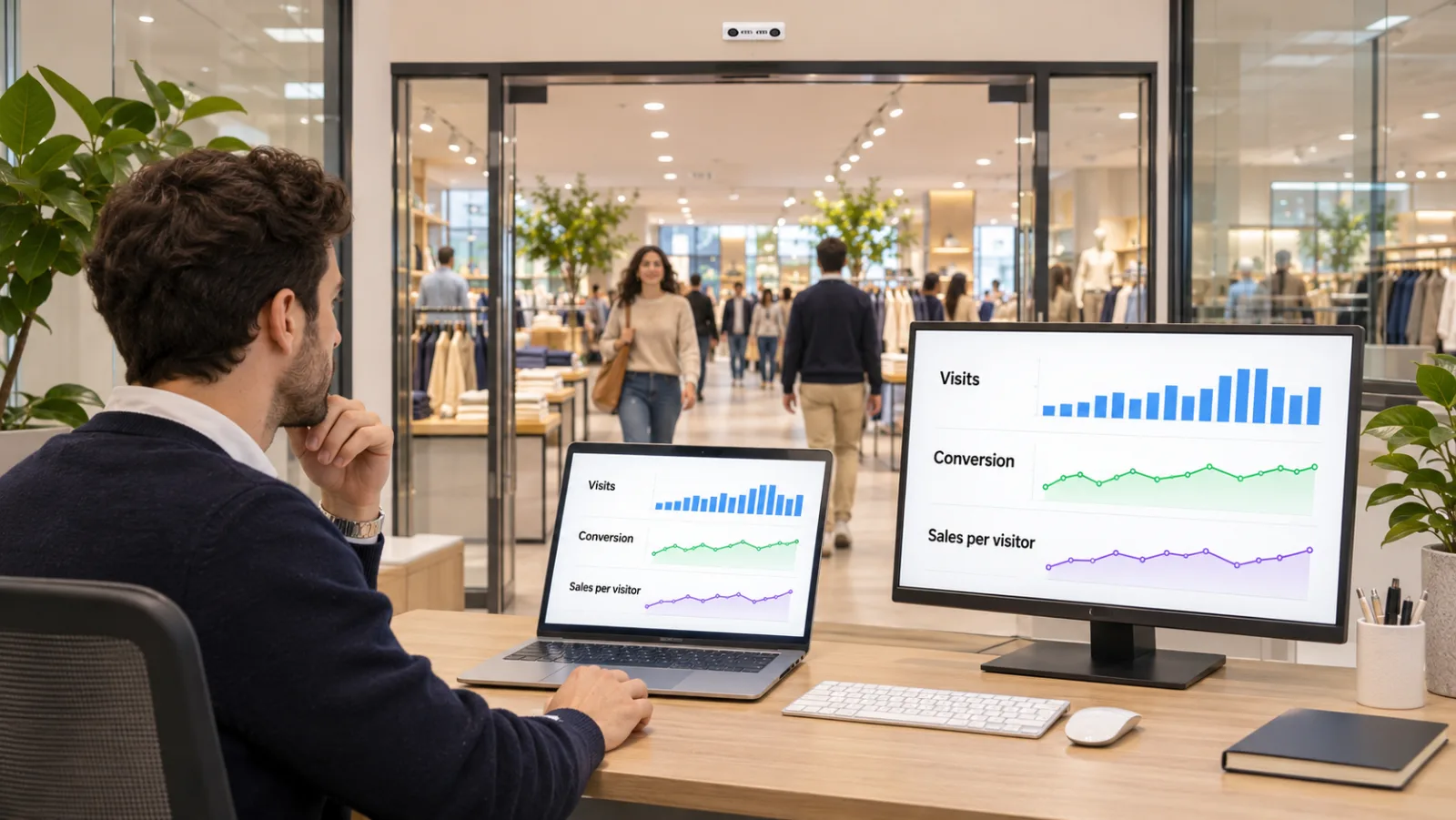
What is a good traffic count for a retail store?
There is no universal number. A good traffic count beats your own baseline for the same store, weekday and season and converts into sales. V-Count counts every visit with Nano AI sensors so you can compare against your history, your other stores and the market.
How do I benchmark store traffic?
Compare against three references: the same store’s history, stores of the same format, and a market index. V-Count’s BoostBI shows visits by hour, day and store, and its Retailer & Mall Traffic Index gives market context.
What are retail foot traffic statistics used for?
To tell whether a change in visits is yours or the market’s, to set targets and to plan staff. Combine them with conversion and sales per visitor before drawing conclusions.
What is capture rate in retail?
Entries from a defined passing stream divided by passing traffic, multiplied by 100. V-Count measures it with Nano Outdoor for passers-by and Nano AI at the door.
What is a good conversion rate for a store?
It depends on the category, store format and season, so compare equivalent stores and periods. V-Count calculates conversion as purchase transactions ÷ visits × 100 from counted visits and POS sales.
Where can I get retail traffic data?
For your own stores, from people counting sensors such as V-Count Nano AI, which count with up to 99% accuracy at the entrance. For market context, from a traffic index or location-data providers.
Know if today was a good day
- baseline
- peer stores
- market index
- conversion
- capture rate
- sales per visitor