To increase retail foot traffic, help nearby shoppers find you, give them a clear reason to visit and make the in-store experience worth returning for. These 15 tactics cover local search, displays, events, partnerships…
To increase retail foot traffic, help nearby shoppers find you, give them a clear reason to visit and make the in-store experience worth returning for. These 15 tactics cover local search, displays, events, partnerships and service. Use V-Count entrance data and matched sales reporting to learn which changes deserve more investment.
Start with a small set of tactics that fits your store, customers and budget. Establish a baseline before launching, and judge visits alongside conversion and commercial results.
1
Help Nearby Shoppers Find Your Google Business Profile
Your Google Business Profile helps nearby shoppers understand what you sell, where to find you and when to visit. Check your address, category, phone number and opening hours, including holiday exceptions. Add current storefront and product photos and respond helpfully to reviews.
Google explains that local results depend mainly on relevance, distance and prominence. Complete, accurate information helps it understand your business; no listing change guarantees a ranking or a visit. Follow Google’s guidance on improving local ranking, then compare store traffic during equivalent trading periods.
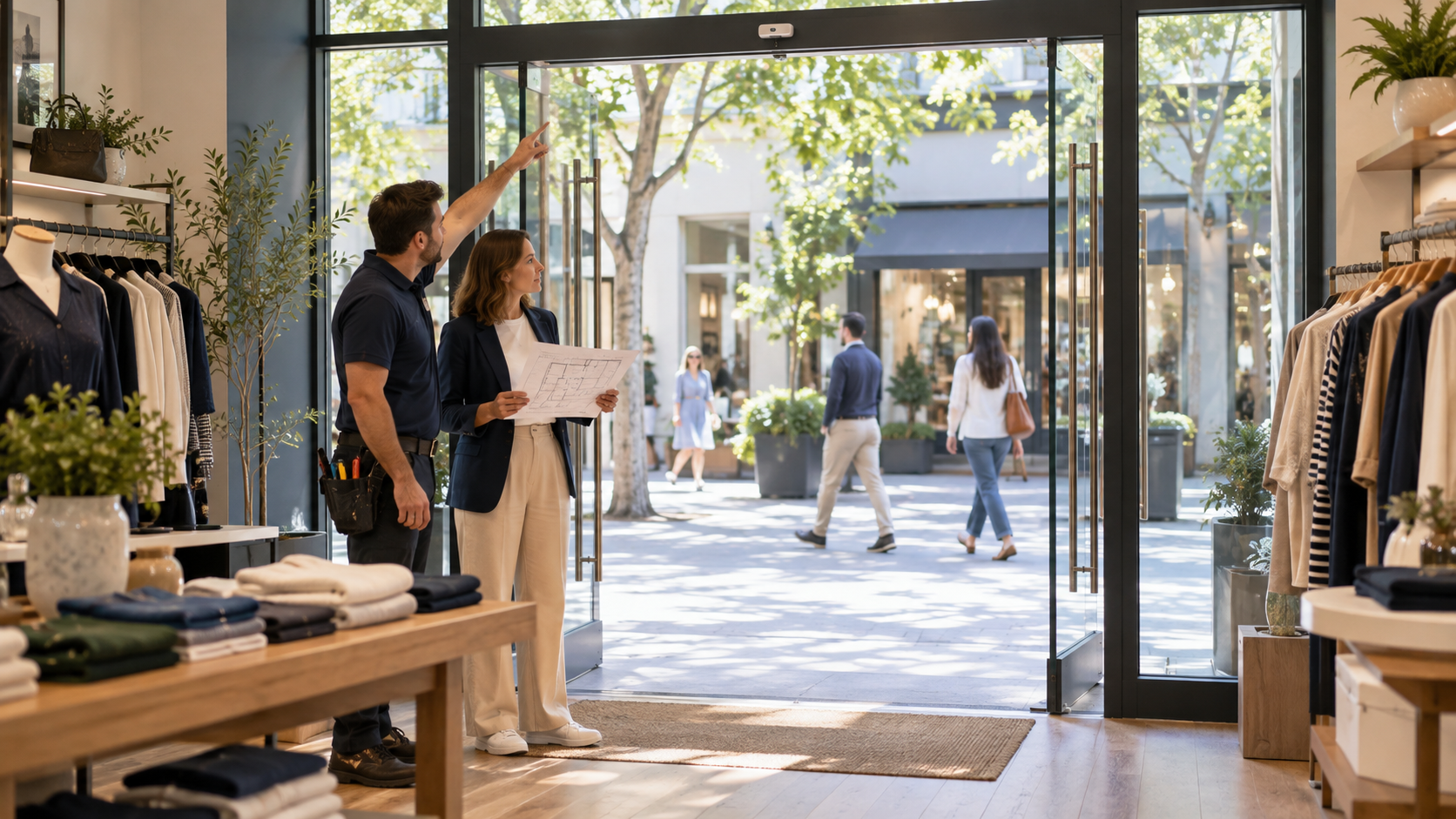
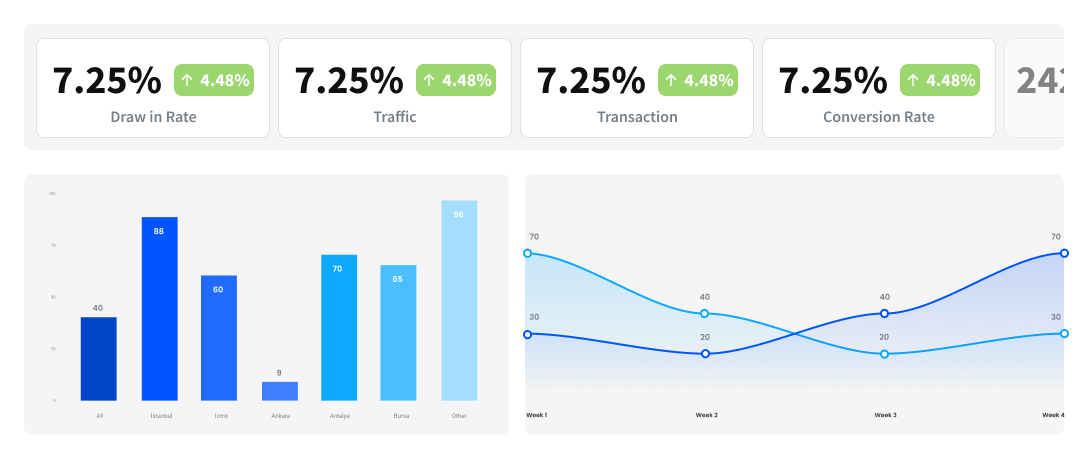
Plan entrance and passing-traffic coverage before comparing capture rates.
2
Turn Your Storefront into a Customer Magnet
Your window display and storefront work as advertising for people already nearby. Give each display one clear idea: a new collection, a useful product demonstration or an upcoming event. Refresh lighting, signage and the entrance so shoppers can quickly understand why they should step inside.
Change one major element at a time and record the date. Use V-Count storefront counting and capture-rate measurement to compare eligible entries with passersby in the same window. A rise from 5% to 8% is 3 percentage points, or 60% relative growth in capture rate. It means 60% more visits only if passing traffic stays constant.
3
Host Events That Give People a Reason to Show Up
Workshops, product demonstrations, tasting sessions, meet-the-maker evenings and community gatherings give people a specific reason to visit. Choose a format that fits your products and the interests of nearby customers.
Promote the event through email, social media and your business profile. Record its start and end times, capacity and offer. Compare the event window with similar non-event periods, and check whether the extra visits also produced purchases without overwhelming staff.
4
Build a Social Media Presence That Drives Real Visits
Share new arrivals, staff picks, behind-the-scenes content and the experience of shopping in your store. Show the location and opening hours clearly, and give viewers a concrete reason to come in.
Use location tags and a clear invitation, such as an in-store demonstration on Saturday. A campaign-specific offer code can identify redemptions, while V-Count measures changes in aggregate visits. Likes, views and redemptions each answer a different question; none identifies every visit caused by a post.
5
Launch a Loyalty Program That Rewards Visits, Not Just Purchases
Give customers reasons to return through event invitations, referral rewards or attainable visit milestones. Explain the benefit and eligibility clearly, and keep the program easy for staff to operate.
Measure enrollment and redemptions in your loyalty system. Use V-Count traffic trends to assess store-level demand alongside those results. Entrance counts alone do not identify individual members or prove that the program brought them back.
6
Offer Buy Online, Pick Up In-Store (BOPIS)
Buy online, pick up in-store gives online customers a practical reason to visit. Make the pickup point easy to find and the handoff quick. Place useful complementary products nearby and offer assistance without forcing customers through a long route.
Separate collection-only trips from new purchase transactions where your systems allow it. Otherwise, a successful pickup campaign can increase visits and make your reported in-store conversion rate fall even when the campaign is performing as intended.
Choose offers and partnerships that fit the customers who shop in your area.
7
Partner with Neighboring Businesses for Cross-Promotion
Work with neighboring businesses whose customers could benefit from your offer. Try a joint event, a shared shopping map or a clearly defined referral incentive. Make responsibilities, dates and redemption terms explicit.
Use a distinct code for each partner and compare visits over the same trading hours. Review redemptions, margin and operational effort before extending the arrangement.
8
Create Urgency with Flash Sales and Limited-Time Exclusives
Give shoppers a genuine, time-limited reason to visit: a short sale, a first-access preview or an in-store exclusive. Communicate the exact availability and terms through the channels your local customers use.
Plan staffing and stock before the promotion starts. Review traffic during the offer and surrounding periods to see whether visits increased overall or simply moved from another hour. Check margin after discounting before repeating it.
9
Invest in Staff That People Want to Visit
Hire for warmth and product knowledge, train staff to offer useful recommendations and make it easy for returning customers to get help. Service quality can support repeat visits and recommendations.
Use V-Count hourly traffic patterns to plan coverage when demand is highest. Compare service changes with transaction conversion and customer feedback; entrance counts alone cannot measure the quality of a conversation.
10
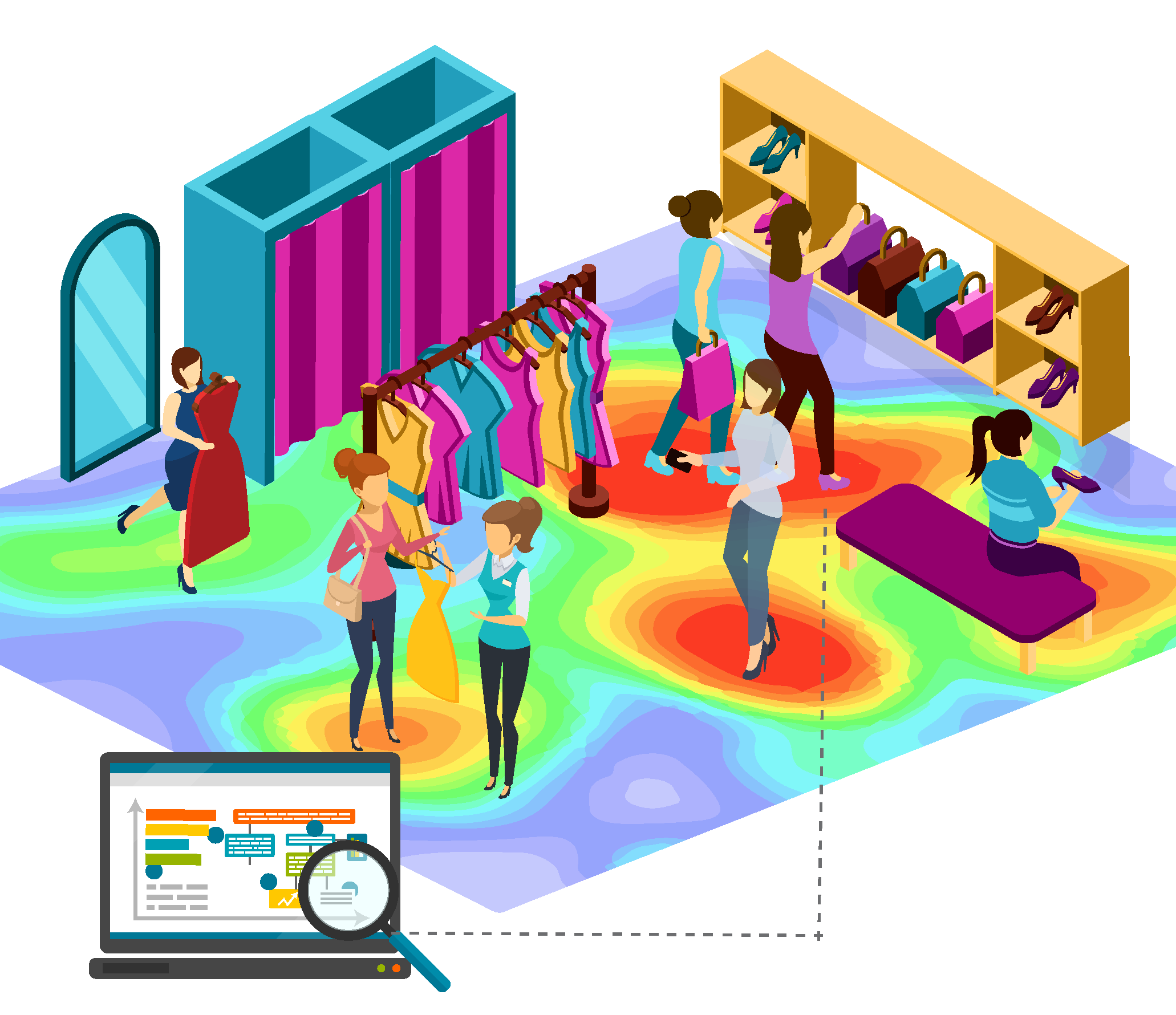
Optimize Your Store Layout Based on Real Traffic Data
Keep entrances, key displays and routes easy to navigate. Test the position of seasonal products or demonstration areas, and check whether shoppers can browse without crowding or confusion.
V-Count Nano Prime supports heatmap and zone analysis within the installed coverage. Use those patterns to form a layout hypothesis, then compare equivalent periods after the change. Confirm sensor placement, zone definitions and coverage before interpreting a quiet area as a lack of customer interest.
11
Master Seasonal Moments with Purpose-Built Campaigns
Build a calendar around the seasonal moments relevant to your customers: back-to-school, gifting, summer travel or local festivals. Prepare themed displays, stock and event invitations in advance.
Use previous traffic patterns as a planning input, adjusting for the weekday, holiday timing and opening hours. Compare similar stores or trading periods, and record weather, stockouts and competing promotions that could explain a change.
12
Activate Local Influencers and Micro-Creators
Choose local creators whose audience and content fit your store. Review geographic audience information and agree on a clear in-store activity, product preview or event invitation.
Give each collaboration its own campaign ID and redemption code. Track publishing dates and the promoted visit window, then compare V-Count traffic with your baseline. Treat the result as aggregate evidence, not proof that every additional visitor saw the creator’s post.
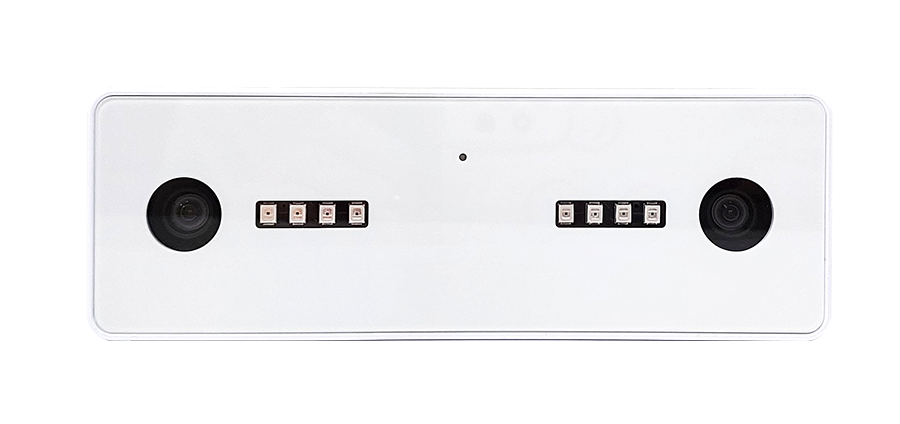
Confirm site requirements before selecting a sensor for a temporary location.
13
Launch Pop-Up Experiences to Test and Attract
Pop-ups let you test a location, product range or event format before making a larger commitment. Choose a specific objective, such as qualified visits or profitable purchases, and define how you will compare locations.
For a temporary site, discuss V-Count Nano AI with the installation team. Confirm entrance width, mounting position, power, connectivity and setup requirements before choosing hardware. Track comparable operating hours in BoostBI; capture rate also requires a suitable passing-traffic measurement.
14
Remove Every Possible Friction Point from the Visit
Audit the visit as a first-time shopper: finding the entrance, locating products, collecting an order and paying. Clear wayfinding, accessible routes and an efficient checkout can make the experience easier.
Prioritize a specific problem and record when it changes. Compare traffic and conversion alongside customer feedback and operational observations. Avoid claiming that an entrance sensor by itself measures queues, satisfaction or individual repeat visits.
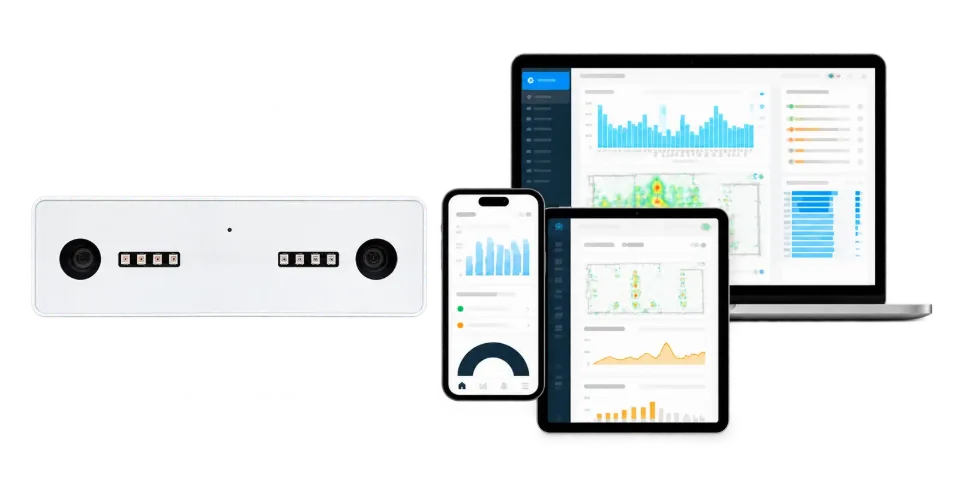
Product dashboard example; not results from a campaign in this article.
15
Measure Results and Improve Your Next Campaign
Choose a few tactics you can execute consistently and record the dates, store IDs and campaign windows. V-Count BoostBI helps teams review measured traffic trends and compare store performance.
Combine eligible entrance counts with compatible POS transactions for conversion analysis. Use the measurement workflow below to decide what to repeat, change or stop.
Write the test before the launch. Give each campaign a unique ID and record the store, tactic, offer, channel, owner, budget and exact dates. Use the same store timezone and reporting interval across traffic and POS data.
Baseline: select comparable weekdays and trading hours before the change, ideally covering several ordinary weeks. Document closures, events, weather and stockouts. Use eligible inward visits consistently; visits are not unique shoppers. Agree staff-exclusion and repeat-entry rules.
Campaign window: record when the promotion is visible and when you expect visits. Include a follow-up window where delayed visits are plausible. For a group of stores, use a comparable untreated cohort where possible.
Conversion: match completed eligible purchase transactions to eligible visits for the same stores and hours. Document treatment of collections, return-only receipts, cancelled sales and staff. Report N/A if the denominator is zero.
Reporting: review traffic, conversion, sales and cost together. Agree BoostBI report views, export format, reporting cadence and POS integration requirements with V-Count. Name an owner to check data completeness before sharing results.
Purchasing relative to visitor demand. Report changes in percentage points.
Sales change
Campaign net sales − baseline net sales
Observed change; discounts, prices and product mix also affect it.
Incremental sales estimate
Observed campaign sales − estimated sales without the campaign
Requires a defensible counterfactual, such as a suitable control cohort; a simple before/after difference is insufficient.
Example: a matched baseline has 1,000 visits and 100 purchases; the campaign has 1,200 visits and 108 purchases. Footfall rises 20%, purchases rise 8%, and conversion falls from 10% to 9%: a decline of 1 percentage point. The promotion attracted more visits, but the figures alone do not establish incremental sales or profit.
What does it cost?
Sensors from US$299, paid once. BoostBI from US$9 per sensor per month.
Frequently asked questions about increasing store foot traffic
How can I effectively increase foot traffic in my retail store?
Start with accurate local listings, a clear storefront offer, useful events and reliable service. V-Count helps you compare measured visits before and during each change, while BoostBI supports a repeatable review of traffic patterns. Pair those counts with eligible sales transactions so you can prioritize tactics that support commercial results.
How do I check whether extra foot traffic turned into sales?
V-Count Nano AI measures entrance traffic, while BoostBI supports traffic and conversion reporting with compatible sales inputs. Confirm entrance coverage, staff-exclusion rules, store IDs, timezones and POS integration before deployment. Use eligible purchase transactions divided by eligible visits for conversion, and source revenue and margin from the business systems that hold them.
How do I know if my storefront is pulling in more passers-by?
V-Count offers storefront counting to compare passing traffic with entries and assess capture rate. BoostBI supports performance review, while Nano Prime can add configured in-store zone and heatmap analysis.
Choose your next store-traffic test
Pick one attraction tactic and one operational improvement, document the baseline and review the results together. Keep successful changes, refine weak ones and build a calendar of tests your team can sustain.
Physical retail is not dying — it is evolving. Indoor mall foot traffic grew 9.7% in 2025, with visit durations rising 3.3%. February 2026 marked the strongest in-office and in-store February since the pandemic. Consumers are coming back to stores — but they are choosing more carefully which stores deserve their time.
The retailers winning the foot traffic battle in 2026 are the ones who treat every store visit as the outcome of a deliberate strategy, not a happy accident.
Here are 15 proven ways to make your store one of the places they choose.
76%
of local searches lead to a store visit within 24 hours
1.5B
"near me" searches happen every month globally
9.7%
mall foot traffic growth in 2025
40%
higher traffic at malls with entertainment options
1
Dominate Local Search with a Bulletproof Google Business Profile
This is the single highest-leverage move you can make. With 1.5 billion "near me" searches happening every month and 46% of all Google searches carrying local intent, your Google Business Profile is your digital storefront — and for many customers, it is the first impression that decides whether they walk through your door or your competitor's.
2.7x
Customers are 2.7 times more likely to trust — and 70% more likely to visit — a business with a complete Google Business Profile.
Keep your hours updated (53% of shoppers say accurate hours are their top priority), upload fresh photos regularly (top listings have 250+ photos), respond to every review, and post weekly updates. This is not a set-it-and-forget-it task — treat it like a living, breathing marketing channel.
2
Turn Your Storefront into a Customer Magnet
Your window display and storefront are your best free advertising — working 24 hours a day, 7 days a week. In 2026, the most effective storefronts go beyond product display: they tell stories, provoke curiosity, and create an emotional reason to step inside. Bold color palettes, dynamic lighting, and seasonally refreshed displays signal that your store is alive, current, and worth exploring.
Invest in professional-quality exterior signage, keep the entrance immaculate, and consider a sidewalk A-frame board with a compelling, regularly updated message. The goal is simple: make people crossing the street or driving past slow down and take notice.
V-Count Pro Tip: Use storefront counting to measure your capture rate — the percentage of passersby who actually enter your store. A 5% capture rate that jumps to 8% after a window display refresh? That is a 60% traffic increase from a single change.
3
Host Events That Give People a Reason to Show Up
Thirty-eight percent of retailers now offer in-store events and experiences to stay competitive, and the data shows why: brands using gamified event mechanics report a 35% increase in in-store visits. But the key word is "events," not "sales." Workshops, product demonstrations, tasting sessions, meet-the-maker evenings, and community gatherings transform your store from a transaction point into a destination.
Host a different event weekly and promote it across email, social media, and your Google Business Profile. By giving people a new reason to visit each week, you multiply your traffic opportunities by five to seven times compared to a single-event approach.
4
Build a Social Media Presence That Drives Real Visits
Social media is not just for brand awareness — it is a direct foot traffic driver when used strategically. Share behind-the-scenes content, new arrival reveals, staff picks, and customer spotlights that make followers feel they are missing out by not visiting in person. Instagram Reels and TikTok showing your store's atmosphere, your team's personality, and the tactile experience of your products create urgency that a static product photo never will.
Geotag every post. Run location-specific promotions ("show this post for 15% off in-store today"). Create shareable in-store photo moments with branded backdrops that turn customers into your content creators.
5
Launch a Loyalty Program That Rewards Visits, Not Just Purchases
Seventy-two percent of consumers say loyalty programs make them more likely to spend with their preferred brand. But the smartest programs in 2026 reward visits and engagement, not just transactions. Check-in bonuses, event attendance points, referral rewards, and surprise-and-delight offers give customers tangible reasons to return frequently, and over half of members increase their spending because of the program.
Keep it simple: a digital punch card or app-based system with clear milestones and attainable rewards. The goal is to build a habit of visiting your store regularly, not just buying when something is needed.
6
Offer Buy Online, Pick Up In-Store (BOPIS)
BOPIS is one of the most reliable foot traffic generators available because it converts an already-committed online customer into a physical store visitor. Once inside, the majority of BOPIS customers browse and make additional purchases — turning a simple pickup into a full shopping visit. Position your pickup area strategically so customers must walk past compelling displays to reach it, and train staff to offer personalized suggestions during the handoff.
7
Partner with Neighboring Businesses for Cross-Promotion
Your neighboring businesses have customers who are already physically near your store — the warmest possible foot traffic leads. Create reciprocal referral programs, host joint events, offer combination discounts ("Show your receipt from the coffee shop next door for 10% off"), and cross-promote on each other's social channels. When multiple stores in the same area collaborate, the entire block or center benefits from increased overall traffic.
8
Create Urgency with Flash Sales and Limited-Time Exclusives
Scarcity and urgency are among the most powerful drivers of foot traffic. Announce flash sales via SMS, push notifications, and social media with a tight window — "Today only, 2 PM to 5 PM" — to create a burst of traffic when you need it most.
In-store-only exclusives that cannot be purchased online give digital-native consumers a reason to make the trip. Pair these with limited-edition products or first-access previews to make the visit feel special and unrepeatable.
9
Invest in Staff That People Want to Visit
Your team is your most powerful (and most underestimated) foot traffic tool. Ninety-one percent of consumers are more likely to shop with brands that recognize them and make relevant suggestions. Hire for warmth and product passion. Train relentlessly on product knowledge and customer engagement. Empower staff to create personal connections that turn one-time shoppers into regulars who come back specifically because of the people.
5%
Samsung Turkey increased their conversion rate by 5 percentage points by aligning staff presence with actual traffic patterns — using V-Count data to ensure associates were on the floor when and where customers needed them most.
10
Optimize Your Store Layout Based on Real Traffic Data
Your layout is either working for you or against you, and without data, you do not know which. Heatmap analytics reveal exactly where customers go, where they linger, and where they never set foot. Use this intelligence to eliminate dead zones, position high-margin products in high-dwell-time areas, and create natural flow patterns that guide visitors through your entire space.
V-Count Pro Tip:V-Count's Nano Prime sensor generates real-time heatmaps and zone analytics showing exactly how customers navigate your store. When Crocs used this data to optimize their layouts, they achieved a 2-point increase in conversion rate — a result that paid for the technology many times over.
11
Master Seasonal Moments with Purpose-Built Campaigns
The most successful retailers build their traffic calendar around seasonal peaks — but they start preparing weeks before, not days. Back-to-school, Valentine's Day, Mother's Day, summer kickoff, Black Friday, and the December holidays are all foreseeable traffic opportunities.
Design purpose-built campaigns for each: themed displays, seasonal products, gift guides, and event programming that makes your store the go-to destination for that moment. Use previous years' traffic data to staff and stock precisely for expected demand.
12
Activate Local Influencers and Micro-Creators
You do not need celebrities. Local influencers with 2,000-20,000 followers often have more engaged, geographically concentrated audiences than mega-influencers. Invite them for exclusive in-store experiences, product previews, or co-hosted events. Their content reaches precisely the audience most likely to visit your store — people who live, work, and shop in your area. Offer a unique experience, not just a product, and let them share it authentically.
13
Launch Pop-Up Experiences to Test and Attract
Eighty percent of retailers who opened a pop-up shop considered it a success, and nearly 60% plan to open another one. Pop-ups let you test new markets, create buzz through exclusivity, and reach customers in locations they already frequent. Use them as satellite traffic drivers that funnel new customers back to your main store. Seasonal pop-ups during holidays, festivals, or community events capitalize on existing crowd momentum.
V-Count Pro Tip: Pop-up shops need instant analytics without permanent infrastructure. V-Count's Nano sensor is ideal for temporary retail — it is compact, plug-and-play, powered by USB-C, connects via Wi-Fi, and sets up in under 5 minutes. Track your pop-up's foot traffic, peak hours, and capture rate from day one through the BoostBI dashboard, so you know exactly which locations and formats deliver the best ROI before committing to a permanent lease.
14
Remove Every Possible Friction Point from the Visit
People will not return to stores that waste their time. Fast checkout (contactless payments, mobile self-checkout), adequate parking, clean restrooms, intuitive wayfinding, and comfortable climate control are not differentiators — they are baseline expectations. Audit your store through the eyes of a first-time visitor and eliminate every small annoyance that might prevent a return visit. Each friction point you remove increases the likelihood that today's visitor becomes tomorrow's regular.
15
Measure Everything — Then Optimize Relentlessly, by V-Count
You cannot improve what you cannot measure. Every strategy on this list becomes exponentially more powerful when you can track its impact on actual foot traffic. People counting sensors give you the ground truth: how many visitors entered today versus last Tuesday, how your flash sale compared to your workshop event, whether your new window display actually increased your capture rate.
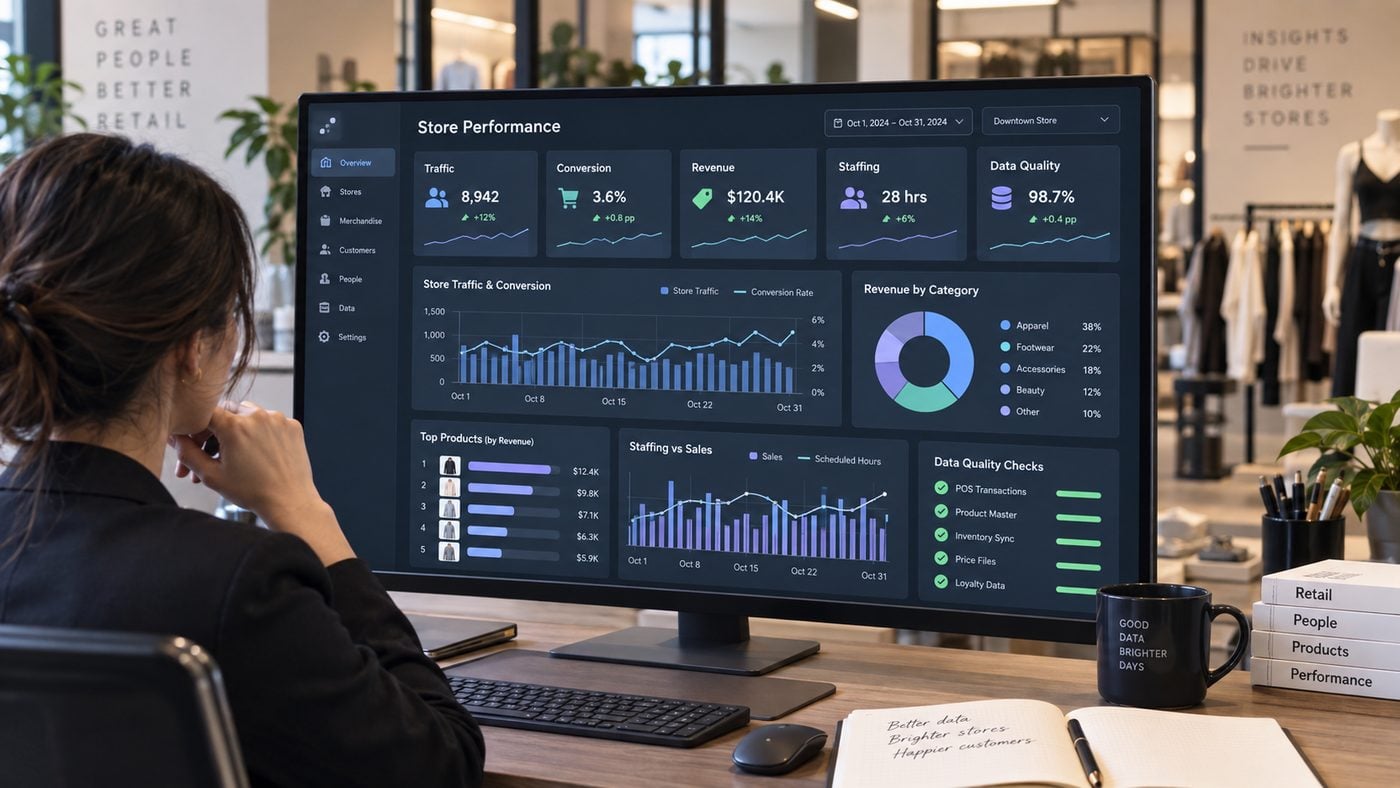
V-Count's BoostBI platform connects all these data points into a single dashboard — traffic trends, conversion rates, peak hours, zone performance, and demographic insights — giving you the intelligence to double down on what works and quickly pivot away from what does not. The most successful retailers treat foot traffic optimization as a continuous loop: strategize, execute, measure, learn, and repeat.
10-15%
Retailers who personalize their strategy based on real visitor data see a 10-15% boost in sales conversion rates — because they stop guessing and start knowing.
The Bottom Line
Foot traffic is not a matter of luck or location alone — it is the result of deliberate, layered strategies executed consistently. The 15 approaches above are not theoretical suggestions. They are proven tactics used by some of the world's most successful retail brands, adapted for the realities of 2026 — a year when consumers have more choices than ever, but are also more eager to shop in person than at any point since the pandemic.
Start with the strategies that require the least investment and deliver the fastest results (tips 1, 2, and 4), then build toward the data-driven optimization (tips 10 and 15) that will compound your gains over time. The retailers who treat foot traffic as a system — not a single tactic — are the ones who will dominate their markets in the years ahead.
Know Exactly What Drives Your Foot Traffic
V-Count's AI people counting sensors and BoostBI analytics platform give you up to 99% accurate traffic data, capture rates, heatmaps, and conversion insights — all in one dashboard.
We use cookies to optimize your experience and analyze traffic. By clicking 'Accept', you consent to all cookies. Click 'Reject' to keep only strictly-necessary cookies. See our Privacy Policy for details.AcceptRejectPrivacy Policy