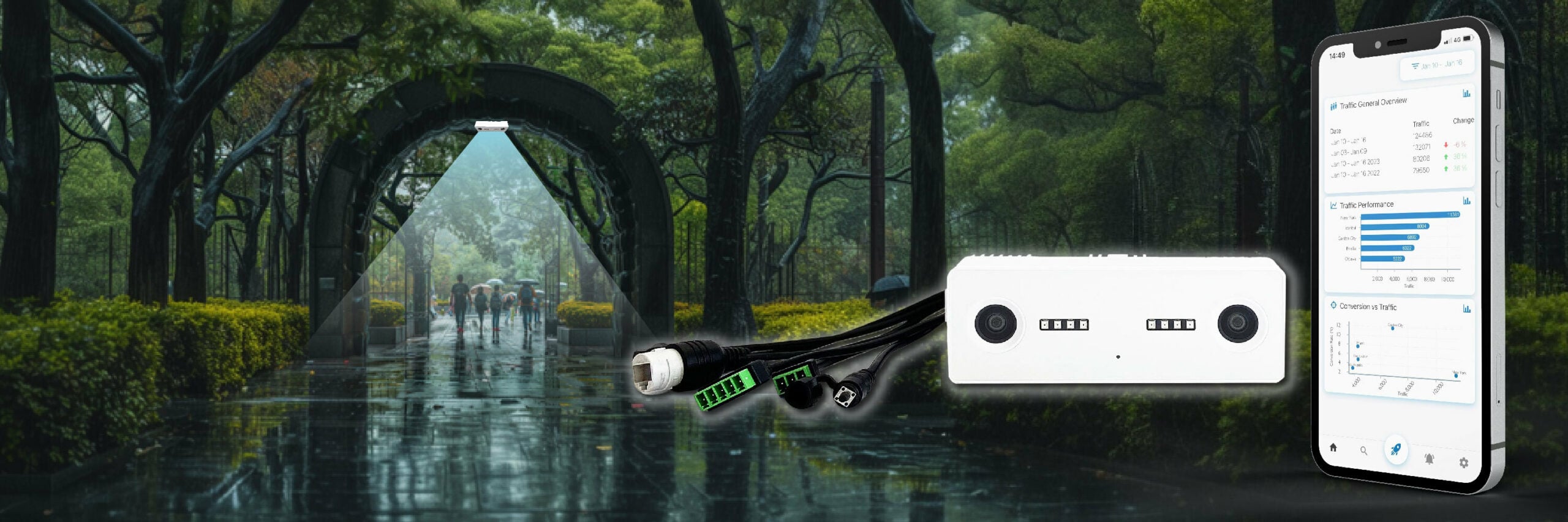
Indoor spaces have doors, and doors make counting easy. Outdoor spaces have none of that: open approach paths, demand that swings by hour, weather, and event schedules — and that is exactly where the biggest costs and risks sit. Teams that manage streets, parks, events, terraces, and attractions still mostly run on estimates, which means over-staffing quiet hours, under-staffing peaks, and weak evidence for sponsors, landlords, and city stakeholders.
This guide explains what outdoor people counting is, why it is technically harder than indoor counting, how V-Count Nano Outdoor solves it, and 10 real-world places where outdoor counting pays for itself.
What Is Outdoor People Counting?
Outdoor people counting is the automated measurement of pedestrian traffic in open-air spaces — streets, squares, parks, gates, terraces, and event grounds — using sensors instead of manual clickers or estimates. It answers four questions every outdoor operator needs: how many people came, when they came, which direction they moved, and how that changed after a decision you made.
With reliable footfall and flow data, you can staff to real peaks, reduce queues and bottlenecks, monitor capacity and crowd pressure points, and report results with confidence — including proof of attendance for non-ticketed areas.
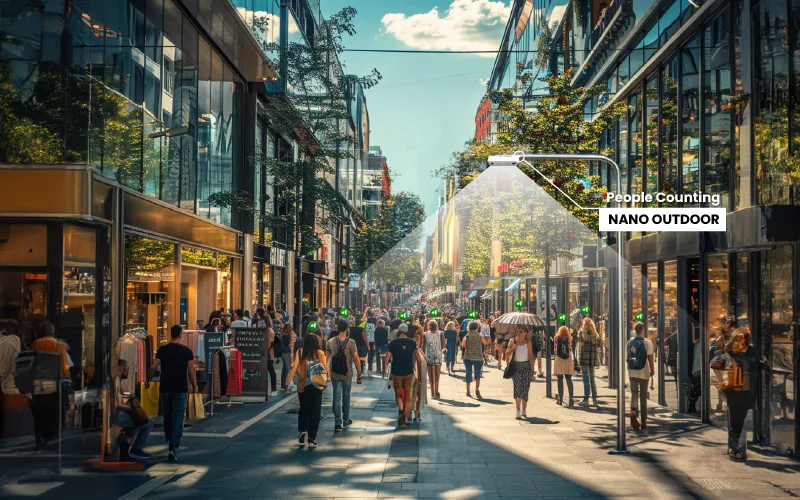
Count people outdoors, day and night
Nano Outdoor counts pedestrians in streets, parks and open-air venues and sends the data to BoostBI.
- Built for outdoors
- Night vision
- Live dashboards
Why Outdoor Counting Is Harder Than Indoor
Outdoor counting breaks simple methods for four reasons: lighting shifts constantly through the day, shadows move, rain and fog degrade image quality, and crowds create occlusion — people blocking other people. That is why many sites still rely on estimates, and why decisions drift.
Purpose-built outdoor sensors like Nano Outdoor are designed for exactly these conditions: anonymous, AI-based counting that holds up in changing light and weather, with no fixed entrance required. One customer on Trustpilot reports accuracy “around 98–99% after fine tuning” across island-wide outdoor deployments.
10 Places Outdoor People Counting Pays Off
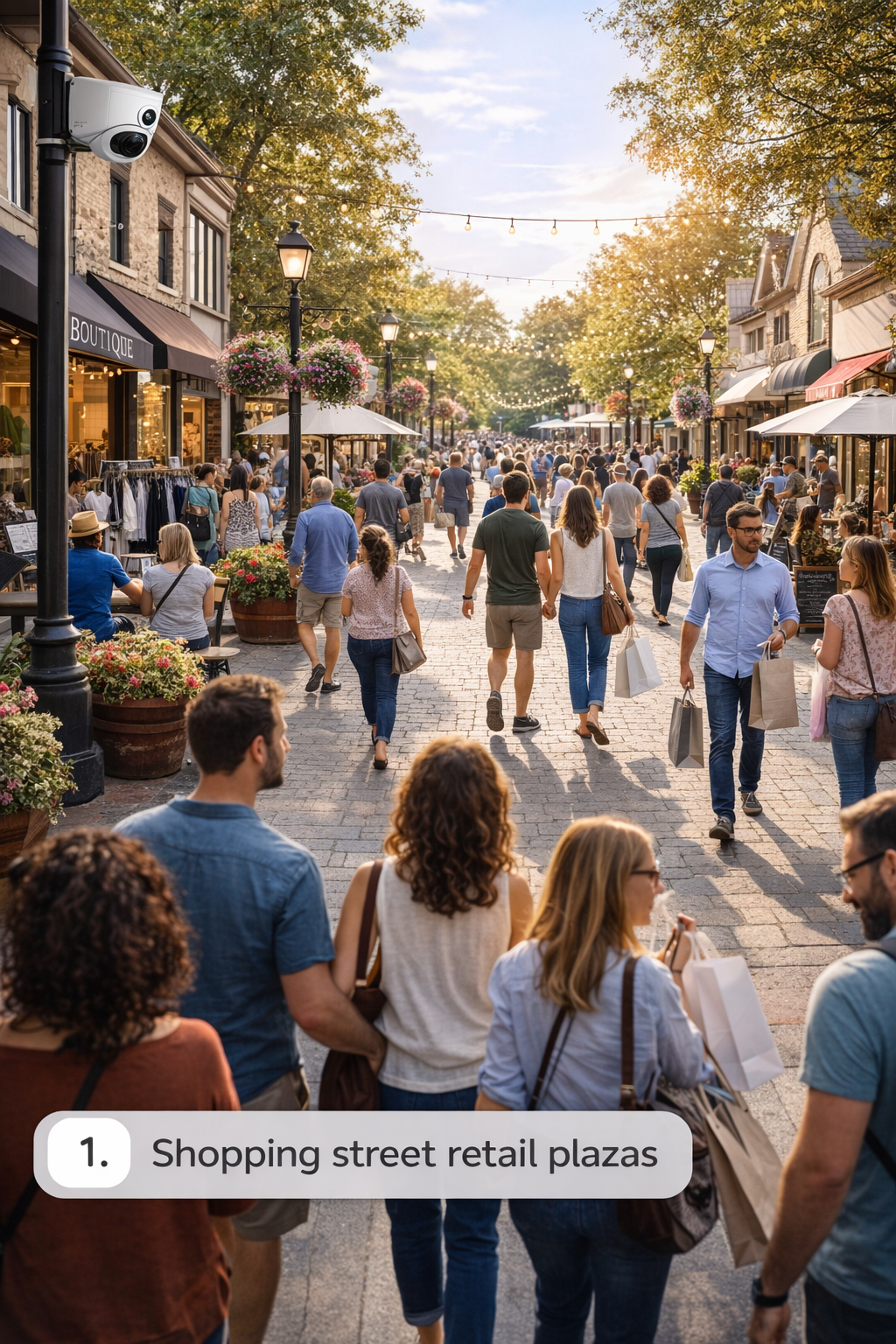
1. Shopping Streets and Retail Plazas
Measure outdoor foot traffic along storefronts and open walkways to understand demand before people walk in. Identify peak walking hours and strongest directions, justify pop-up, signage, and staffing decisions with real numbers, and measure campaign uplift using before/after footfall.
For pop-up and seasonal retail, the same data shows passersby, stop rate, and whether a temporary concept deserves to scale. For the full street-to-door funnel, see our guide to storefront counting and capture rate.
2. Outdoor Markets and Public Squares
Track visitors across open lanes and gathering zones, even without fixed entrances. Optimise stall placement using real movement patterns, reduce congestion with better routing, and deliver reliable attendance data to vendors and sponsors.

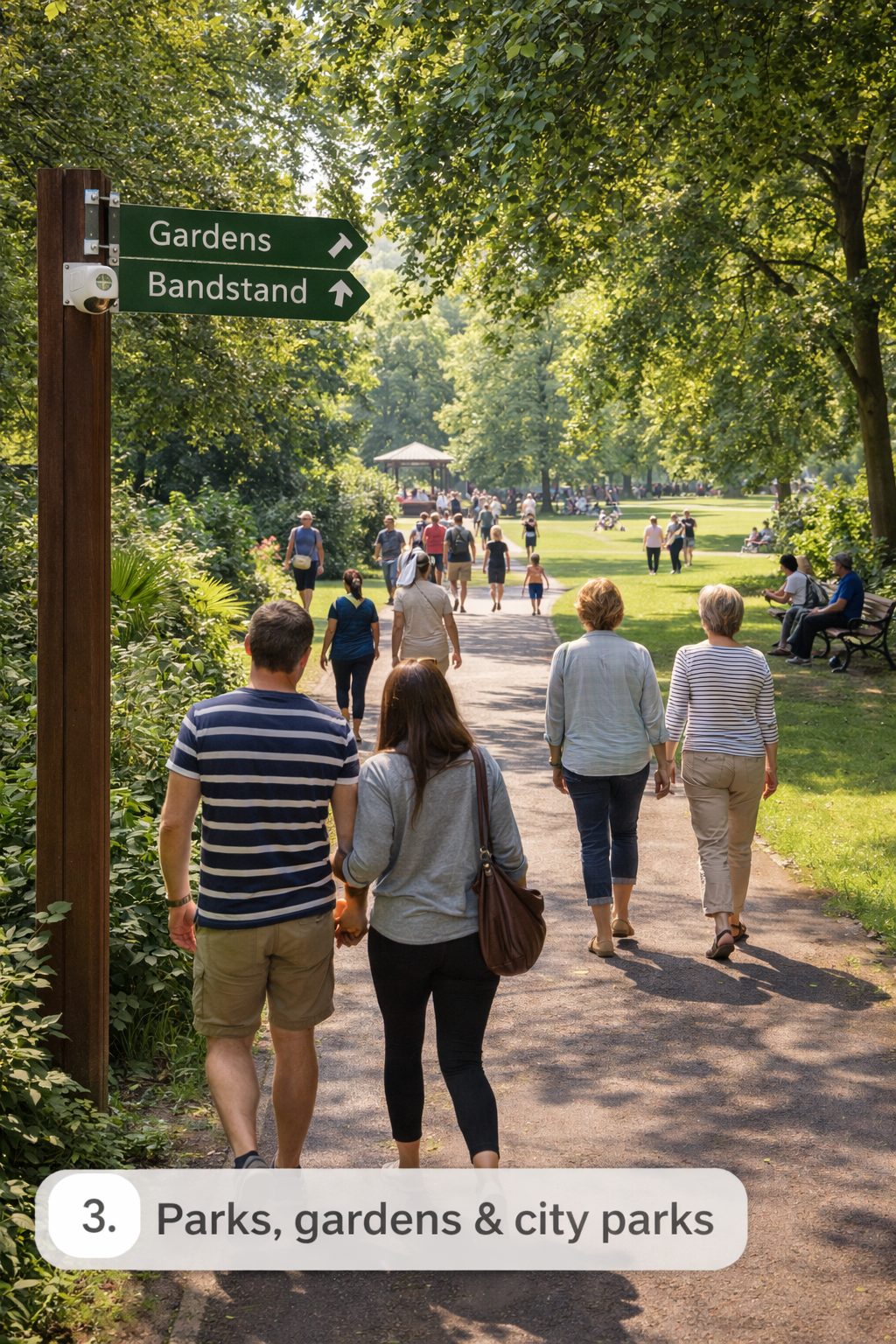
3. Parks, Gardens, and City Parks
Monitor entrances and paths to see which gates and trails are most used, plan cleaning and security based on demand, and support funding requests with hard visitor data. For cities, pedestrian counts also support mobility planning and smarter investment in crossings, walkways, and public-space design.
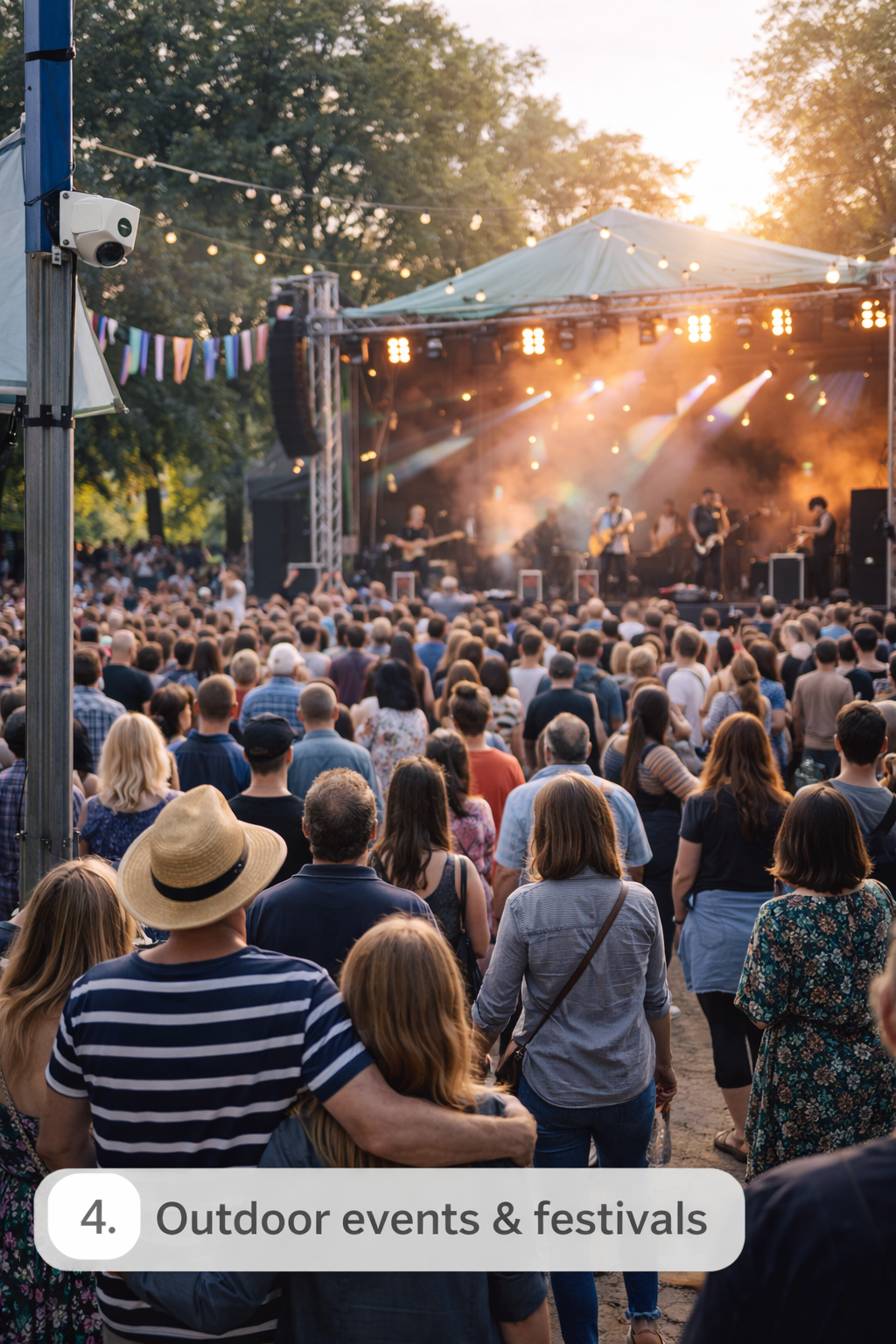
4. Outdoor Events and Festivals
Count attendance and flow across stages, entries, and food zones. Confirm turnout for staffing and vendor planning, detect crowd pressure points early for safety, and give sponsors verified visitor numbers instead of estimates.
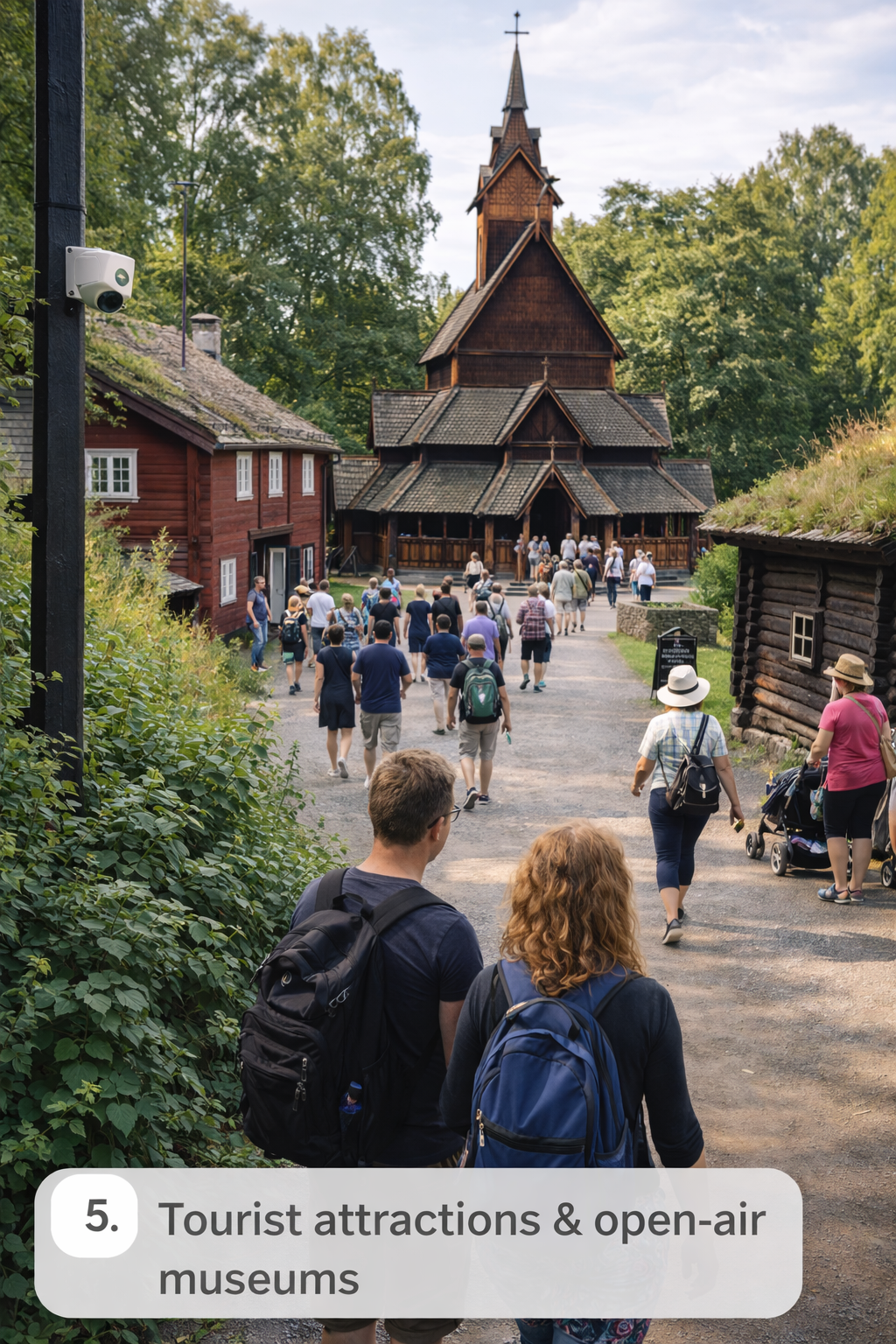
5. Tourist Attractions and Open-Air Museums
Track visitor flow between exhibits to understand popularity by zone and time, reduce bottlenecks with smarter routing, and improve the guest experience using real flow data instead of complaints.
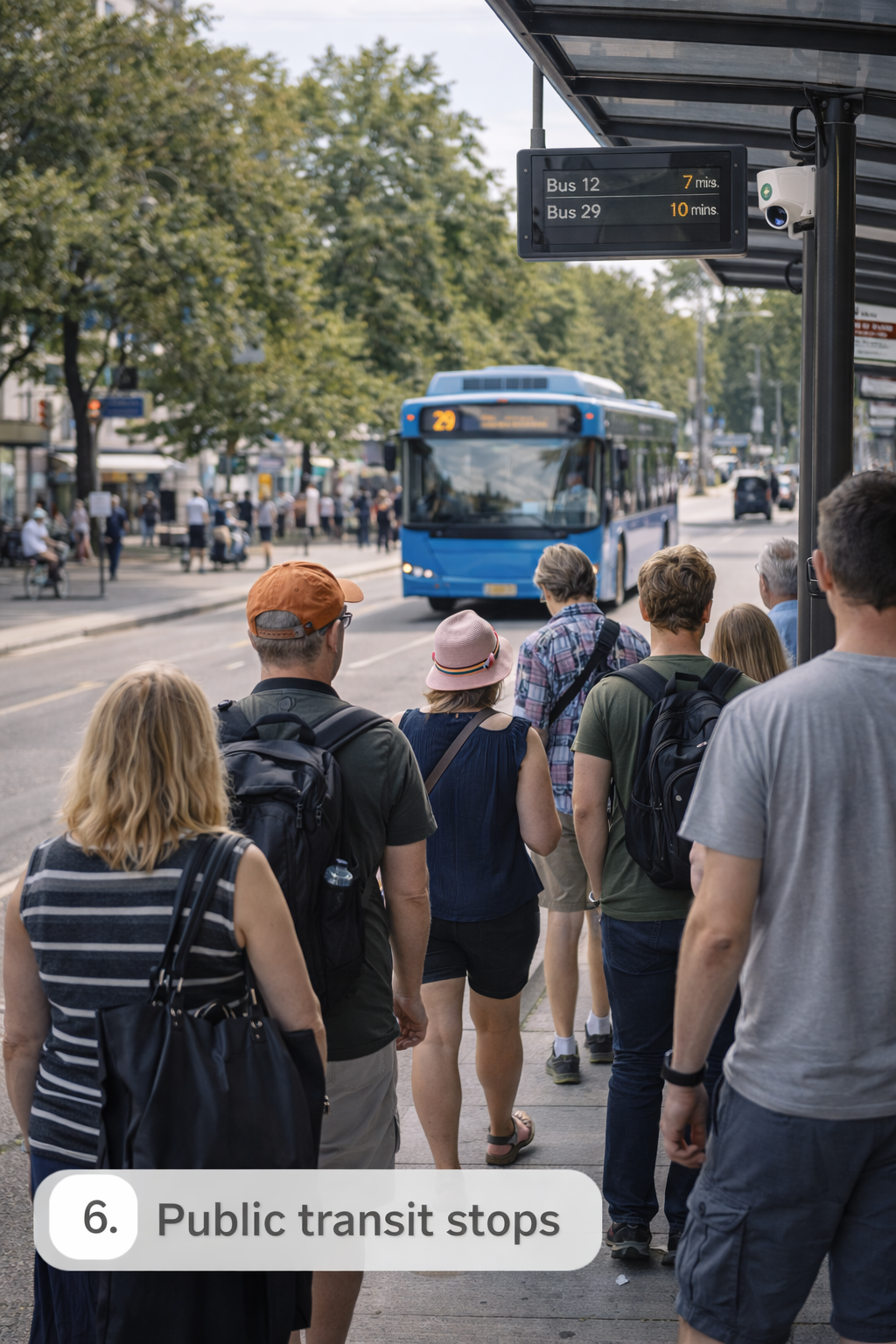
6. Public Transit Stops
Measure demand at bus and tram stops by time of day, identify overcrowding windows, and support service planning with data — platform by platform, hour by hour.
What does it cost?
Sensors from US$299, paid once. BoostBI from US$9 per sensor per month.
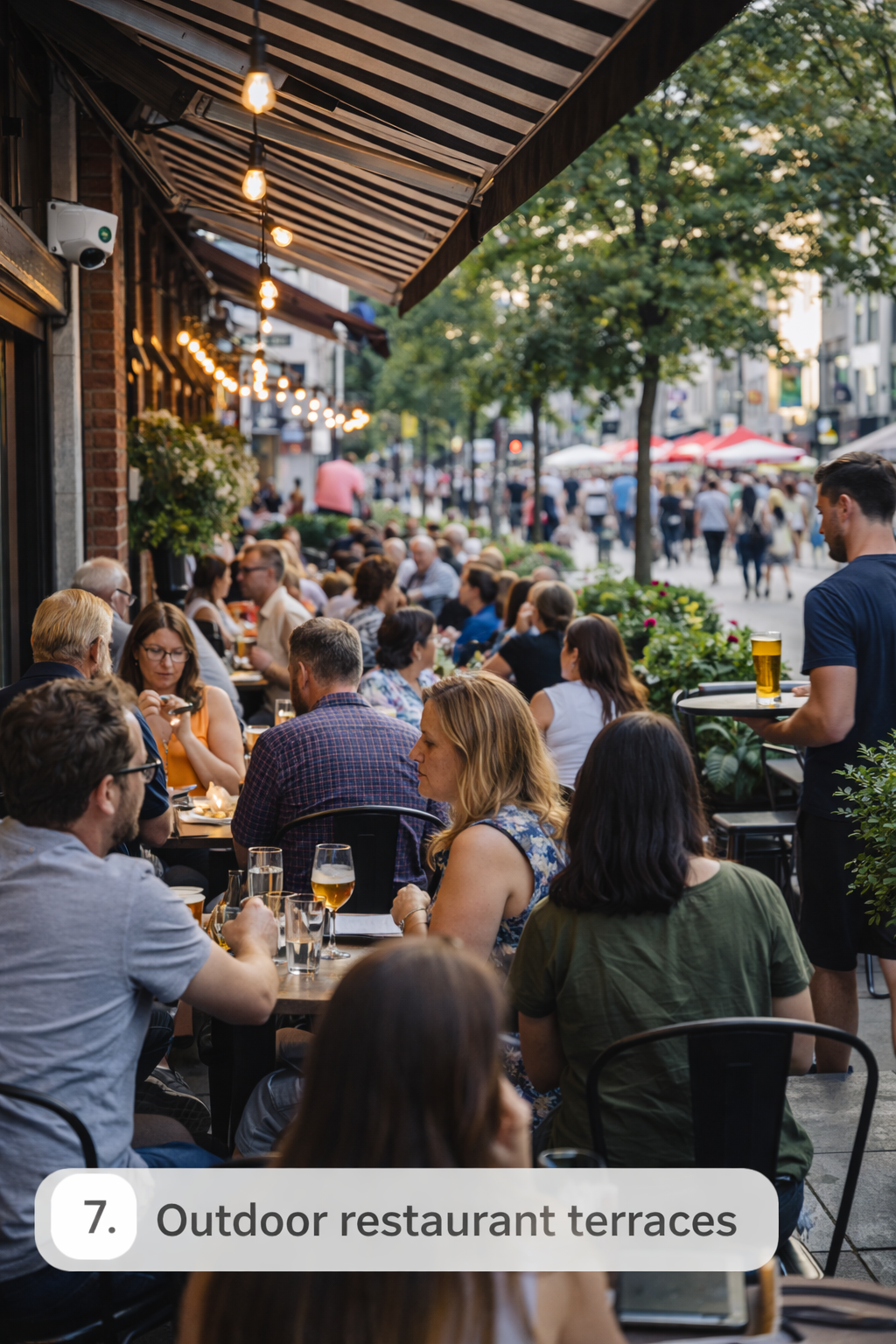
7. Outdoor Restaurant Terraces
Understand terrace demand and pass-by flow to staff correctly and optimise seating. Compare pass-by versus seated traffic, improve queue handling, and match service capacity to the hours that actually matter.
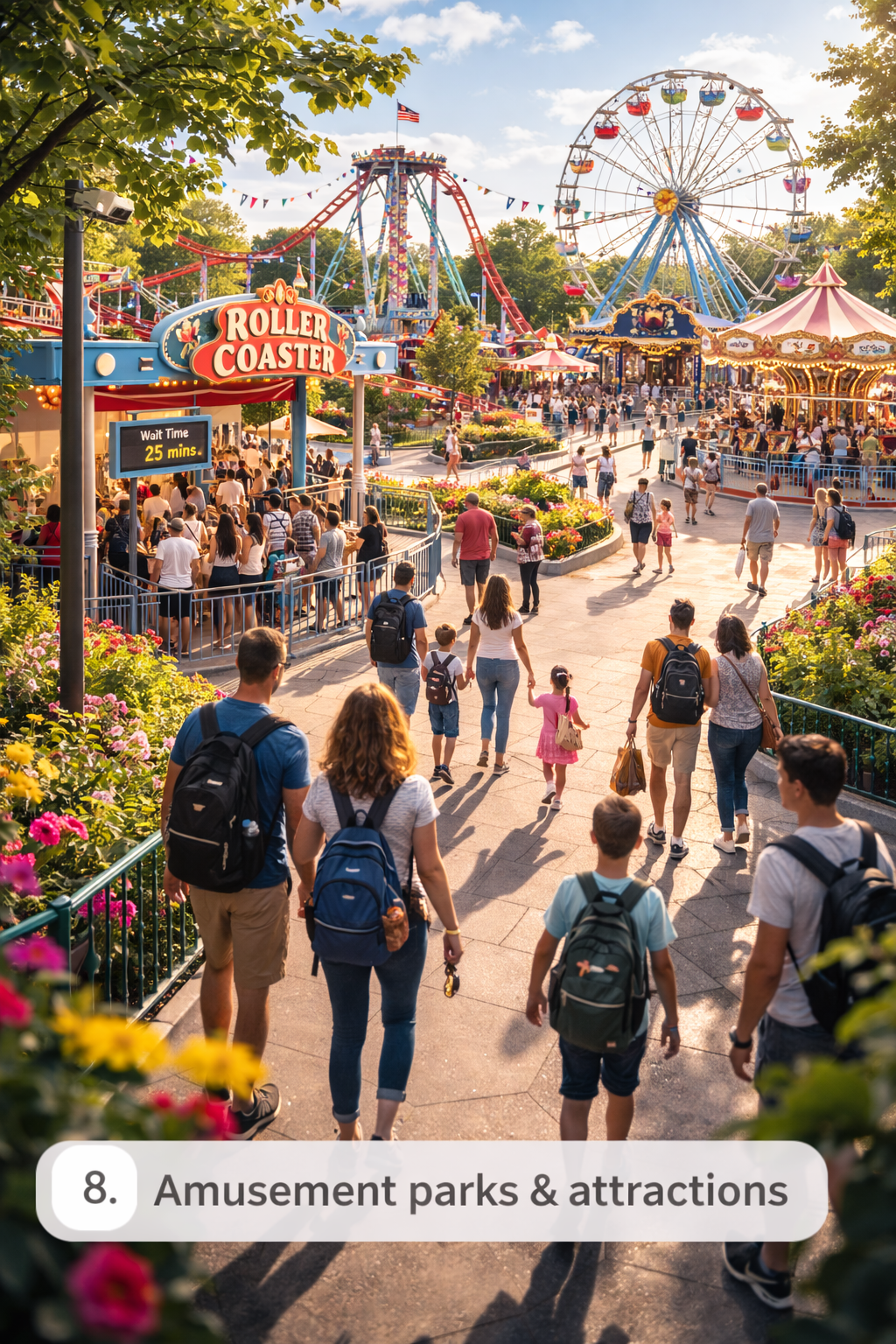
8. Amusement Parks and Attractions
Measure guest flow at entrances and ride queues to reduce bottlenecks, understand movement between attractions, and improve staffing and ride-access planning. At stadium and venue gates, the same sensors track in/out flow, gate throughput, and crowd build-up in real time.
9. Zoos
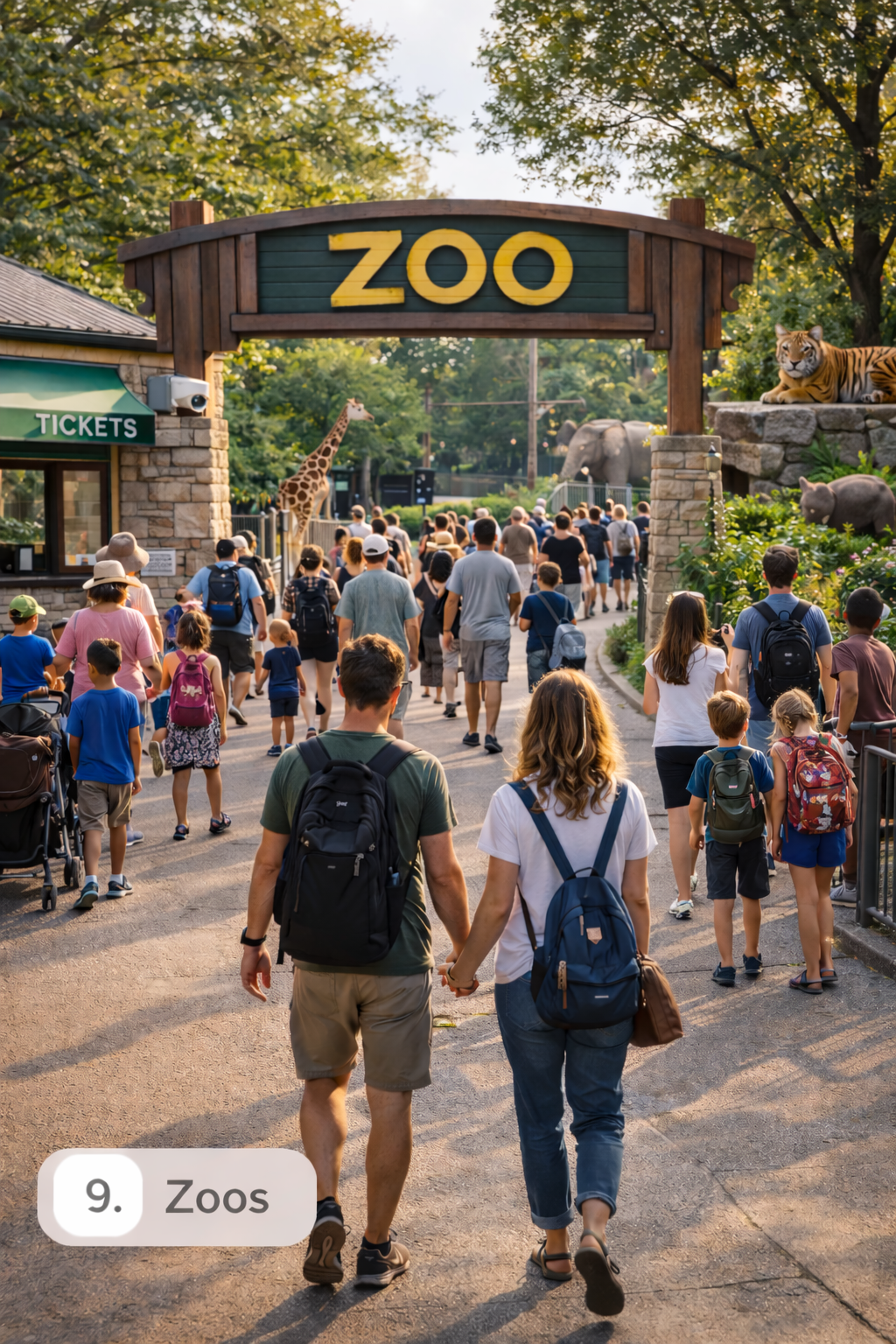
Track exhibit routes to see popularity and peak hours per exhibit, reduce crowding at hotspots, and improve route design and food-and-beverage placement along the busiest paths.
10. Beach Clubs
Measure flow across entrances, loungers, and service zones to match staff and inventory to demand. Track arrivals and peak service windows, optimise bar and seating staffing, and understand day-versus-evening demand shifts through the season.

What You Get From Outdoor Counting
Better operations: staffing based on real peaks, fewer bottlenecks and smoother circulation, safer crowd-management signals, and cleaner planning for security and logistics.
Stronger reporting and ROI: prove event and campaign impact, benchmark sites and zones fairly, share credible numbers with sponsors and landlords, and track footfall weekly as a KPI. For leasing and municipal work, verified pedestrian data replaces negotiation by anecdote.
Accuracy and Privacy
V-Count’s sensor line delivers up to 99% counting accuracy, and outdoor deployments are tuned per site — one multi-site customer reports 98–up to 99% accuracy after fine-tuning. Counting is fully anonymous: the system measures movement, not identities, so it supports privacy-first operations in public spaces. V-Count supports 600+ clients across 130+ countries and holds a 4.6/5 rating on Trustpilot.
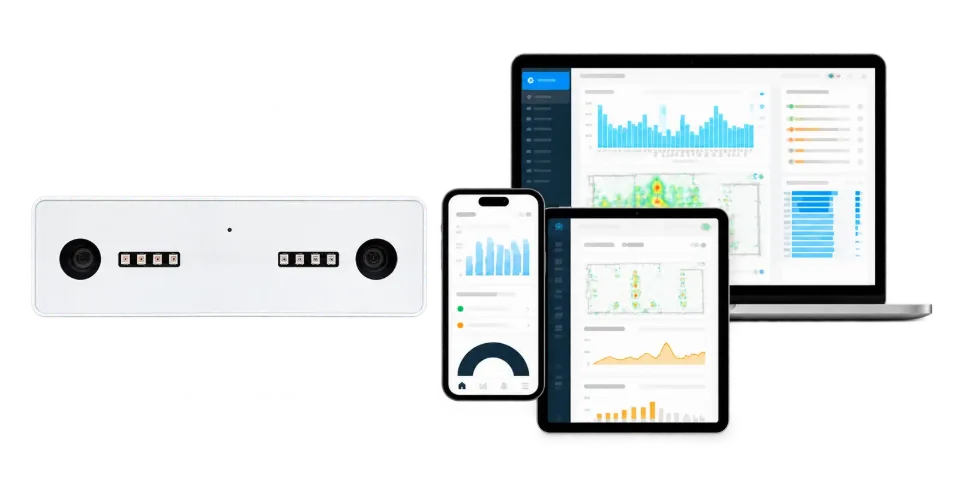
Count every visitor with up to 99% accuracy
Nano AI is a 3D people counting sensor. It counts entries and exits, can exclude staff and works in total darkness.
- Up to 99% accurate
- Staff exclusion
- Works at 0 lux
How Much Does Outdoor People Counting Cost?
Two components: hardware and software. V-Count publishes its prices openly — sensors range from $299 to $799, with software plans from $9 to $49 per month per sensor. See the pricing page for current figures and bundles. For most outdoor sites, the cost question resolves quickly against one number: what a single over-staffed season, failed sponsor negotiation, or unmeasured campaign already costs you.
Outdoor Counting Methods Compared
| Method | How it works | Strengths | Weaknesses |
|---|---|---|---|
| Manual clickers | Staff count by hand | No hardware, quick to start | Error-prone, not continuous, no direction or zone data |
| WiFi / Bluetooth tracking | Detects phone signals | Covers wide areas | Undercounts (phones off, randomised MACs), imprecise, privacy concerns |
| Thermal sensors | Detects heat signatures | Works in full darkness | Struggles in hot weather and dense crowds, limited zone insight |
| AI vision (Nano Outdoor) | On-device AI counts anonymously | High accuracy, direction + zones + occupancy, privacy by design | Needs correct mounting and per-site tuning |
How to Count People at an Outdoor Event: 5 Steps
- Map the site. Mark every entry, exit, and pinch point — stages, food zones, gates.
- Define measurement lines and zones. Virtual count lines across approach paths replace physical doorways.
- Mount sensors to cover the paths. Position for clear sight lines over each defined line; tune per location.
- Watch live occupancy against capacity. Crowd pressure shows up in the data before it shows up as an incident.
- Report verified attendance afterwards. Sponsors, vendors, and authorities get measured numbers, not estimates.
How Do Cities Count Pedestrians?
Cities place anonymous counting sensors on streets, crossings, and public spaces and measure movement across virtual lines — hourly pedestrian volumes, directions, and trends over seasons. The data supports mobility planning, justifies investment in crossings, walkways, and public-space design, and measures the before/after effect of interventions like pedestrianisation or new lighting. The same infrastructure serves parks (use case 3) and transit stops (use case 6).
Not sure where the sensors go?
Send a floor plan and a few photos taken by your store manager. We recommend sensor placement within 24 hours.
Frequently Asked Questions
How is outdoor people counting different from indoor counting?
Indoor counting measures flow through defined entrances. Outdoor counting must work without doors: open approach paths, variable lighting, weather, and crowd occlusion. It requires sensors specifically built for open-air conditions — using an indoor sensor outside typically produces unreliable data. V-Count Nano Outdoor is built for these open-air conditions and connects over Wi-Fi.
Does weather affect outdoor people counting accuracy?
Rain, fog, shadows, and changing light are the main technical challenges outdoors, and they do break simple counting methods. Purpose-built outdoor sensors are designed and fine-tuned for these conditions; accuracy is validated per site after installation. V-Count Nano Outdoor is designed and tuned for these outdoor conditions.
Can you count people in spaces without a fixed entrance?
Yes. Open lanes, squares, and multi-path areas are counted by measuring movement across defined virtual lines and zones rather than physical doorways — that is exactly what outdoor markets, parks, and high streets require. V-Count Nano Outdoor counts across virtual lines and zones in open spaces.
Is outdoor people counting legal in public spaces?
Outdoor counting with anonymous sensors measures movement, not identities — no personal identification takes place. That anonymous-by-design approach is what makes it suitable for public spaces; always confirm local regulations for your specific deployment. V-Count Nano Outdoor counts anonymously and does not identify individuals.
How much does an outdoor people counter cost?
V-Count sensors range from $299 to $799 with software from $9 to $49 per month per sensor — pricing is published openly on the pricing page, including bundles for multi-site deployments.
What does an outdoor people counter measure?
Visitor counts by hour, direction of movement, in/out flow at gates, live occupancy of defined zones, and trends over days, seasons, and events — the inputs for staffing, safety, marketing, and reporting decisions. V-Count Nano Outdoor collects this data and BoostBI reports it.
Measure What Happens Outside
Every indoor metric starts with what happens outside the door. Whether you run a high street store, a festival, a park, or a beach club, outdoor people counting turns open-air movement into decisions you can defend with data.
Book a demo and V-Count will tailor the setup to your site type — or explore Nano Outdoor and see how it pairs with people counting indoors and heatmap analytics inside the store.
See it working in a store like yours
Book a free demo and see live traffic, conversion and staffing data. Trusted by 600+ companies in 130+ countries.