Business case · ROI
People Counter ROI: How to Calculate It
People counter ROI compares the extra gross profit you can attribute to better decisions with the full cost of the system. There is no universal uplift, so use your own baseline and a fair comparison.
Below: the formula, a clearly labelled planning scenario, and how to measure the result honestly. For prices, see the pricing page.

How to calculate people counter ROI
ROI = (attributable gross profit − total cost) ÷ total cost × 100, over the same period.
Total cost
Sensors, BoostBI licences, installation and support for the period. See pricing.
Attributable gain
Extra gross profit you can link to decisions made with the data, measured against a baseline.
Period
Use the same period for cost and gain, and compare equivalent trading periods.
A worked planning scenario
| Input | Value |
|---|---|
| Daily eligible visits | 1,000 |
| Conversion increase | 3 percentage points |
| Average transaction | US$45 |
| Extra daily revenue | 1,000 × 3% × US$45 = US$1,350 |
| Assumed 30-day month | US$40,500 |
This is a scenario, not profit or a forecast. Replace each input with your own figures and convert revenue to gross profit before comparing it with cost.
How to measure the return honestly
- Record a baseline before changes.
- Compare equivalent periods: same weekdays, same season.
- Note promotions, weather and opening hours.
- Use comparison stores where you can.
- Remember that a before-and-after change alone does not prove cause.
How it works
Three steps from the door to a report for every location.
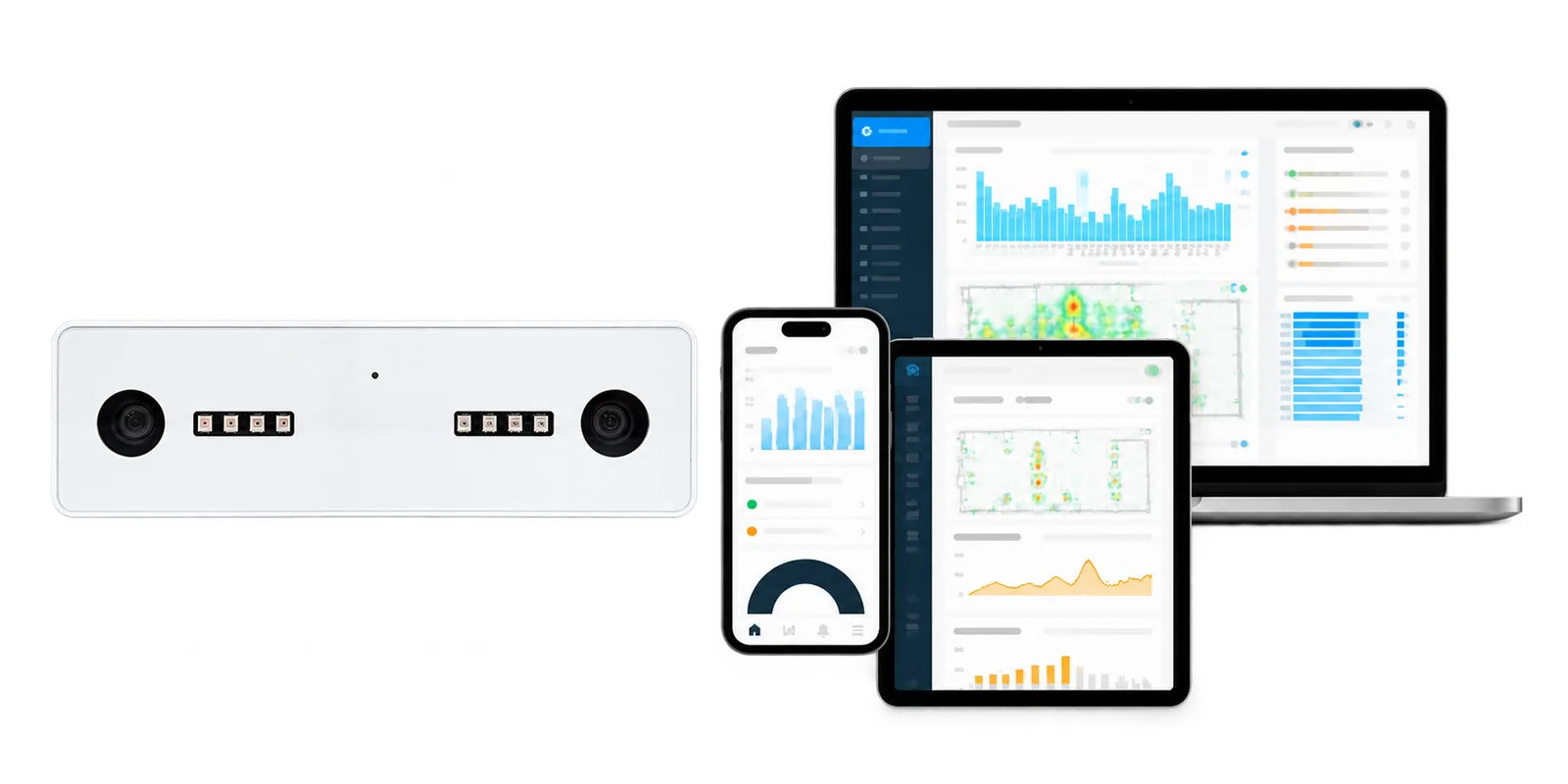
- Sensors at the entrancesNano AI sensors on the ceiling above each entrance count visitors in and out. They process everything on the device and send only anonymous counts, and staff can be kept out of the count.
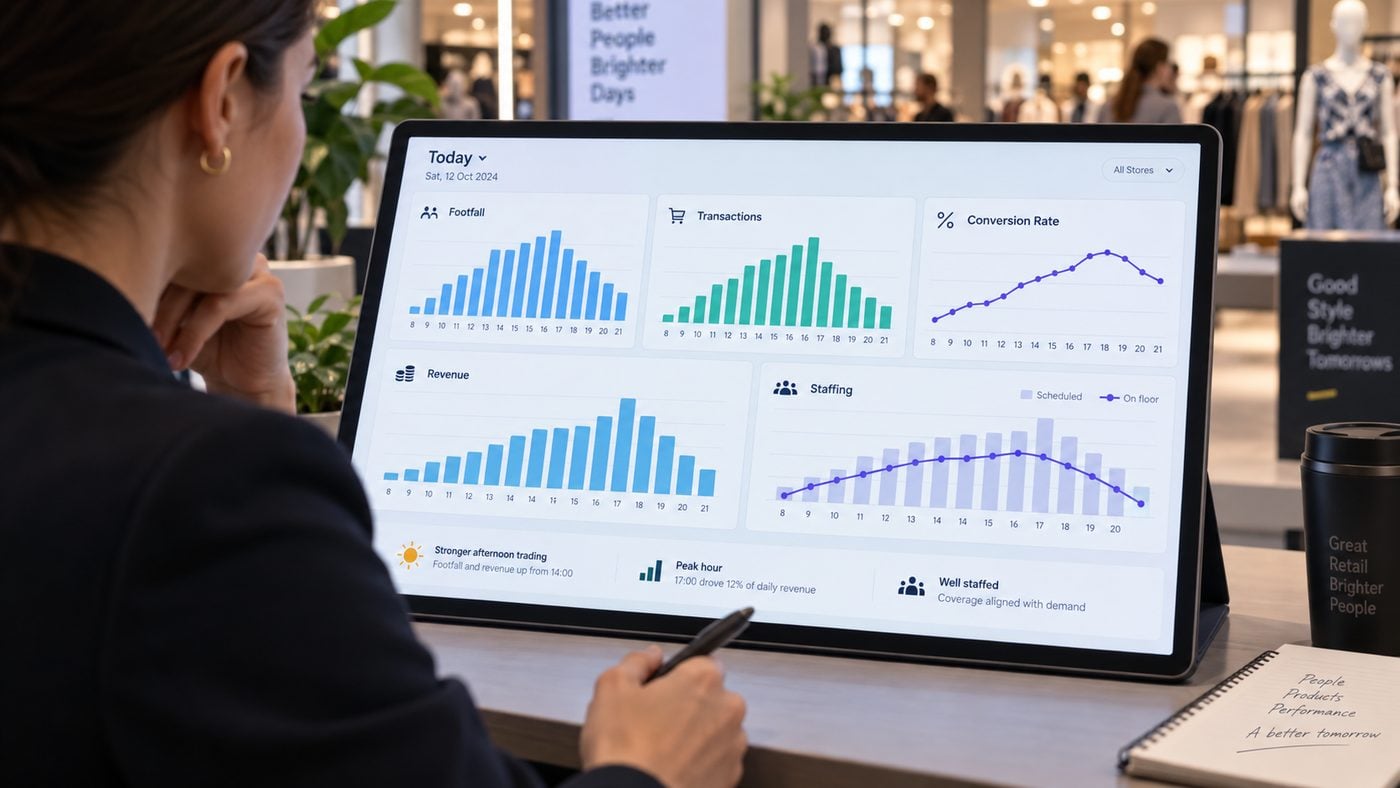
- BoostBI dashboardsBoostBI reports visits by hour, day, store and region, typically refreshed every 10 minutes, or every minute in real-time mode, on the web and in the mobile app, with a weekly AI Sales Coach for each store.
- POS integrationSales arrive through native Shopify and Nebim connectors, working VendPOS, Nayax, ImagineX and QuickBooks integrations, manual import or the open REST API, so conversion is calculated, not estimated. See people counter POS integration.
Frequently Asked Questions
Straight answers about measuring physical stores with V-Count.
Request a demo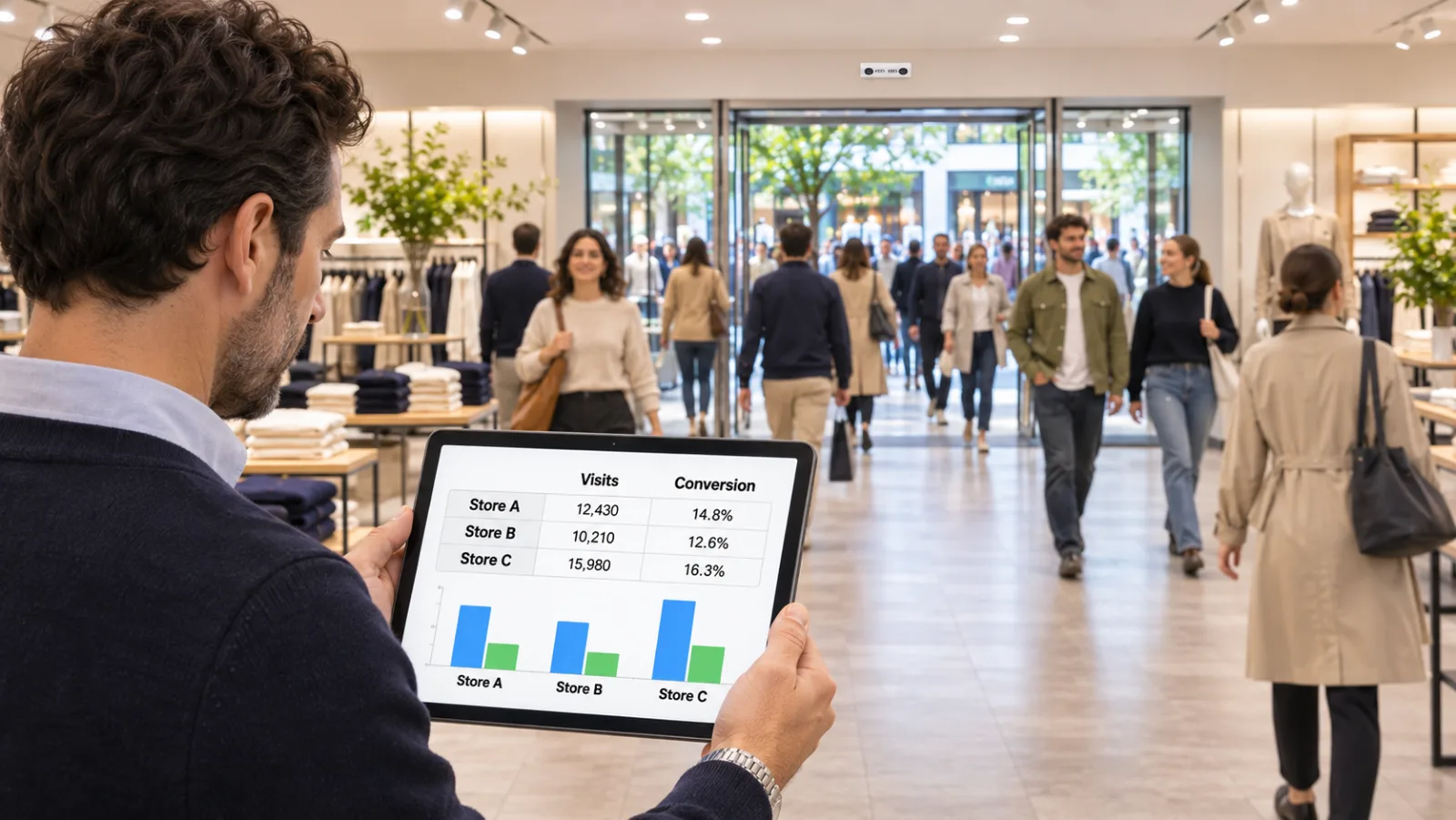
How do you calculate people counter ROI?
ROI = (attributable gross profit − total cost) ÷ total cost × 100 for the same period. V-Count provides the visit counts, with up to 99% accuracy for Nano AI entrance counting, and BoostBI joins them with POS sales so the gain can be measured.
What ROI can I expect from a people counter?
There is no universal figure. V-Count does not assert a fixed uplift or payback period; measure your own baseline and compare equivalent periods.
What costs should I include?
Sensors, analytics licences, installation and support over the same period as the gain. V-Count publishes its prices on the pricing page.
Where does the return from people counting come from?
From decisions the data supports: staffing to real peaks, fixing hours with high traffic and low conversion, judging campaigns by visits and reviewing opening hours.
Is the planning scenario a forecast?
No. 1,000 daily visits × a 3-point conversion increase × US$45 per transaction = US$1,350 extra daily revenue is a labelled scenario, not profit or a forecast.
How do I prove the return?
Compare equivalent periods, record promotions, weather and opening hours, and use comparison stores. A before-and-after change alone does not prove cause.
Build the business case on your own numbers
- baseline
- gross profit
- total cost
- equivalent periods
- comparison stores