
Products
Solutions
Industries
Clients
Resellers
Blog
About Us
🇬🇧 English
Get a Demo Become a Partner

A Reader's Guide to the V-Count Blog

The blog covers people counting, retail analytics and visitor insights. This guide groups the main topics, so you can find the right article for your question. Each group lists a few good places to start.

New to people counting? Start here

If you are just starting out, learn the basics first: what a counter measures, how the main technologies differ, and how to test a setup at your own site.

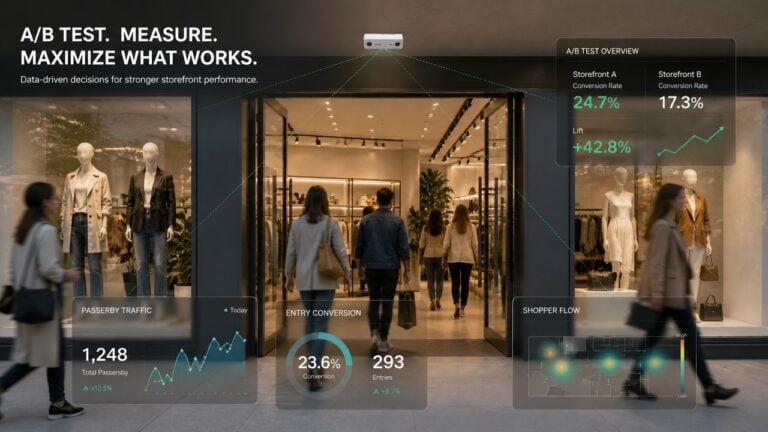
Outside the store: storefronts and capture rate

These articles focus on the street. They explain how to count passers-by and entries, and how to test a window display.

Inside the store: zones, heatmaps and layout

Entrance counts show how many people came in. These articles look at what happened next.

Performance, staffing and opening hours

These articles connect traffic with sales and labour. They are useful for store managers and finance teams.

Data, software and integrations

For IT, data and head-office teams choosing or joining up systems:

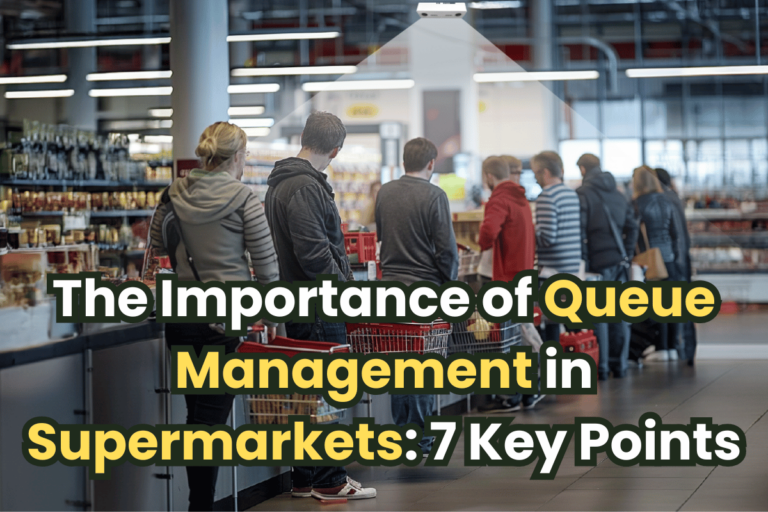
Demographics and queues

Malls, venues and buildings

Outdoor, transport and hospitality

Suggested reading paths by role

Key terms you will meet

  • Footfall: the number of people entering a space.
  • Eligible visit: an entry that counts as a customer visit after exclusions, such as staff.
  • Dwell: how long visitors stay in a zone.
  • Revenue per visitor: net sales ÷ eligible visits. It is not the same as conversion.
  • Sales per labour hour: net sales ÷ paid labour hours.
  • Occupancy: the number of people inside at a moment. It needs coverage of all relevant entrances and exits.

How to get the most from each article

  1. Start with your question. Pick the group above that matches the decision you face.
  2. Note the definitions. Many articles use conversion and capture rate. Conversion rate = eligible purchase transactions ÷ eligible store visits × 100. Storefront capture rate = eligible entries from a defined passing stream ÷ eligible passing traffic × 100.
  3. Look for the method. The most useful ideas come with a way to test them at your own site.
  4. Test before you roll out. Compare equivalent periods and note promotions, weather and opening hours. A before-and-after change does not prove cause on its own.
  5. Keep your own notes. Record what you tried, when, and what the data showed.
  6. Share with your team. Agree common definitions before people start comparing numbers from different reports.
  7. Check the date. Each article shows when it was published. Product details can change, so confirm current specifications with V-Count.

A note on numbers in articles

Some articles include worked examples and planning scenarios. Treat them as illustrations of a method, not as forecasts for your business. Your own results depend on your sites, your data and how you run each test. The safest approach is to take the method, apply it to your own validated counts, and compare equivalent periods.

Where to go after reading

For product details, see products and solutions. To discuss your own site, request a demo. New articles appear at the top of this page, and older ones are on the following pages.

Go to Top